The commercial aviation market has long followed a predictable lifecycle: aircraft serve airlines for decades before being retired, with parts gradually recycled once the cost of maintaining the airframe surpasses its market value. The Boeing 787 Dreamliner, introduced in 2011, disrupts that expectation. With most of its fleet barely a decade and a half old, it would normally be far from retirement age. Yet an unprecedented economic and supply chain environment has reshaped the calculus, turning almost brand-new Dreamliners into more profitable sources of components than operational jets. This phenomenon is a direct consequence of post-pandemic supply shortages, production bottlenecks, and the sheer youth of the fleet.
Consider the case of Boeing 787-8 N947BA, an aircraft with a mere 13 flight hours. This jet, one of the “terrible teens” — early production models fraught with assembly inconsistencies and structural quirks — never carried a single paying passenger. Originally built for Royal Air Maroc, it failed to meet the airline’s delivery criteria due to assembly errors and weight issues, leaving it in limbo for years in storage at Victorville, California. By the time Boeing and its partners sought a buyer, N947BA’s operating history was non-existent, and its complicated background made potential operators hesitant. Despite its near-new condition, the aircraft ended up at Roswell International Air Center in New Mexico for dismantling, highlighting the shift from traditional aircraft economics to a teardown-driven valuation model.
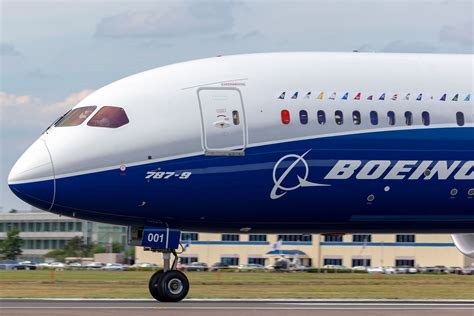
The financial logic behind dismantling N947BA was strikingly simple yet counterintuitive. Its two engines alone commanded a market value of roughly $20 million each, exceeding the price of the aircraft as a whole by $15 million. When factoring in other high-value components — landing gear estimated at $4–6 million, avionics and major line-replaceable units at $2–4 million, and auxiliary power unit (APU) hardware at $2–3 million — the total parts valuation soared to between $50 and $56 million. In contrast, selling N947BA as a complete aircraft proved challenging, leaving disassembly as the only financially rational path. This scenario illustrates a rare but emerging trend in modern aviation: when components outstrip the whole in value, the logical move is to dismantle even jets that have scarcely flown.
The underlying cause of this economic inversion lies in the post-pandemic aerospace supply chain crisis. Global OEMs (original equipment manufacturers) have struggled to meet the surging demand from airlines expanding their fleets, with production resources concentrated on completing new aircraft to address a backlog exceeding 17,000 orders. According to IATA and Oliver Wyman, supply chain bottlenecks in 2025 alone cost the airline industry more than $11 billion in excess fuel expenditures, grounded aircraft awaiting parts, and maintenance delays. These disruptions have driven a steep increase in the value of used serviceable materials (USM), components that can be removed, certified, and reused on other aircraft.
Airlines operating large Boeing 787 fleets now face months-long waits for replacement parts, forcing some aircraft to remain grounded while critical components are sourced. With over 1,200 Dreamliners in active service and minimal retirements to supply the secondary parts market, the scarcity of used components has reached a tipping point. The result is a paradox where a nearly new aircraft, once prized for its operational potential, is more profitable when cannibalized for parts.
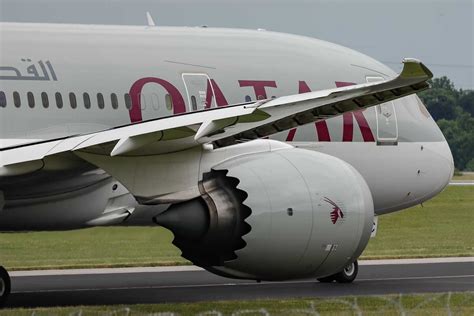
This trend is not limited to unused early-build jets like N947BA. Even aircraft with substantial commercial service histories have succumbed to teardown economics. Norwegian Air’s 787-8s, delivered in 2014, operated transatlantic routes before the airline restructured its long-haul network in 2021. By 2023, these jets were approaching major scheduled maintenance milestones, including 12-year checks and landing gear overhauls, costs that often reach tens of millions of dollars. With no committed operator willing to assume these expenses, dismantling became the economically superior choice. Similarly, TUI Group retired its first 787-8 in 2025 for parts recovery rather than investing in extensive maintenance, reflecting a broader shift in how airlines evaluate aircraft asset value amid constrained supply chains.
Several factors make the Boeing 787 particularly susceptible to this paradox. The aircraft’s fleet is large yet young, with virtually all airframes under 15 years old. Traditional attrition has not produced enough retired aircraft to feed the secondary market, resulting in a shortage of used parts relative to operational demand. Airlines in need of engines, landing gear, or avionics cannot wait for months for new production, making low-hour or commercially unviable jets attractive candidates for teardown. The components extracted from these aircraft immediately return value to the active fleet, allowing operators to maintain operational continuity while circumventing lengthy OEM lead times.
The USM market’s evolution has amplified this effect. Historically, airlines turned to used parts as a cost-saving measure. Today, they are often the only viable path to keep aircraft flying without significant delays. In this environment, even newer airframes, previously considered too valuable to scrap, are being cannibalized to meet urgent demand. The cycle reinforces itself: fewer older aircraft are retired, reducing supply for teardown, which in turn intensifies the value of newer aircraft as a source of parts. This dynamic extends beyond the 787, impacting other types such as the Airbus A320neo and A321neo, where engine shortages have made component lease rates exceed the aircraft’s overall lease value.
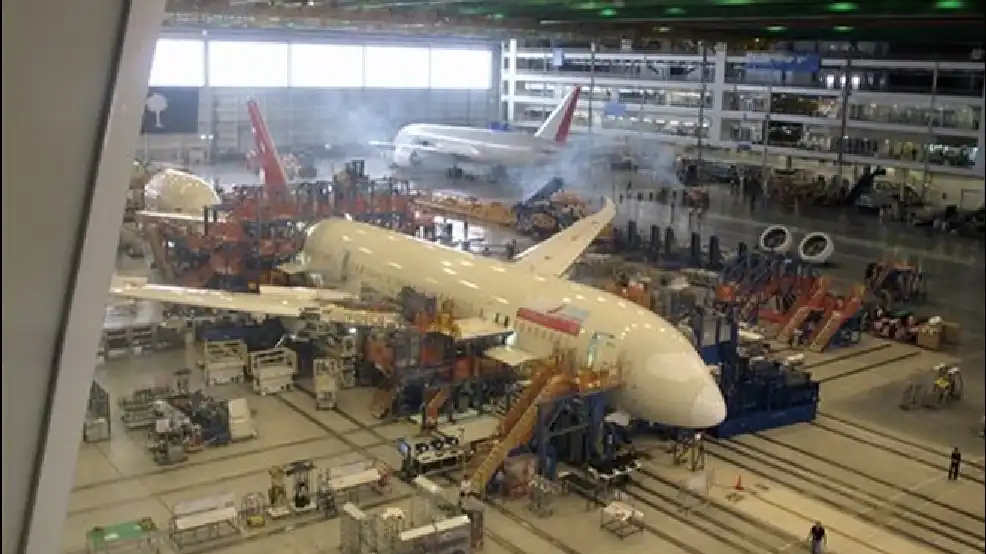
The economics of Boeing 787 teardowns also highlight the role of variant-specific demand. With three primary variants — 787-8, 787-9, and 787-10 — airlines tailor purchases to specific route profiles, creating concentrated demand for certain components. High-value engines, avionics suites, landing gear systems, and APUs are interchangeable across subsets of the fleet, but only in limited quantities. The scarcity of these components, coupled with the fleet’s rapid expansion, makes each dismantled aircraft a critical contributor to fleet reliability. Airlines that secure parts from teardowns gain a competitive operational advantage, as sourcing equivalent components from manufacturers often entails months-long delays.
Beyond economics, teardown decisions reflect strategic asset management under supply chain constraints. Operators weigh not only the immediate value of components versus the aircraft’s resale price but also the opportunity cost of grounding planes for maintenance. In a market where engine shortages or landing gear backlogs can delay flights for months, the ability to immediately deploy recovered parts translates into substantial operational savings. The dismantling of aircraft like N947BA demonstrates that asset optimization now transcends conventional metrics of age or flight hours; instead, financial and operational imperatives dictate that some jets are more profitable on the ground than in the air.
Looking at the broader industry, teardown economics signal a structural shift in how modern fleets are sustained. Traditionally, the aftermarket relied on gradual attrition, where older airframes fed the secondary parts market. Today, shortages in OEM production, combined with exponential fleet growth, are forcing airlines to proactively source parts from younger aircraft. If manufacturers fail to close the production-demand gap, the trend of retiring relatively new aircraft specifically for parts recovery may intensify, creating a permanent restructuring of the aerospace supply chain. The Boeing 787 Dreamliner, despite being technologically advanced and operationally efficient, has become a case study in how market dynamics can override traditional asset logic.
This phenomenon has implications for airline strategy, fleet planning, and maintenance operations. Operators must incorporate teardown value into acquisition and retirement decisions, recognizing that holding an aircraft may no longer guarantee future profitability if parts scarcity and maintenance costs misalign. Leasing companies, too, face a recalibration: aircraft that might have retained residual value for resale may now find their peak valuation in disassembly. For OEMs like Boeing and General Electric, this trend underscores the need to balance new production with aftermarket support to prevent artificial scarcities that distort market behavior.
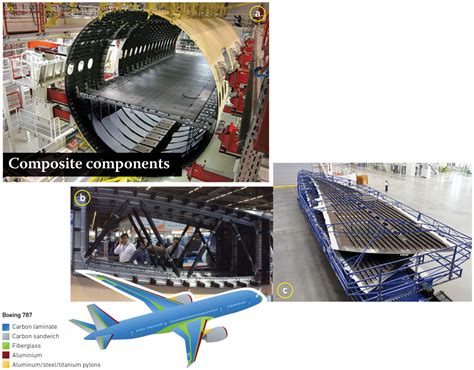
The rise of teardown economics is compounded by the technical complexity of the 787 itself. Composite airframes, advanced avionics, and high-bypass turbofan engines are not only expensive to manufacture but also challenging to maintain. Components such as the GEnx and Rolls-Royce Trent 1000 engines require specialized inspection, certification, and installation procedures. For airlines facing immediate operational pressures, acquiring these parts through teardown is faster, more predictable, and often more cost-effective than relying on direct OEM supply. This creates a self-reinforcing ecosystem in which dismantled aircraft become the fastest route to fleet readiness, making even low-hour, nearly pristine airframes financially expendable.
The financial case for dismantling is further strengthened by the disparity between component value and the aircraft’s market price. For example, landing gear alone can account for $4–6 million, avionics for $2–4 million, and engines can exceed $20 million each. Combined with APUs, nacelle hardware, and other rotable units, the parts value often surpasses the aircraft’s current market valuation. In essence, the aircraft becomes a floating warehouse of high-demand, scarce components. Airlines and MRO (Maintenance, Repair, and Overhaul) providers recognize this value and are willing to pay premium prices for recovered parts, further incentivizing dismantling over resale or continued operation.
Moreover, the strategic timing of teardowns intersects with regulatory and certification considerations. Early-build 787s like N947BA had known assembly inconsistencies and structural nuances. Even if airworthy, such aircraft may face limited market acceptance due to insurance and operational risk concerns. Scrapping these jets for parts avoids the reputational and financial hazards associated with leasing or selling them to cautious operators, while simultaneously supplying high-value components to the broader fleet. This dual benefit — risk mitigation and component monetization — underscores the multidimensional calculus driving these decisions.
Ultimately, the story of hardly flown Boeing 787 Dreamliners being worth more as parts than whole aircraft illustrates a profound evolution in aerospace economics. The post-pandemic supply chain crisis, coupled with rapid fleet expansion and delayed OEM production, has created an environment where traditional asset valuation rules no longer apply. Component scarcity, high operational costs, and maintenance backlogs have aligned to make teardown the most rational financial strategy for certain jets. The implications extend across the airline industry, reshaping fleet management, asset valuation, and maintenance strategy for decades to come.
In conclusion, the Boeing 787 Dreamliner teardown cases highlight a new paradigm in commercial aviation asset management. Aircraft are no longer valued solely for their airframe and operational potential but increasingly for the marketability of their components in a constrained supply environment. Early-build aircraft with limited service histories, like N947BA, demonstrate that even nearly new jets can be financially optimized through disassembly. As supply chain pressures persist and demand for high-value parts remains elevated, the practice of dismantling younger aircraft is likely to continue, redefining the economics of modern fleet management and emphasizing the intrinsic worth of parts over the whole.