
Spirit Airlines’ disappearance from the US aviation landscape has opened a rare window of opportunity at one of the country’s most restricted airports. Following the carrier’s collapse and liquidation, a bankruptcy court approved the sale of its 22 daily flight slots at New York’s LaGuardia Airport (LGA), an asset estimated to be worth as much as $87 million. While the headline figure underscores the extraordinary value of airport access in major metropolitan markets, the real question is whether those slots are truly worth that amount to the airlines most likely to pursue them.
For decades, LaGuardia has operated under a tightly controlled slot allocation system administered by the Federal Aviation Administration (FAA). Unlike most airports where airlines can add flights according to demand and available infrastructure, LaGuardia restricts takeoff and landing rights through a carefully managed framework designed to reduce congestion and maintain operational efficiency. As a result, access to the airport has become one of the most valuable commodities in American aviation.
The scarcity of slots is what drives their value. Airlines seeking to expand in the lucrative New York market cannot simply launch new flights at their preferred times. Instead, they must acquire existing slots through transfers, trades, or purchases. Because opportunities to obtain slots are exceptionally rare, every available package attracts significant attention from across the industry.

Spirit’s portfolio consists of 22 daily slot pairs, equivalent to roughly 11 round-trip flights each day. While that number may seem modest compared to the holdings of larger airlines, it represents immediate access to one of the world’s most important air travel markets. For carriers hoping to strengthen their presence in New York City, these slots offer a shortcut that would otherwise be nearly impossible to obtain.
The strategic value becomes clearer when viewed against the broader competitive landscape. Major network airlines already dominate LaGuardia. Delta Air Lines controls hundreds of slots, while American Airlines maintains an even larger presence through its extensive schedule. Their scale allows them to maximize aircraft utilization, coordinate connecting traffic, and leverage customer loyalty programs that generate premium revenue beyond simple ticket sales.
Against such formidable competition, a smaller airline entering LaGuardia faces an uphill battle. Access alone does not guarantee profitability. The airport’s operating environment presents unique financial challenges that can quickly erode the advantages traditionally enjoyed by low-cost carriers.
Why LaGuardia Challenges the Low-Cost Airline Model
The ultra-low-cost carrier model is built around efficiency. Airlines operating under this strategy rely on minimizing expenses, maximizing aircraft utilization, and stimulating demand through exceptionally low fares. Success depends on maintaining costs significantly below those of larger competitors.
LaGuardia complicates that formula.
Airport fees, gate costs, staffing expenses, and operational constraints are considerably higher than at many secondary airports favored by budget airlines. Unlike airports designed to accommodate rapid aircraft turnarounds and simplified operations, LaGuardia’s congestion often introduces delays that increase costs and reduce schedule flexibility.
For an airline focused on generating profits through volume and efficiency, these factors can become major obstacles. Every minute an aircraft spends waiting for departure clearance or taxiing through congestion reduces productivity. Every increase in airport charges narrows already thin profit margins.
Spirit Airlines itself serves as a cautionary example. Despite possessing a recognizable brand, a substantial fleet, and a customer base attracted by low fares, the carrier accumulated more than $2.5 billion in losses after 2020. Rising operational costs, increasing debt burdens, changing consumer preferences, and intense competition ultimately overwhelmed the business.
Its experience highlights a broader challenge facing budget airlines across the industry. While consumers continue seeking affordable travel options, the economics of serving high-cost airports have become increasingly difficult. Airlines can no longer rely solely on low fares to drive sustainable growth, particularly when competing against larger carriers with diversified revenue streams.
Legacy airlines generate substantial income from premium cabins, corporate contracts, loyalty programs, co-branded credit cards, and international partnerships. These additional revenue sources provide resilience during economic downturns and allow them to absorb higher operating expenses more effectively.
Budget carriers generally lack those advantages.
As a result, the same slots that might create strategic opportunities for a major airline could present significant financial risk for a low-cost operator.
The $87 Million Question: Who Can Actually Profit From These Slots?
The estimated $87 million valuation assumes strong demand among potential buyers. From a pure scarcity perspective, the figure appears reasonable. Access to LaGuardia is extraordinarily limited, and acquiring new slots through regulatory channels is nearly impossible.
However, value is ultimately determined by an asset’s ability to generate future returns.
An airline purchasing the slots must not only recover the acquisition cost but also generate sufficient profits to justify the investment. That calculation becomes more complicated when the buyer is a budget carrier operating under narrow margins.
Eleven daily round-trip flights may not provide enough scale to establish a meaningful competitive position at LaGuardia. Without a larger network presence, airlines may struggle to attract frequent business travelers, secure premium revenue opportunities, or achieve operational efficiencies.
This reality may lead to an unexpected outcome. Although regulators would prefer the slots to remain in the hands of a low-fare competitor, the highest bids could ultimately come from established network airlines that can extract greater value from the asset.
For a legacy carrier already operating hundreds of flights at LaGuardia, adding a handful of additional slots could strengthen schedule flexibility, improve connectivity, and enhance market share. The incremental benefits may justify a higher purchase price than what a low-cost airline could reasonably afford.
Regulators Face a Delicate Balancing Act
The FAA’s interests extend beyond maximizing financial returns for creditors. Federal regulators remain focused on preserving competition and ensuring consumers retain access to affordable travel options.
A market dominated by a small number of major airlines can result in higher fares and reduced consumer choice. Spirit’s presence historically provided an important competitive check by offering lower-priced alternatives on several routes.
Consequently, regulators have expressed interest in seeing another budget-oriented airline step into the vacancy left behind by Spirit’s collapse.
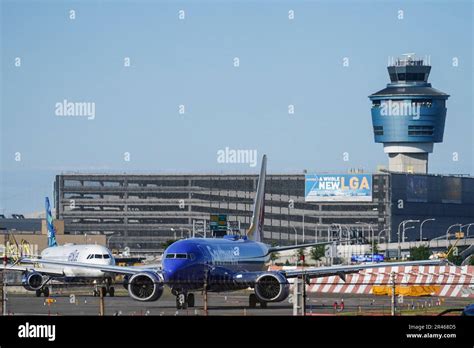
Yet regulatory objectives do not always align with commercial realities. If low-cost carriers determine that operating at LaGuardia is economically unattractive, policymakers may have limited ability to influence the outcome.
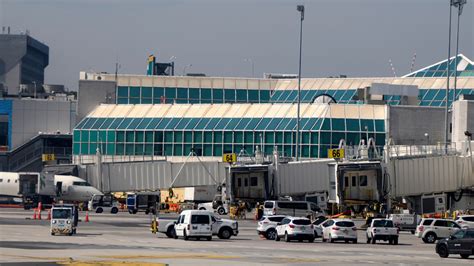
Adding another layer of complexity is the position of the Port Authority of New York and New Jersey, which oversees the airport. Officials have emphasized that any successful bidder should also assume Spirit’s lease obligations at Terminal A. Maintaining full utilization of airport facilities remains a priority, and separating slots from terminal operations could create logistical and financial complications.
The intersection of bankruptcy proceedings, aviation competition policy, airport management, and commercial strategy ensures that the final disposition of these slots will involve far more than a straightforward sale.
What Spirit’s Exit Means for the Future of LaGuardia
The sale of Spirit Airlines’ LaGuardia slots represents more than a bankruptcy asset auction. It serves as a revealing test of the current economics of air travel in the United States.
If a low-cost airline ultimately acquires the slots and successfully expands operations, regulators may point to the outcome as evidence that competition can still thrive at constrained airports. If legacy carriers emerge as the primary beneficiaries, the result could reinforce concerns that rising costs increasingly favor larger airlines with deeper resources and broader networks.
Regardless of who wins the bidding process, the transaction underscores a fundamental reality of modern aviation: access to major airports has become one of the industry’s most valuable strategic assets. Spirit’s former slots may carry an estimated price tag of $87 million, but their true worth depends entirely on which airline believes it can turn scarce access into sustainable profits in one of America’s most competitive aviation markets.