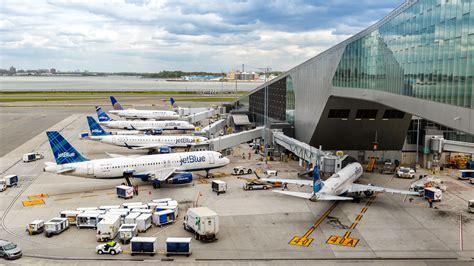
LaGuardia Airport has a reputation that precedes it. Tucked tightly into Queens and surrounded by water, it has long been associated with dramatic aviation moments that capture headlines and public imagination. When incidents occur here, they seem to resonate louder, linger longer, and raise sharper questions than similar events elsewhere. The latest high-profile accident involving an Air Canada Express CRJ-900 and a ground vehicle has only intensified scrutiny, reigniting a familiar debate: is LaGuardia actually more dangerous than other major U.S. airports, or does it simply operate under conditions that make every incident feel amplified?
To answer that, it is necessary to move beyond perception and examine the airport’s physical constraints, operational complexity, historical incidents, and safety data. What emerges is not a story of heightened danger, but of a uniquely demanding environment where margins are tighter and visibility is greater.
A High-Pressure Airport in a Compact Footprint
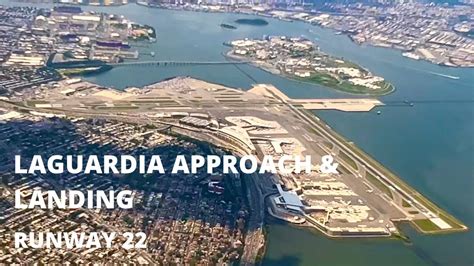
LaGuardia Airport serves as one of the primary gateways to New York City, handling tens of millions of passengers annually despite occupying a relatively small footprint. Unlike sprawling mega-hubs such as Hartsfield-Jackson Atlanta International or Dallas/Fort Worth, LaGuardia operates within a constrained space that shapes every aspect of its operations.
The airport’s two intersecting runways, each just over 7,000 feet long, are shorter than those found at many comparable airports. This limitation is not inherently unsafe, but it reduces operational flexibility. Pilots must execute approaches and landings with greater precision, particularly under challenging weather conditions. A late touchdown or minor miscalculation that might be inconsequential elsewhere can carry more weight at LaGuardia.
Adding to this pressure is the airport’s location. Surrounded by Flushing Bay and Bowery Bay, LaGuardia lacks the forgiving overrun areas seen at inland airports. Instead of open land, there is water just beyond the runway ends, creating a visual and psychological intensity that reinforces its reputation as an unforgiving airfield.
Why LaGuardia Feels Less Forgiving Than Its Peers
The perception of danger at LaGuardia is rooted in a combination of physical and operational factors that, when layered together, create an environment where precision is paramount.
Shorter runways are one piece of the puzzle, but not the entire story. The intersecting runway layout introduces additional complexity, requiring careful coordination between air traffic control and flight crews. Aircraft movements must be tightly sequenced, leaving little room for deviation.
The airport’s surface layout further compounds this challenge. Taxiways, runway crossings, and ground vehicle movements occur in a dense, fast-paced environment. When something goes wrong—such as a miscommunication or timing error—the consequences can escalate quickly, as seen in recent events.
Weather also plays a significant role. New York’s winters bring snow, slush, and ice, all of which can affect braking performance and runway conditions. Combined with gusty winds and frequent precipitation, these factors increase the workload on pilots and controllers alike.
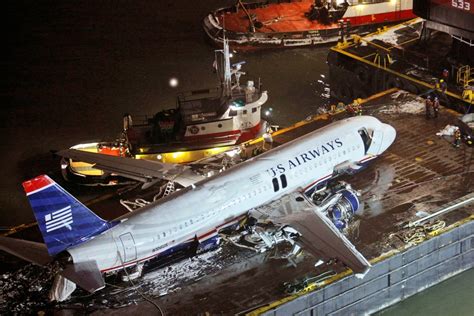
Perhaps most notably, LaGuardia’s proximity to water increases wildlife exposure, particularly bird activity. This risk became globally recognized during the 2009 US Airways Flight 1549 incident, when a dual-engine bird strike forced an emergency landing on the Hudson River. While the outcome was miraculous, the event underscored the environmental realities of operating in this location.
A History That Shapes Perception
LaGuardia’s reputation has been built over decades of incidents that reflect its unique operating environment. These events are not necessarily more frequent than at other airports, but they are often more visible and memorable.
In 1992, USAir Flight 405 crashed shortly after takeoff in icy conditions, resulting in multiple fatalities and raising questions about winter operations. Earlier and later incidents, including runway overruns and approach mishaps, reinforced the idea that LaGuardia offers little margin for error.
The “Miracle on the Hudson” remains the most famous aviation event associated with the airport. While it demonstrated exceptional airmanship and emergency response, it also highlighted the risks posed by bird strikes in the area.
More recent events, including runway excursions and ground incidents, continue to feed the narrative. Each occurrence adds another layer to LaGuardia’s public image, even when similar events happen elsewhere without attracting the same level of attention.
The Role of Visibility and Media Amplification
One of the most important factors in understanding LaGuardia’s reputation is its location within the New York media ecosystem. Incidents at the airport are not just aviation events; they are major news stories in one of the world’s most visible cities.
A runway excursion in a remote location might receive limited coverage. The same event at LaGuardia, with water splashes visible and the Manhattan skyline in the background, becomes a national headline. The imagery is more dramatic, the audience larger, and the narrative more compelling.
This amplification effect creates a perception gap. The public sees more of LaGuardia’s incidents, remembers them more vividly, and associates the airport with higher risk—even when the underlying data does not support that conclusion.
What the Data Actually Says About Safety
When evaluating whether LaGuardia is more dangerous than other U.S. airports, data provides a crucial reality check. Safety metrics such as runway incursions, accident rates, and operational incidents offer a more objective perspective than anecdotal evidence.
Recent figures show that LaGuardia does not stand out as an outlier in runway safety. In fact, its number of recorded runway incursions is lower than several larger airports, including Dallas/Fort Worth, Boston Logan, and Chicago O’Hare. This suggests that, despite its constraints, LaGuardia operates within a comparable safety envelope.
It is important to interpret this data carefully. Lower incident counts do not automatically make an airport safer, just as higher counts do not necessarily indicate greater danger. However, the absence of a clear statistical anomaly undermines the idea that LaGuardia is uniquely hazardous.
Instead, the data points to a more nuanced conclusion: LaGuardia is a challenging airport, but not an exceptionally dangerous one.
Engineering and Safety Systems Designed for Constraints
Recognizing its limitations, LaGuardia has implemented multiple layers of safety systems designed to mitigate risk and compensate for its physical constraints.
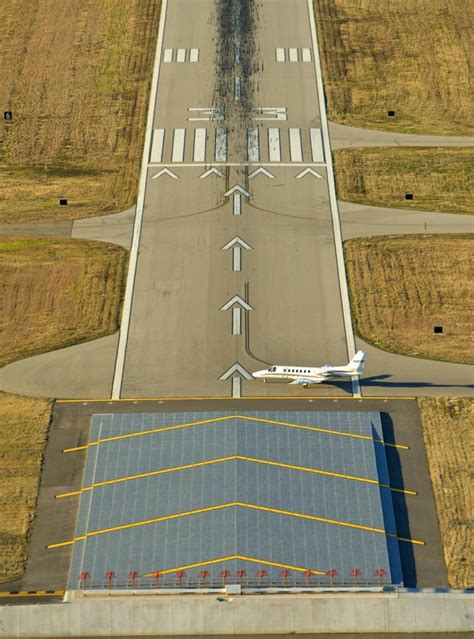
One of the most significant features is the installation of Engineered Material Arresting Systems (EMAS) at runway ends. These systems are designed to stop aircraft that overrun the runway by using crushable materials that rapidly decelerate the aircraft. EMAS has proven effective in preventing more serious outcomes in several incidents.
Runway status lights provide another layer of protection, offering real-time visual cues to pilots and ground crews about runway occupancy. These systems help reduce the risk of collisions by enhancing situational awareness in a complex operating environment.
Air traffic control procedures at LaGuardia are also highly refined. Controllers manage dense traffic flows with precise sequencing, ensuring safe separation despite limited space. This level of coordination is essential to maintaining safety in such a constrained setting.
Why “Challenging” Doesn’t Mean “Dangerous”
The distinction between a challenging airport and a dangerous one is subtle but critical. LaGuardia demands a higher level of precision and awareness from pilots and controllers, but that does not inherently translate into greater risk.
In aviation, risk is managed through systems, training, and procedures. Airports with known constraints often develop more robust safety measures to address those challenges. In many cases, this leads to a level of operational discipline that enhances safety rather than undermines it.
LaGuardia exemplifies this principle. Its constraints are well understood, its risks carefully managed, and its safety systems continuously improved. The result is an airport that operates safely within its limitations, even if those limitations are more visible than elsewhere.
The Psychological Factor: Perception vs. Reality
Human perception plays a powerful role in shaping opinions about safety. Dramatic visuals, high-profile incidents, and repeated exposure to certain narratives can create lasting impressions that are difficult to reconcile with statistical evidence.
At LaGuardia, the combination of water surroundings, urban proximity, and media attention creates a perfect storm for perception bias. Events that might be considered routine elsewhere take on heightened significance here.
This does not mean concerns about safety should be dismissed. On the contrary, scrutiny can drive improvements and reinforce accountability. However, it is important to distinguish between perceived risk and actual risk when evaluating an airport’s safety record.
Final Verdict: Is LaGuardia More Dangerous?
LaGuardia Airport is not more dangerous than other major U.S. airports in any clear, data-supported sense. What it is, undeniably, is more constrained, more complex, and more visible.
Its shorter runways, intersecting layout, surrounding water, and dense airspace create an environment where precision is essential and errors are less forgiving. These factors contribute to its reputation, but they do not equate to a higher overall level of danger.
In reality, LaGuardia represents a case study in how aviation adapts to challenging conditions. Through engineering solutions, operational discipline, and continuous improvement, it maintains safety standards comparable to its peers.
The next time headlines spotlight an incident at LaGuardia, it is worth remembering that visibility is not the same as vulnerability. Beneath the drama lies a system designed to manage risk effectively—even in one of the most demanding aviation environments in the United States.