In the realm of aviation safety, understanding the nuanced dangers between a skid and a slip is crucial. While both involve uncoordinated flight, it is skids that pose a far more lethal threat, especially during stall conditions.
When an aircraft enters a skid, it becomes aggressively uncoordinated, yawing heavily towards the inside of the turn. This induces complex aerodynamic disruptions that often result in a sudden, uncontrollable spin at low altitudes, where recovery is nearly impossible.
The Aerodynamic Triggers Behind a Skid-Induced Spin
A skid is primarily initiated when the pilot applies excessive rudder pressure in the direction of the turn without a corresponding increase in bank angle. This creates a yaw into the turn, which leads to:
- Increased lift on the outside wing, as it moves faster through the air.
- Opposite aileron input from the pilot, unintentionally raising the angle of attack on the inside wing.
- Rapid stall of the inside wing, due to the higher angle of attack exceeding the critical threshold.
- Spanwise flow development, where airflow moves laterally down the wing instead of creating lift, particularly worsening near the wingtips.
Each of these effects converges to induce a violent spin entry, usually towards the ground.
Spanwise Flow: The Silent Saboteur
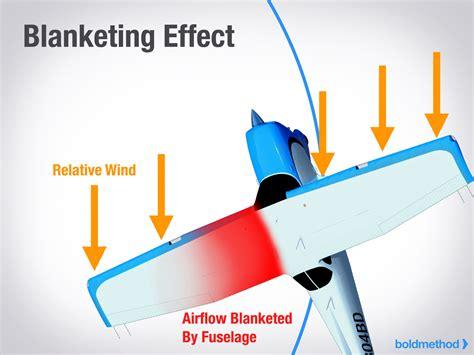
During a skid, the fuselage blocks smooth airflow and the relative wind strikes the aircraft from an unnatural angle. This sideways wind component causes spanwise airflow, significantly reducing the wing’s lifting efficiency. Particularly on the inside wing, this reduction leads to premature stall conditions.
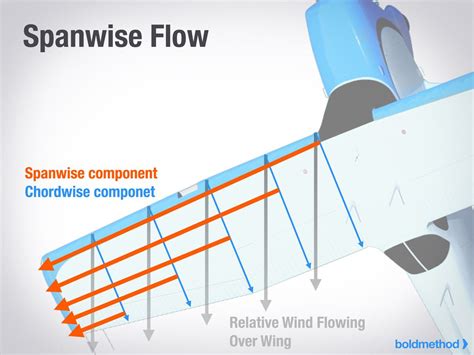
Spanwise flow is particularly insidious because it degrades performance without immediate warning signs visible to a pilot accustomed to straightforward, nose-on relative wind conditions.
Fuselage Interference and Asymmetric Stall Progression
Adding to the complexity, the aircraft’s own structure disrupts airflow over the wing during a skid. This interference, especially on the inside wing, compounds the loss of lift and accelerates the stall asymmetry, pitching the aircraft uncontrollably into a deadly spin.
The overall sequence is almost instantaneous — from skid to incipient spin — leaving no time for effective recovery below 1000 feet AGL.
Why Slips Are Significantly Safer
Conversely, during a slip, the aircraft’s nose yaws away from the turn, meaning the aircraft is banked more than necessary for the rate of turn. This has several stabilizing effects:
- Higher angle of attack on the outside wing, leading to stall of the outside wing first.
- Natural leveling tendency, as the stall-induced roll brings the aircraft back towards coordinated flight.
- Reduced likelihood of spin, since yaw towards the outside counteracts the conditions needed for an incipient spin.
The fundamental difference lies in the direction of yaw and its influence on which wing stalls first. A slip promotes recovery towards level flight, whereas a skid amplifies instability, making spin entry almost inevitable.
The Danger Zone: Base to Final Turn
One of the most perilous moments for a skid to occur is during the base-to-final turn. As pilots recognize an overshoot of the runway centerline, the instinctive but hazardous reaction is to apply excessive rudder into the turn to tighten the path.
This reaction creates the perfect storm:
- Excessive yaw with insufficient bank.
- Over-banked correction with opposite aileron.
- Elevator back pressure attempting to maintain altitude, raising the angle of attack.
At such low altitudes — often around 700 feet AGL — there is neither time nor altitude to recover from the spin initiated by these combined inputs.
Preventative Measures: Best Practices for Pilots
To minimize the risk of deadly skids:
- Never use rudder to tighten a turn. Tightening must always be coordinated with bank and pitch adjustments.
- Respect maximum bank angles, ideally not exceeding 30 degrees in the traffic pattern.
- Execute a go-around if alignment with the runway becomes questionable.
A disciplined go-around is a mark of skill, not failure. Attempting to “force” a landing through aggressive skidding maneuvers unnecessarily invites disaster.
Conclusion: Mastering Coordination for Flight Safety
Understanding the aerodynamic and procedural dangers of skids versus the relative benignity of slips is fundamental to pilot safety. While slips can even be used intentionally for descent management without engine power, skids represent a breakdown in coordinated control that aviation history repeatedly shows to be unforgiving.
Thus, the paramount emphasis must always remain on proper coordination, measured inputs, and the disciplined decision-making that separates routine flights from fatal accidents. In aviation, knowledge, anticipation, and precision are not luxuries — they are the very pillars of survival.