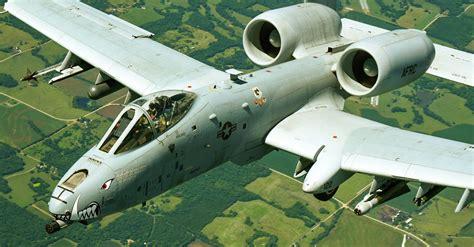
The loss of a single A-10 Thunderbolt II, better known as the Warthog, is often framed as a financial setback. That framing is incomplete. While the price tag alone is staggering, the deeper issue lies in something far more critical: irreversibility. Every destroyed A-10 is not just an asset written off a ledger—it is a vanishing capability that cannot be easily replaced, replicated, or reimagined in modern warfare.
The Illusion of “Just Another Expensive Aircraft”
At first glance, the cost of an A-10 seems manageable within the enormous scale of modern defense budgets. Originally projected at around $15 million per aircraft in the 1970s, the inflation-adjusted figure climbs to roughly $120 million today. That alone positions the Warthog among high-value military platforms.
Yet this number barely scratches the surface. The aircraft shot down in recent conflict zones was not a factory-fresh 1970s relic—it was a heavily upgraded A-10C variant, layered with decades of technological enhancements. When factoring in avionics upgrades, modern weapons integration, structural reinforcements, and continuous maintenance cycles, the true replacement cost becomes far more ambiguous—and significantly higher.
This is where conventional accounting fails. The A-10 is not simply purchased—it is continuously rebuilt, modernized, and sustained, making each individual airframe a unique investment shaped by time.
Weapons That Redefine Cost—and Combat Power
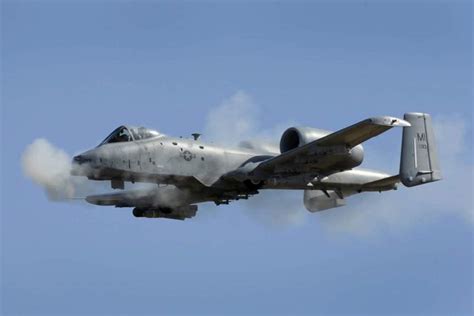
What makes the Warthog legendary also makes it expensive. At the heart of the aircraft lies the GAU-8/A Avenger, a monstrous 30mm seven-barrel Gatling gun that defines the A-10’s identity and mission.
This weapon alone represents a significant portion of the aircraft’s engineering complexity and operational cost. Capable of firing up to 3,900 rounds per minute, the cannon delivers devastating armor-piercing firepower using specialized ammunition, including depleted uranium rounds. Maintaining such a system—logistically, mechanically, and tactically—is neither simple nor cheap.
But the gun is just the beginning. Modern A-10s are equipped with a wide arsenal:
- Precision-guided munitions like JDAMs
- AGM-65 Maverick missiles for anti-armor strikes
- AIM-9 Sidewinder missiles for limited air-to-air capability
- Laser-guided rockets and cluster munitions
Each integration adds layers of cost, training requirements, and maintenance complexity. The Warthog evolves not as a static platform, but as a multi-role battlefield ecosystem, constantly adapting to new threats.
Upgrades That Quietly Outprice the Original Aircraft
Perhaps the most overlooked aspect of the A-10’s cost is the scale of its modernization programs. Over the decades, the aircraft has undergone continuous retrofits, many of which rival—or exceed—the original production cost.
Recent upgrades include:
- Advanced night vision systems for all-weather operations
- Digital cockpit enhancements with situational awareness displays
- Helmet-mounted targeting systems like HObIT
- Electronic warfare systems, including chaff, flares, and jammer pods
Even structural components have been replaced. The addition of new wings, costing between $6.4 and $7 million per aircraft, extended the lifespan of the fleet but added yet another layer of investment.
This means that every operational A-10 today represents decades of accumulated cost, not a one-time purchase. Losing one is not just losing hardware—it is losing years of incremental technological evolution.
A Finite Fleet in a World That Still Needs It
Here lies the real problem. The United States is not losing a replaceable machine—it is losing something that is no longer being produced.
The final A-10 rolled off the production line in 1984. Out of the 713 aircraft originally built, only around 162 remain in active service today. That number continues to decline, not just from combat losses but also from aging airframes and planned retirements.
Unlike modern fighter jets, which can still be manufactured or upgraded within active production lines, the A-10 exists in a closed ecosystem. There is no restart button for production. Every loss is permanent.
Why the A-10 Still Refuses to Become Obsolete
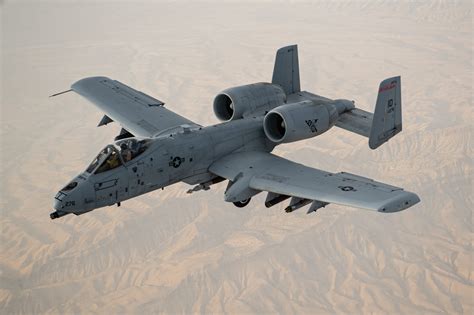
Despite its age, the Warthog continues to outperform expectations in its core mission: close air support (CAS). Designed during the Cold War to counter Soviet armored formations, the aircraft has proven remarkably adaptable in modern asymmetric warfare.
Its strengths remain unmatched:
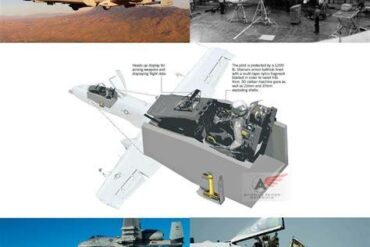
- Exceptional survivability, including titanium armor protecting the pilot
- Ability to fly low and slow, enabling precise targeting
- Short takeoff and landing capability, allowing operation from austere airfields
- Redundant flight systems, enabling return even after significant damage
These characteristics make the A-10 uniquely suited for supporting ground troops in complex environments. While advanced stealth fighters like the F-35 Lightning II offer cutting-edge capabilities, they are not optimized for the same mission profile.
This creates a strategic dilemma: retire the A-10 and lose a proven capability, or keep investing in an aging platform with no replacement in sight.
The Real Cost: Strategic Gaps, Not Dollars
The destruction of an A-10 is not just a financial event—it is a capability loss with strategic consequences. In modern warfare, where precision, persistence, and close coordination with ground forces are critical, the absence of platforms like the Warthog creates gaps that are difficult to fill.
Money can build new aircraft. It cannot instantly recreate:
- Decades of operational doctrine built around the A-10
- Pilot expertise specific to low-altitude CAS missions
- A platform designed from the ground up for survivability in hostile environments
Every lost Warthog erodes a specialized niche within the U.S. military’s airpower structure.
An Aging Legend Facing an Inevitable End
The reality is unavoidable. No amount of upgrades can fully counter the effects of time. Structural fatigue, evolving threats, and shifting defense priorities are pushing the A-10 toward eventual retirement.
The U.S. Air Force has already signaled its intention to phase out the aircraft in favor of more modern systems. Yet resistance remains strong, precisely because the Warthog continues to deliver results where newer platforms struggle.
This tension defines the A-10’s final chapter: an aircraft too effective to retire, yet too old to sustain indefinitely.
Conclusion: More Than Just a Price Tag
Focusing solely on the cost of an A-10 Warthog misses the larger story. Yes, each aircraft represents a massive financial investment. But the true cost lies in its irreplaceability, specialized capability, and shrinking numbers.
When one is lost, the impact extends far beyond dollars. It is a reminder that some military assets cannot simply be replaced—they can only be remembered, studied, and ultimately missed.