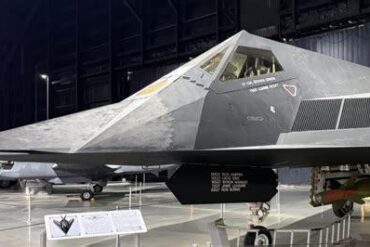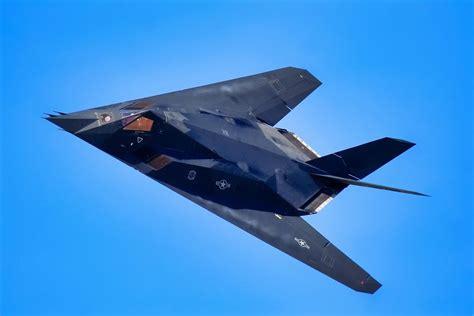
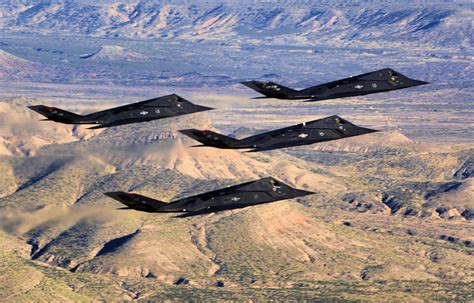
The Lockheed F-117 Nighthawk officially left frontline U.S. Air Force service in 2008, seemingly closing the chapter on the world’s first operational stealth combat aircraft. Yet more than fifteen years after retirement, aviation enthusiasts, military observers, and photographers continue spotting the unmistakable angular black aircraft flying above Nevada’s Tonopah Test Range, Edwards Air Force Base, and even major military exercises around the United States. Rather than fading quietly into museums, the pioneering stealth aircraft has quietly entered an entirely new phase of its career.
Its continued appearances are not accidents, ceremonial flyovers, or simple maintenance flights. Instead, the aircraft has evolved into one of the most valuable hidden assets in America’s defense ecosystem. While newer fifth-generation fighters such as the F-22 Raptor and F-35 Lightning II dominate headlines, the older Nighthawk has found a remarkably important niche supporting advanced pilot training, stealth research, sensor development, and next-generation aircraft programs.
Understanding why these aircraft remain airborne reveals far more than nostalgia. It provides an insightful look into how the United States prepares for future conflicts against technologically advanced adversaries while preserving the lifespan of its most expensive combat aircraft.
The F-117 Never Truly Disappeared
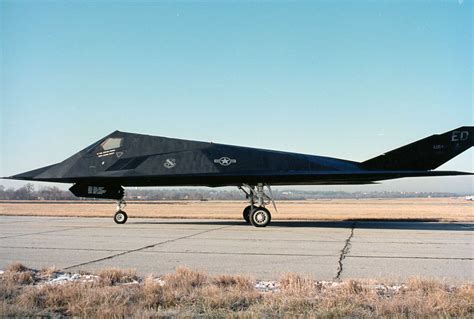
When the U.S. Air Force announced the retirement of the F-117 in 2008, many assumed every surviving aircraft would immediately be transferred into long-term storage. While most airframes were indeed preserved inside highly secure climate-controlled hangars at Tonopah Test Range Airport, they were intentionally maintained in flyable condition rather than dismantled.
That decision now appears remarkably forward-thinking. Instead of becoming museum pieces, selected aircraft periodically returned to the skies, initially in small numbers before sightings gradually increased throughout the 2010s and into the 2020s. Unlike traditional retired aircraft, the Nighthawk fleet was never completely abandoned. Engineers continued preserving structural integrity, maintaining flight systems, and keeping experienced maintenance personnel familiar with the aircraft.
The result is a surprisingly capable reserve fleet of stealth aircraft available whenever the Department of Defense requires realistic low-observable targets, experimental platforms, or specialized test aircraft. Because no other retired American stealth aircraft exists in meaningful numbers, the F-117 occupies an exceptionally unique position within the military inventory.
Why Nevada Remains The Nighthawk’s Home
The majority of sightings continue to occur around the Nevada Test and Training Range (NTTR), particularly near Tonopah, where the aircraft spent decades operating under extraordinary secrecy.
Nevada offers an ideal environment for classified aviation activities. Vast restricted airspace, favorable flying weather, sophisticated radar instrumentation, and proximity to multiple testing facilities allow highly sensitive missions to be conducted with minimal public exposure. The same isolated desert that once concealed the birth of stealth aviation now serves as the perfect laboratory for refining its future.
Pilots flying modern stealth fighters routinely participate in exercises across this enormous training complex. Here, the F-117 provides something no simulator can fully replicate: an actual stealth aircraft with known radar and infrared characteristics that can challenge crews under realistic operational conditions.
Acting As The Enemy In Modern Stealth Warfare
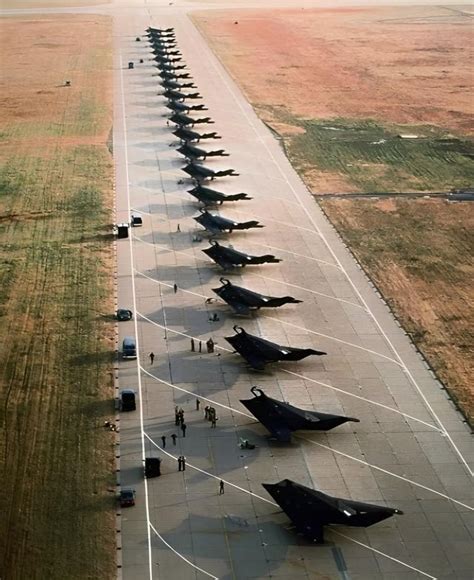
Perhaps the aircraft’s most important modern mission is serving as Red Air, the military term for aggressor forces that simulate enemy aircraft during combat exercises.
Modern air combat increasingly revolves around detecting opponents before being detected. Traditional aggressor aircraft such as the F-16 or F/A-18 can effectively simulate conventional fighters, but they cannot accurately reproduce the challenges presented by low-observable aircraft.
The F-117 changes that equation entirely.
Although designed decades before today’s fifth-generation fighters, its stealth characteristics still create realistic detection challenges. This enables pilots flying the F-22 and F-35 to practice locating, tracking, identifying, and engaging stealthy opponents using combinations of radar, infrared search-and-track systems, passive sensors, electronic support measures, and networked battlefield awareness.
Because American engineers possess exhaustive data documenting every measurable aspect of the Nighthawk’s radar cross-section, training missions can be carefully calibrated. Every detection, missed intercept, and successful engagement generates exceptionally valuable information for improving tactics.
A Flying Laboratory For Radar And Sensor Development
Beyond pilot instruction, the F-117 functions as one of America’s most useful airborne research platforms.
Every new fighter radar, naval radar, missile seeker, infrared tracking system, or electronic warfare package must eventually prove its effectiveness against genuine stealth targets. Computer simulations remain valuable, but nothing replaces collecting data against an actual aircraft flying realistic mission profiles.
The Nighthawk offers engineers a precisely understood baseline. Since its radar signature has been studied for decades, researchers can accurately measure whether upgraded sensors genuinely improve detection performance or whether software modifications merely produce statistical noise.
Likewise, the aircraft’s carefully engineered exhaust system, thermal shielding, and low infrared signature allow developers to validate increasingly sophisticated infrared search-and-track technologies. These systems are becoming critically important because modern stealth fighters often minimize radar emissions while relying on passive sensors to locate enemy aircraft.
Supporting The Transition Toward Pacific Operations
America’s strategic focus has increasingly shifted toward the Indo-Pacific region, where potential future conflicts could involve advanced stealth aircraft operated by near-peer competitors.
Exercises such as Red Flag, Northern Edge, and Savannah’s Century Savannah drill increasingly emphasize joint operations among the Air Force, Navy, Marine Corps, and allied nations. These exercises require realistic adversaries capable of representing emerging threats rather than legacy Cold War aircraft.
The F-117 helps bridge this capability gap.
Although it differs substantially from modern Chinese stealth aircraft such as the Chengdu J-20, it nevertheless presents pilots with many of the same operational challenges associated with detecting and engaging low-observable targets. This provides commanders an affordable way to increase exercise realism while refining tactics for future combat environments stretching across the First and Second Island Chains.
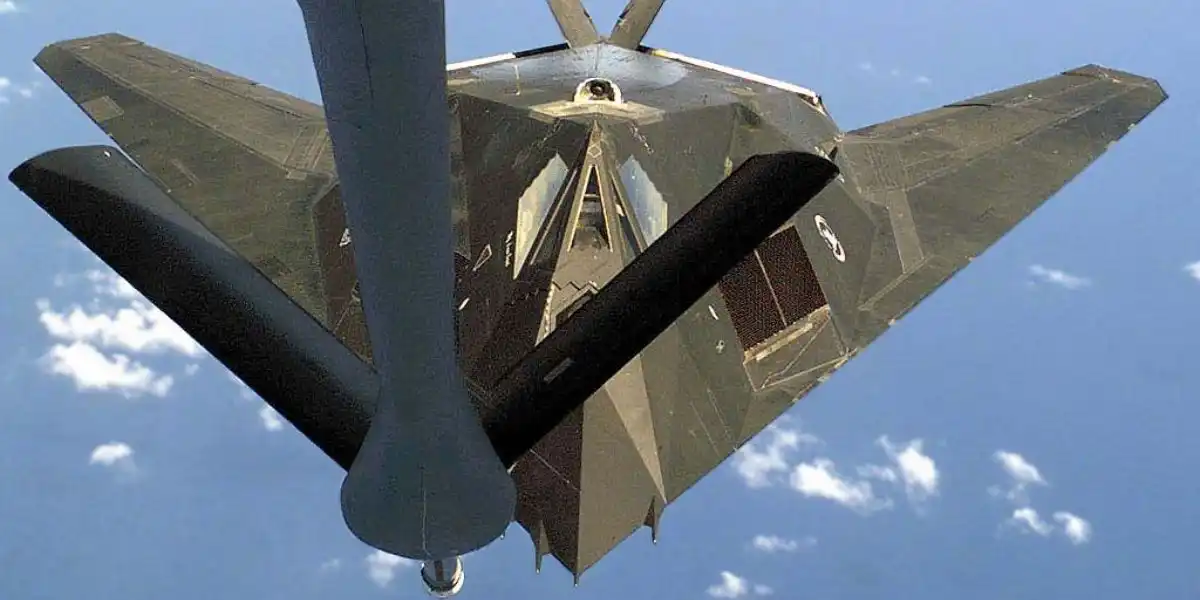
Instead of remaining permanently assigned to one base, the surviving Nighthawks operate as mobile assets, temporarily deploying wherever advanced training requirements emerge.
Testing Tomorrow’s Stealth Technologies
One of the most intriguing aspects of recent F-117 operations involves persistent reports of experimental coatings and unusual external finishes.
Observers have photographed certain aircraft wearing mirror-like or multispectral surface treatments unlike the traditional matte black appearance associated with the Nighthawk. While official explanations remain unavailable, defense analysts widely believe these aircraft may be evaluating next-generation radar-absorbent materials, infrared suppression technologies, or advanced multispectral camouflage concepts.
The aircraft’s flat geometric panels make installing and evaluating new materials considerably easier than on more aerodynamically complex modern fighters. Engineers can compare experimental coatings against decades of historical performance data, allowing measurable improvements to be quantified with exceptional precision.
Such testing could directly benefit future aircraft including upgrades for the F-22, improvements to the F-35, and technologies destined for America’s emerging sixth-generation fighter program.
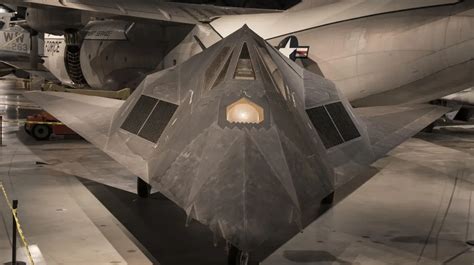
The Wobbly Goblin Is Still An Outstanding Testbed
Pilots affectionately nicknamed the aircraft the “Wobbly Goblin” because its faceted design produced handling characteristics unlike conventional fighters.
Ironically, those unconventional flying qualities now contribute to its continued usefulness.
Unlike frontline combat aircraft, which commanders hesitate to modify extensively, retired F-117s provide engineers with comparatively low-risk airframes for experimentation. New avionics, electronic warfare equipment, sensor pods, stealth coatings, and thermal management concepts can all be evaluated without disrupting operational squadrons.
If an experimental technology requires repeated testing under challenging flight conditions, the Nighthawk offers an ideal balance between capability, availability, and affordability.
The enormous archive of historical flight data accumulated over decades further increases its scientific value. Engineers can directly compare new measurements against original baseline data gathered during the aircraft’s operational career.
Helping Develop America’s Sixth-Generation Future
The U.S. Air Force’s Next Generation Air Dominance (NGAD) program represents the future of American tactical aviation, eventually producing the designated F-47 fighter.
Although development continues, operational deployment remains years away. Bridging that technological gap requires constant experimentation with sensors, coatings, networking technologies, and electronic warfare systems long before production aircraft enter service.
The F-117 provides exactly that opportunity.
Instead of risking scarce prototype aircraft, engineers can validate individual technologies aboard existing Nighthawks before integrating successful concepts into future designs. This incremental development approach reduces technical risk while accelerating innovation.
Consequently, the aircraft contributes not merely to today’s readiness but also to tomorrow’s air superiority.
Saving Flight Hours On America’s Most Expensive Fighters
Economics represent another compelling reason the Nighthawk continues flying.
Every training sortie consumes valuable service life from frontline fighters. The F-22 requires exceptionally intensive maintenance, with estimated operating costs exceeding $80,000 per flight hour, while many estimates place the F-35 between $30,000 and $40,000 per hour depending on mission profile.
The F-117, despite its age, is estimated to operate for substantially less, often below $20,000 per flight hour.
That difference becomes significant across hundreds of annual training flights.
Rather than assigning expensive fifth-generation fighters to act merely as targets or sensor calibration platforms, commanders can reserve those aircraft for operational missions while allowing the Nighthawk to absorb routine developmental testing and aggressor duties.
This strategy preserves airframe lifespan, reduces maintenance demand, and lowers operating costs without sacrificing training quality.
A Reliable Alternative During F-35 Readiness Challenges
Operational readiness remains an ongoing challenge for modern fighter fleets.
Mission-capable rates for the F-35 have fluctuated due to software updates, maintenance demands, and supply chain constraints. Every hour spent performing nonessential developmental missions represents time unavailable for combat readiness.
The mechanically simpler F-117 avoids many of these complications.
Although technologically older, it remains sufficiently capable for specialized research missions that do not require the full sensor fusion or networking architecture of fifth-generation fighters. Engineers can rapidly install experimental hardware, perform flight evaluations, analyze results, and repeat testing without disrupting operational combat units.
Its continued availability effectively expands the Air Force’s testing capacity while protecting scarce frontline resources.
Why Aviation Enthusiasts Continue Spotting The F-117
Recent sightings around Nevada, California, Alaska, and Georgia should therefore not be viewed as isolated curiosities. Instead, they reflect an aircraft that has quietly transitioned from frontline strike platform into one of the Pentagon’s most versatile research and training assets.
Whether supporting Red Flag, conducting classified sensor evaluations, participating in electronic warfare experiments, or validating technologies destined for sixth-generation aircraft, the F-117 continues making meaningful contributions to American airpower.
Its presence also demonstrates an enduring lesson in military aviation: retirement rarely means irrelevance. Aircraft specifically engineered to solve one generation’s greatest challenge often possess unexpected value when preparing for the next.
Conclusion
The Lockheed F-117 Nighthawk changed military aviation forever when it introduced operational stealth to modern warfare. More than fifteen years after leaving frontline service, its remarkable second career has become almost as fascinating as its first.
Instead of gathering dust inside museums, surviving Nighthawks now sharpen fighter pilot skills, evaluate cutting-edge sensors, test revolutionary stealth technologies, support classified research, and reduce wear on America’s most sophisticated combat aircraft. Their continued operations over Nevada represent not a relic refusing retirement, but a carefully managed strategic asset delivering exceptional value across multiple defense programs.
As the United States prepares for the arrival of sixth-generation fighters and increasingly complex stealth-on-stealth combat environments, the aircraft that pioneered low-observable warfare continues proving that innovation rarely becomes obsolete. The F-117 may no longer lead combat formations, but it remains an indispensable contributor to the future of American air dominance.