On July 16, 1945, the world changed forever when the remote desert plains of Los Alamos, New Mexico, witnessed the detonation of the first atomic bomb under the codename “Trinity.” This event not only ended an era of conventional warfare but catapulted humanity into the terrifying realm of nuclear power. Though other nations would follow suit—the Soviet Union with 715 tests and the United Kingdom with 45—the United States would go on to conduct an unprecedented 1,029 nuclear weapons tests, most of which took place in the vast, desolate expanse of Nevada.
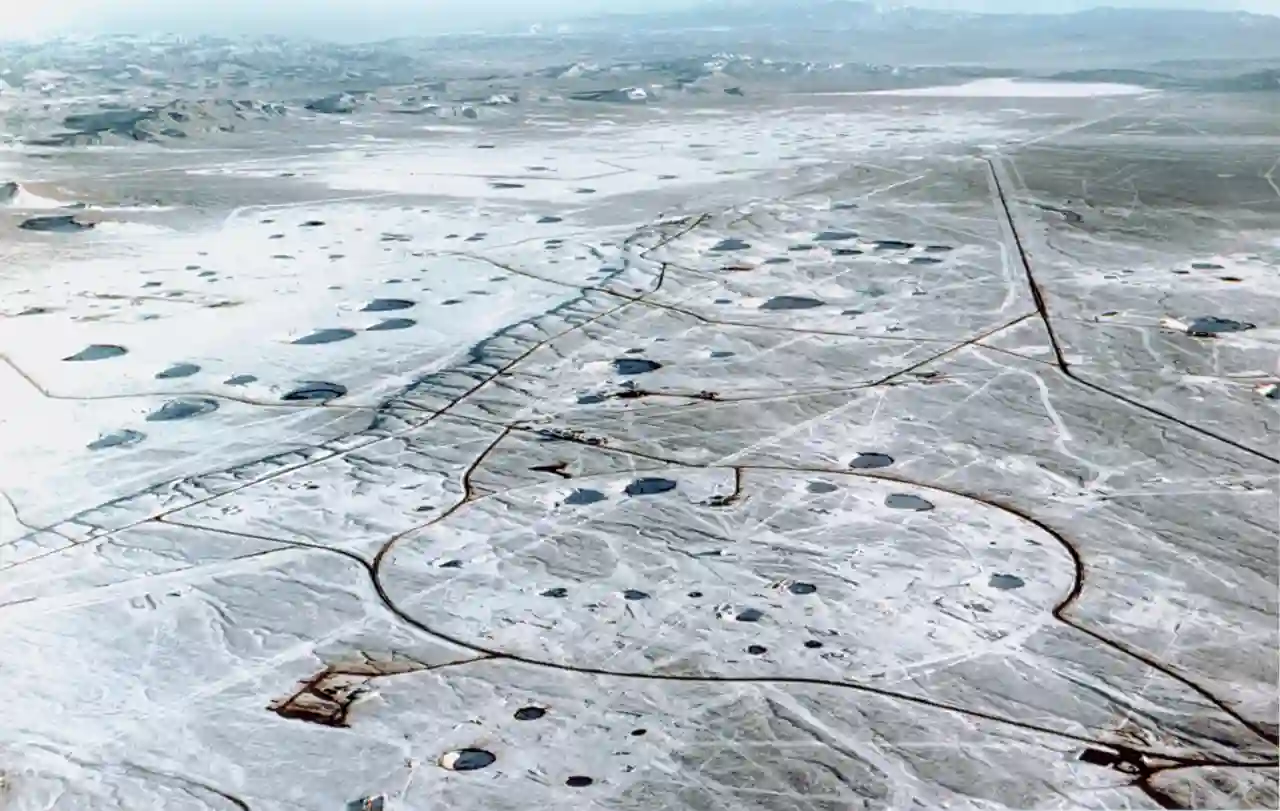
The Nevada Test Site, later known as the Nevada National Security Site (NNSS), earned the grim distinction as the most bombed place on Earth. Between 1951 and 1992, it became synonymous with mushroom clouds, ground-shattering explosions, and radioactive fallout that shaped global politics, scientific progress, and environmental debates.
Why Nevada Became Ground Zero for Nuclear Testing
The choice to turn Nevada into America’s primary nuclear proving ground wasn’t arbitrary. Following earlier tests in the remote Marshall Islands, including Operation Crossroads and Operation Sandstone, the U.S. military sought a more accessible, controlled environment for continued nuclear experimentation.
Nevada, specifically a section of the Nellis Air Force Gunnery and Bombing Range, checked all the right boxes:
- Vast, uninhabited stretches of arid desert
- Low population density, minimizing civilian exposure
- Favorable wind patterns that, in theory, carried radioactive fallout away from major urban centers
- Federal control of the land, reducing bureaucratic hurdles
In 1950, President Harry S. Truman authorized the creation of the Nevada Test Site, a sprawling facility roughly 65 miles northwest of Las Vegas, forever altering both the physical and historical landscape of the region.
The First Nuclear Detonation in Nevada: Shot Able
The Nevada desert’s violent relationship with nuclear testing began on January 27, 1951, when a one-kiloton device known as Shot Able was detonated. Though relatively small compared to later tests, this marked the beginning of nearly half a century of atomic experimentation.
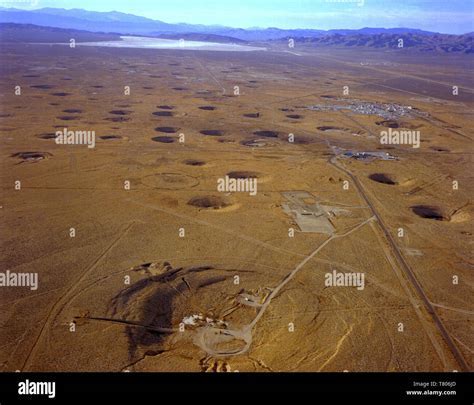
By July 2, 1962, the test site had seen progressively larger and more sophisticated devices. That day witnessed the most powerful bomb ever detonated in Nevada: a 104-kiloton nuclear device under the controversial Plowshare Program, designed to explore “peaceful” uses of nuclear explosions such as excavation and energy production.
The blast left behind a colossal crater measuring 1,280 feet wide and 320 feet deep, a scar on the Earth so vast it could engulf the Statue of Liberty.
Above Ground to Underground: The Shift in Testing Strategy
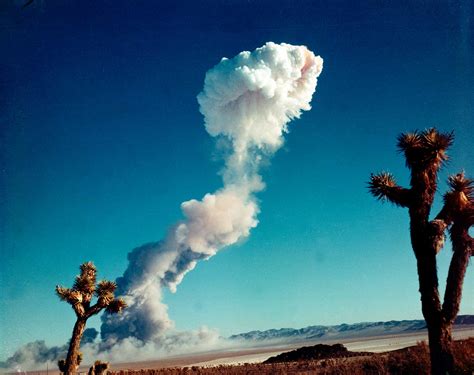
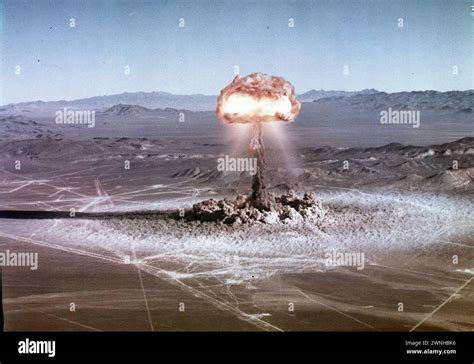
Initially, all tests at the Nevada site were atmospheric, meaning they took place above ground, sending towering plumes of radioactive debris into the skies. These tests created the iconic, eerie images of mushroom clouds that defined the Cold War era.
But as understanding of nuclear fallout improved—and public concern grew—scientists pivoted towards underground detonations. The first successful underground test, known as Rainier, took place in 1957, paving the way for more contained, less visibly catastrophic experiments.
From that point forward, most of Nevada’s nuclear detonations occurred beneath the desert’s surface. By the time the final nuclear test, Divider, was conducted on September 23, 1992, the test site had hosted 928 nuclear tests, with 100 atmospheric and 828 underground.
Scientific Advancements and Military Imperatives
The Nevada Test Site wasn’t merely a destructive showcase—it was a laboratory for advancing American nuclear capabilities. Each test served multiple critical purposes:
- Weapon Development: Testing allowed scientists to refine and improve the efficiency, yield, and reliability of nuclear weapons.
- Military Readiness: The military gained invaluable insights into how nuclear blasts impacted structures, vehicles, and terrain.
- Environmental Studies: Despite the destructive nature of the tests, they inadvertently advanced knowledge about radiation, geology, and atmospheric sciences.
- Peaceful Applications: Programs like Plowshare sought to repurpose nuclear detonations for civil engineering and energy production, though these efforts remained controversial and largely abandoned.
Fallout and the Human Cost
While the Nevada Test Site played a pivotal role in advancing military science and asserting American dominance during the Cold War, it came at a steep price. Communities downwind of the site, especially in Utah and parts of Nevada, suffered increased cancer rates and other health complications, leading to the term “Downwinders” to describe affected populations.
The atmospheric tests dispersed radioactive particles across hundreds of miles, contaminating soil, water, and air. Although underground tests reduced visible fallout, they were not without risks, often triggering earthquakes or venting radioactive gases through fissures.
Today, researchers continue to assess the full extent of the health and environmental consequences. Lawsuits, compensation programs, and medical studies have become part of the long shadow cast by America’s nuclear legacy.
International Consequences and Arms Control
The spectacle of frequent nuclear detonations in Nevada sent a powerful message to the world. During the tense decades of the Cold War, it reinforced America’s technological superiority and military readiness.
But the devastating potential of nuclear weapons also galvanized global efforts to regulate and limit their use. Nevada’s nuclear experiments contributed to broader international treaties, including:
- The Partial Test Ban Treaty (1963), which prohibited atmospheric, outer space, and underwater nuclear tests
- The Nuclear Non-Proliferation Treaty (NPT) (1970), aiming to prevent the spread of nuclear weapons technology
- Discussions around comprehensive test bans, culminating in the Comprehensive Nuclear-Test-Ban Treaty (CTBT), although the United States has signed but not ratified the CTBT
These agreements, coupled with advancements in nuclear monitoring technology, have significantly reduced global nuclear testing, though some nations continue clandestine programs.
Nevada’s Nuclear Legacy in Modern Times
Today, the Nevada National Security Site stands as both a monument to scientific ambition and a cautionary tale of unchecked destructive power. Although active nuclear testing ceased in 1992, the site remains operational for subcritical experiments, which study nuclear materials without triggering a chain reaction.
Public tours occasionally offer glimpses into the forbidden, scarred landscapes dotted with craters and abandoned structures, reminders of the atomic age’s height. Meanwhile, the debate over nuclear energy, weapons stockpiling, and environmental cleanup continues.
Nevada’s fate as the most nuked place on Earth underscores the complexities of technological progress, national security, and ethical responsibility. Its barren plains carry the echoes of countless detonations, symbolizing both mankind’s unparalleled scientific achievements and the ever-present threat of nuclear catastrophe.