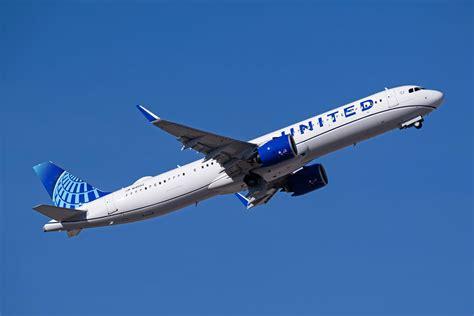
United Airlines has quietly crossed a threshold that reshapes the competitive map of global aviation. In sheer long-haul flight volume, no U.S. carrier—and in fact, almost no airline anywhere—comes close. According to forward schedules for the first half of 2026, United is operating at a scale that leaves its domestic rivals trailing by a wide, measurable margin. This is not a matter of brand perception or marketing muscle. It is a hard numbers story, rooted in fleet strategy, hub geography, and an unusually aggressive appetite for long-distance flying.
The scale of this lead is what makes it startling. United is scheduled to operate nearly 54,000 long-haul flights in the first six months of 2026 alone, defined as services exceeding 3,000 miles in great-circle distance. That translates to roughly 300 long-haul departures every single day. Even airlines renowned for global reach struggle to match that tempo. What truly separates United, however, is not its global peers—but how decisively it has outpaced Delta Air Lines and American Airlines on intercontinental routes.
This dominance did not appear overnight. It is the result of years of disciplined fleet expansion, a willingness to experiment with aircraft deployment, and a network strategy that treats long-haul flying as the airline’s primary growth engine rather than a prestige side project.
United Airlines’ Long-Haul Advantage Is Structural, Not Incremental
United’s 53,742 long-haul flights planned for 1H 2026 represent a 3.5% year-over-year increase, building on an already massive base. Delta Air Lines, by contrast, is scheduled for approximately 38,500 long-haul flights, or about 214 per day. That gap—nearly 15,000 flights in six months—means United is operating around 40% more long-haul services than its closest U.S. rival.
American Airlines sits even further back. With just under 32,000 long-haul flights planned for the same period, American’s intercontinental network remains constrained by a comparatively smaller widebody fleet. Even with a healthy 10.6% growth rate, American still operates 68% fewer long-haul flights than United. Growth off a smaller base helps headlines, but it does not erase the structural disadvantage.
What matters here is not a single strong season or a temporary schedule spike. United’s lead is embedded into its operational DNA. The airline has built a system where long-haul flying is routine, repeatable, and scalable.
The Dreamliner Effect: How United Built the World’s Largest 787 Fleet
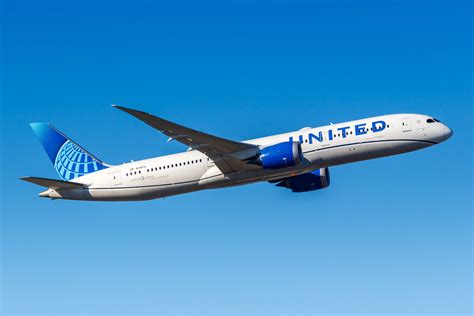
A key driver of United’s dominance is its extraordinary commitment to the Boeing 787 Dreamliner family. As of the end of 2025, United operated 81 Dreamliners, already the largest fleet of its kind in the world. In 2026, another 20 Boeing 787-9s are scheduled for delivery, pushing United well past the 100-aircraft mark.
This matters because the 787 is uniquely suited to United’s strategy. Its fuel efficiency, long range, and right-sized capacity allow the airline to profitably serve routes that would be marginal—or impossible—with older widebodies. United has leaned into this flexibility more aggressively than any U.S. competitor, turning the Dreamliner into the backbone of its long-haul expansion.
While other carriers treat widebody growth cautiously, United has treated it as an opportunity to own secondary long-haul markets before rivals can react.
New Routes, Secondary Cities, and a Willingness to Take Risks
United’s route additions for 2026 reveal how it converts fleet capacity into market advantage. From its Newark hub alone, the airline is launching new services to Bari, Glasgow, Santiago de Compostela, Split, and Seoul, mixing seasonal leisure destinations with high-value intercontinental business routes.
What stands out is not just where United is flying, but how. Two of these transatlantic routes will be operated using the Boeing 737 MAX 8, a narrowbody aircraft that Delta has been notably hesitant to deploy on long-haul missions. United’s comfort with long, thin routes using narrowbodies opens an entirely different playbook—one that will expand further with the arrival of Airbus A321XLRs later in 2026.
This approach allows United to connect secondary European cities directly to the U.S., bypassing congested mega-hubs and capturing demand that competitors leave on the table. It is a strategy that prizes network reach over uniformity and rewards operational flexibility.
Sustained Expansion, Not One-Off Growth Spurts
United’s long-haul story is not just about new dots on the map. The airline is also restoring and reinforcing routes added during its historic 2025 expansion. Seasonal destinations such as Ulaanbaatar, Nuuk, Palermo, and Madeira are returning, while high-demand corridors are seeing frequency increases rather than mere capacity swaps.
A striking example is Newark–Tel Aviv, where United is adding a third daily flight, complementing existing services from Chicago and Washington, D.C. Combined, these routes make United the largest U.S. carrier serving Israel, a position achieved through frequency, not just aircraft size.
This pattern—test, validate, expand—has become United’s default mode of growth. Routes that perform are strengthened. Routes that surprise on the upside become permanent fixtures.
Hub Power: Newark as the Most Important Long-Haul Airport in the U.S.
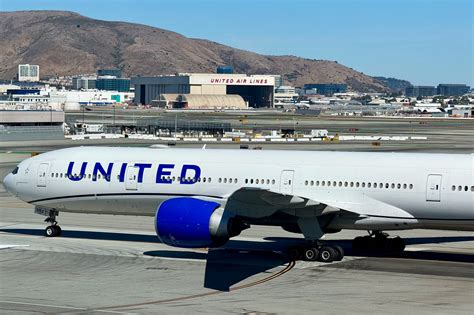
United’s dominance is reinforced by its hub strategy, particularly at Newark Liberty International Airport. With over 14,500 long-haul flights scheduled in 1H 2026, Newark is not only United’s largest intercontinental hub—it is the largest long-haul hub for any U.S. airline.
San Francisco follows with more than 10,300 long-haul flights, driven by transpacific demand and Europe-bound services. Washington Dulles and Chicago O’Hare add further depth, while Denver’s growing long-haul role underscores how widely distributed United’s network has become.
By comparison, Delta’s largest long-haul hub—Atlanta—handles just over 11,000 such flights, while American’s Dallas/Fort Worth hub sits closer to 8,000. These are powerful hubs by any standard, but they do not match the scale or diversity of United’s long-haul footprint.
Why United’s Lead Is Likely to Grow, Not Shrink
United Airlines’ 40% advantage in long-haul flights is not a temporary anomaly. It is the predictable outcome of fleet investment, risk tolerance, and a network philosophy that treats long-distance flying as a core competency rather than a branding exercise.
With more 787-9 deliveries, the introduction of the A321XLR, and a proven willingness to open unconventional routes, United has positioned itself to widen the gap further. Rivals can grow—and they will—but matching United requires years of fleet acquisition and a fundamental shift in strategy.
In modern commercial aviation, dominance is rarely about a single aircraft or route. It is about scale, repetition, and the confidence to commit. On long-haul flying, United Airlines has done exactly that—and the numbers make it clear that, for now, it is not even close.