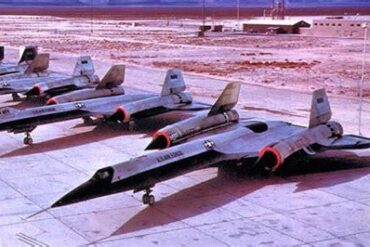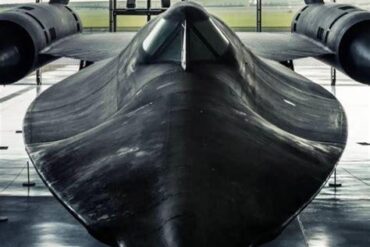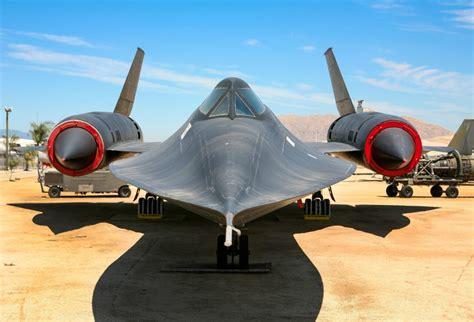
The SR-71 Blackbird, Lockheed’s legendary creation, holds the title of the fastest manned aircraft ever built, surpassing any commercial jet ever made. Introduced more than six decades ago, this remarkable plane achieved speeds that remain unmatched to this day. With a top speed of 2,193 miles per hour (approximately Mach 3.3), the SR-71 was not merely a high-speed marvel but a tool designed for one purpose: high-altitude, high-speed reconnaissance. Its unparalleled capabilities ensured that it could outfly threats and complete its mission with unmatched precision.
The Unmatched Speed of the SR-71
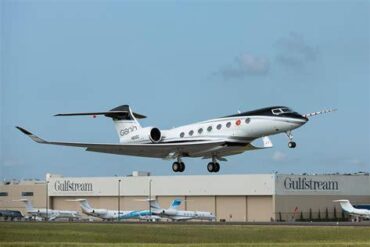
The SR-71’s incredible speed was one of its defining features. Reaching 2,193 mph, it was not only the fastest manned jet in history but also a technological breakthrough. This speed is equivalent to traveling 1.2 miles every two seconds, a feat that still leaves modern aviation in awe. To put this into perspective, commercial airliners like the Boeing 737, which is one of the most widely used aircraft, cruise at speeds of around 520 to 560 mph. The Boeing 737-700, a popular model for airlines such as Southwest, has a cruising speed of 528 mph, meaning the SR-71 is roughly 4.1 times faster than the Boeing 737-700.
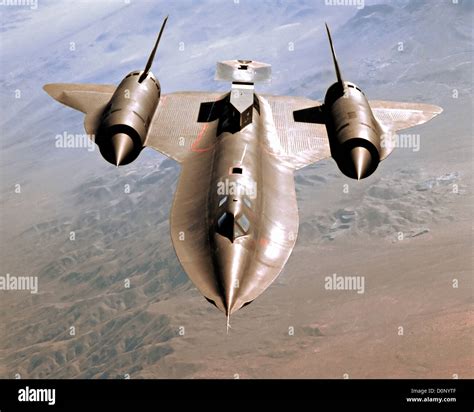
Even when compared to other commercial planes, the SR-71’s speed remains beyond reach. The Airbus A380, another major commercial aircraft, tops out at around 634 mph—still far slower than the SR-71. Even with the revival of supersonic flights in development, with expected speeds of Mach 1.7, the SR-71’s Mach 3.3 is a distant, nearly uncatchable dream. This remarkable performance solidifies the SR-71’s place as an aviation legend.
Why Commercial Planes Are Slower
So, why aren’t commercial planes as fast as the SR-71 Blackbird? The answer lies in the difference between military jets and commercial aircraft. Commercial airliners are designed primarily for comfort, safety, and efficiency. They transport large numbers of passengers, and their design focuses on fuel efficiency, reliability, and minimizing costs. Speed is not their primary concern.
Flying at extremely high speeds, like the SR-71, introduces several complications. At near-supersonic speeds, passengers would experience significant vibration and turbulence, which would make the flight uncomfortable. The sonic boom and the sheer force of flight at these speeds could also cause significant issues with airframe stability and passenger comfort. Most passengers would prefer a smooth flight at 550 mph over enduring an uncomfortable ride at over 1,000 mph.
Moreover, the faster an aircraft flies, the more fuel it consumes. The SR-71’s fuel consumption was immense, as its engines were built to operate at supersonic speeds. This leads to higher operational costs, and if commercial airlines wanted to offer similar speed, ticket prices would skyrocket. In addition, the maintenance costs for high-speed aircraft are much higher, as the aircraft undergoes more wear and tear.
The SR-71 Blackbird: A Legacy of Speed
The SR-71 Blackbird remains a symbol of aviation excellence. Its design prioritized speed, altitude, and maneuverability, making it nearly invincible in its prime. While commercial airliners today are far slower, their focus is on efficiency, cost, and comfort. The SR-71 represents a different era of aviation—one where speed was the ultimate goal. Despite its retirement, its legacy continues to inspire those who dream of pushing the limits of what is possible in aviation.
In conclusion, the SR-71 Blackbird’s unmatched speed not only set it apart from any commercial jet but also redefined the boundaries of aviation technology. Its record remains unbroken, and it continues to fascinate aviation enthusiasts and engineers alike, representing the peak of speed and innovation in the world of flight.