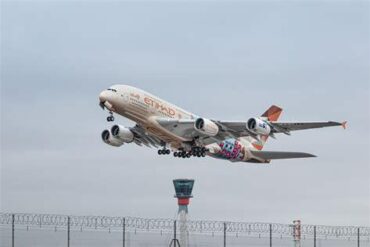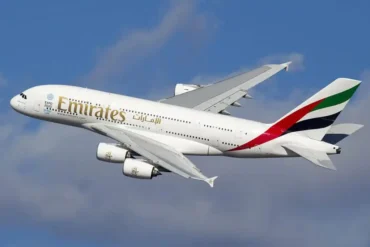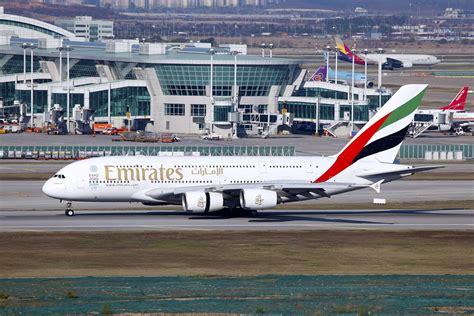
The Airbus A380 remains the undisputed king of high-capacity commercial aviation, even years after production ended. While many airlines have reduced or retired their superjumbo fleets, Emirates has transformed the world’s largest passenger aircraft into the backbone of its global network. Thanks to its unmatched fleet of more than 100 Airbus A380s, the Dubai-based carrier continues to deploy the double-decker on routes where passenger demand consistently exceeds what smaller aircraft can efficiently accommodate.
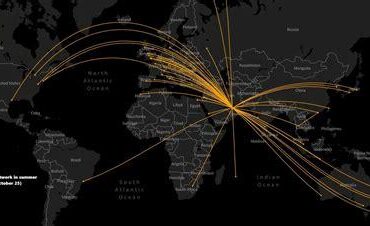
Rather than using the A380 exclusively on ultra-long-haul flights, Emirates has refined a network strategy that leverages the aircraft across both regional and intercontinental markets. Some sectors last barely three hours, while others connect major global financial centers thousands of miles apart. In every case, the objective is identical: maximize capacity, optimize premium cabin revenue, and make the most of valuable airport slots at some of the world’s busiest hubs.
Using 2026 scheduling data, five Emirates-operated routes stand above the rest, each surpassing one million annual A380 seats. Together, they demonstrate why the aircraft continues to play an essential commercial role despite changing industry trends and the growing popularity of newer twin-engine widebody aircraft.
After the third paragraph:
Dubai–Cairo: A Regional Route That Generates Global Demand
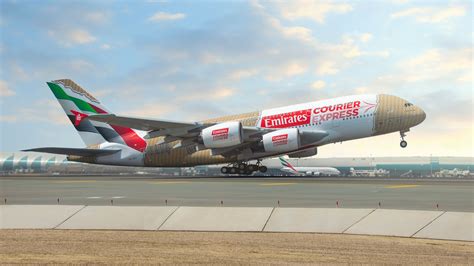
At first glance, the Dubai–Cairo market seems like an unlikely candidate for one of the world’s busiest Airbus A380 routes. The distance measures only 1,306 nautical miles (2,416 kilometers), well within the capability of virtually any modern narrowbody aircraft. Yet demand between the United Arab Emirates and Egypt has elevated this regional sector into one of Emirates’ most important high-capacity operations.
Emirates schedules approximately three daily Airbus A380 flights in each direction, supported by additional Boeing 777 services. Across the year, the airline plans 2,178 A380 flights, offering an impressive 1,086,612 seats, making Cairo the fifth-busiest A380 route globally.
The market benefits from several overlapping passenger segments. Beyond point-to-point travel, Cairo serves as a major feeder into Emirates’ vast long-haul network connecting Africa, Asia, Australia, Europe, and North America. Thousands of passengers use Dubai as a transfer hub rather than their final destination, allowing Emirates to consistently fill nearly 500-seat aircraft throughout the year.
Unlike many regional services operated with narrowbody aircraft, Emirates deploys its three-class Airbus A380 configuration featuring between 489 and 519 seats. These aircraft include luxurious First Class suites and Business Class cabins, significantly increasing premium capacity compared with the airline’s two-class Boeing 777-300ERs, which are primarily configured for economy-heavy demand.
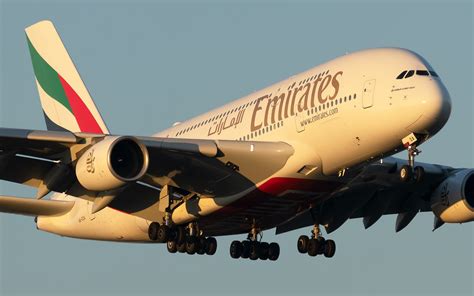
The strategy illustrates one of Emirates’ greatest competitive advantages. Instead of simply adding more frequencies, the airline concentrates additional premium seating onto fewer departures, maximizing both aircraft utilization and revenue while preserving valuable departure slots at Dubai International Airport.
Dubai–Jeddah: High-Frequency Superjumbo Operations on a Short-Haul Market
Ranking fourth with 1,164,678 annual seats, the Dubai–Jeddah route highlights a unique aspect of Emirates’ network planning. Covering only 919 nautical miles (1,701 kilometers) with block times of approximately three hours, it represents the shortest route among the world’s busiest A380 markets.
For many airlines, operating such a large aircraft on a relatively short regional flight would appear economically inefficient. Emirates, however, approaches fleet planning differently.
Rather than maintaining separate fleets of regional narrowbody aircraft and long-haul widebodies, Emirates operates an almost exclusively widebody fleet. Between international connection banks at Dubai, many aircraft would otherwise remain idle on the ground. Deploying A380s to nearby high-demand destinations allows the airline to keep these expensive assets productive throughout the day.
Jeddah is perfectly suited to this strategy. Business travel, tourism, family visits, and religious traffic connected to Mecca and Medina generate substantial year-round demand. Emirates schedules roughly three daily Airbus A380 departures in each direction, totaling 2,254 annual A380 flights.
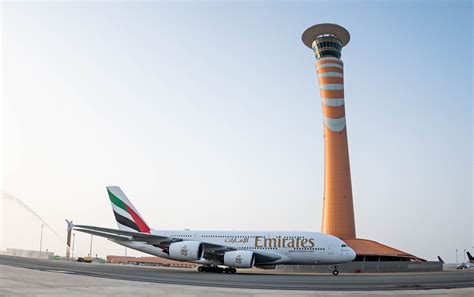
While competitors frequently rely on smaller aircraft offering numerous daily departures, Emirates capitalizes on its massive premium cabins and superior onboard experience. Even passengers traveling for only a few hours enjoy amenities rarely available on regional flights, including spacious Business Class seating and the airline’s renowned premium service standards.
The route also demonstrates how aircraft utilization can be just as important as passenger demand when determining fleet deployment. Every short-haul A380 rotation helps position aircraft for subsequent long-haul departures from Dubai while simultaneously generating additional revenue.
Dubai–Paris: Premium Travel Makes the Airbus A380 Shine
The third busiest Airbus A380 route worldwide connects Dubai with Paris Charles de Gaulle Airport, where Emirates plans 2,284 A380 flights carrying 1,181,922 seats throughout 2026.
Unlike Cairo and Jeddah, Paris represents the traditional role many envisioned for the Airbus A380 when it first entered commercial service: linking two major international hubs with exceptionally high volumes of premium travelers.
Paris remains one of Europe’s largest financial centers while simultaneously attracting millions of leisure visitors every year. Combined with Emirates’ extensive global connections through Dubai, passenger demand remains remarkably consistent across all seasons.
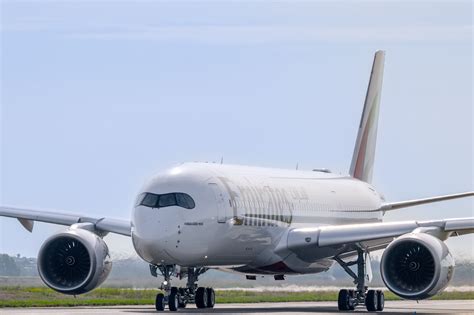
The economics become particularly attractive because of the aircraft’s premium cabin mix. Emirates’ three-class A380s serving Paris feature 14 First Class suites, 76 Business Class seats, and hundreds of Economy seats. Premium travelers contribute disproportionately high revenue, making each departure significantly more profitable than an aircraft configured primarily for economy passengers.
The onboard product itself further strengthens Emirates’ competitive position. First Class passengers enjoy private suites and exclusive shower spas, while Business Class travelers have access to the famous onboard lounge located at the rear of the upper deck. These signature features remain unique among commercial airlines and continue attracting premium customers despite growing competition from newer aircraft types.
Although Air France also serves the route, Emirates’ multiple daily A380 frequencies provide unmatched capacity and schedule flexibility, reinforcing its position as one of the dominant airlines connecting Europe with Asia, Africa, and Oceania.
Dubai–Bangkok: Tourism and Fifth-Freedom Traffic Create Massive Volume
Second place belongs to the vibrant Dubai–Bangkok corridor, where Emirates schedules 2,836 Airbus A380 flights during 2026, providing an extraordinary 1,562,990 seats.
Bangkok consistently ranks among the world’s most visited cities. Tourists from Europe, the Middle East, Africa, Australia, and North America converge on Thailand year-round, creating enormous passenger volumes that easily justify multiple daily superjumbo operations.
However, tourism alone does not explain the route’s remarkable scale.
Emirates also benefits from Thailand’s liberal aviation agreements, which allow the airline to exercise valuable fifth-freedom rights. Several Airbus A380 flights continue beyond Bangkok to Hong Kong, enabling Emirates to sell tickets both between Dubai and Bangkok and between Bangkok and Hong Kong.
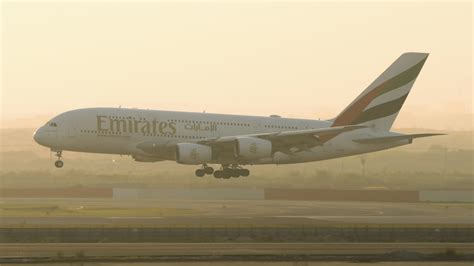
This dual-market strategy significantly boosts aircraft occupancy. Instead of relying exclusively on Dubai-bound passengers, Emirates fills seats using travelers flying entirely within Asia as well.
Fleet deployment on the route also showcases the airline’s diverse Airbus A380 configurations. Some frequencies feature the latest cabins equipped with Premium Economy, while others continue operating traditional three-class layouts that include First Class. Emirates even deploys one of its highest-density A380 variants designed to maximize passenger capacity without sacrificing premium offerings.
The result is exceptional flexibility. By matching different cabin configurations to varying daily demand patterns, Emirates can optimize both premium revenue and overall seat availability while maintaining one of the world’s highest-capacity international routes.
Dubai–London: The World’s Busiest Airbus A380 Route by a Wide Margin
No Airbus A380 route comes close to matching the scale of Dubai–London Heathrow, which comfortably ranks first with an astonishing 2,231,200 annual seats.
Emirates schedules between seven and eight daily Airbus A380 flights in each direction, creating one of the most intensive widebody operations anywhere in commercial aviation. During peak periods, the airline has even operated additional Airbus A380 services to London Gatwick, making London the single largest overseas destination for the Emirates superjumbo fleet.
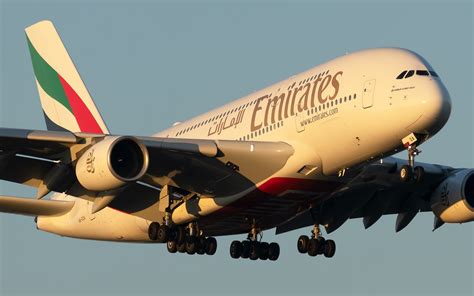
Several factors combine to produce this extraordinary level of demand. London is simultaneously one of the world’s largest financial centers, a major tourism destination, and an important gateway for global connections. Emirates funnels passengers through Dubai to destinations across Asia, Africa, Australia, and the Middle East, making Heathrow one of the airline’s most strategically valuable markets.
Premium demand is particularly strong. Emirates has prioritized deploying its newest Premium Economy-equipped Airbus A380s on flagship London frequencies, allowing passengers to choose among four cabin classes while maintaining enormous overall capacity.
Airport slot constraints also play a decisive role. Heathrow remains one of the world’s busiest and most slot-restricted airports, making additional frequencies extremely difficult to secure. Instead of increasing flight numbers, Emirates simply increases aircraft size, enabling it to transport thousands more passengers every day using the same limited allocation of takeoff and landing slots.
The result is a route unmatched anywhere else in the global Airbus A380 network.
Why Emirates Continues to Rely on the Airbus A380
Many airlines concluded that the Airbus A380 no longer fit evolving market conditions, especially as highly efficient twin-engine aircraft such as the Airbus A350 and Boeing 787 enabled profitable nonstop service between secondary cities. Emirates reached a very different conclusion.
Its business model revolves around consolidating passengers through a single mega-hub at Dubai International Airport. This hub-and-spoke strategy naturally favors aircraft capable of transporting hundreds of passengers simultaneously while maximizing the value of scarce airport infrastructure.
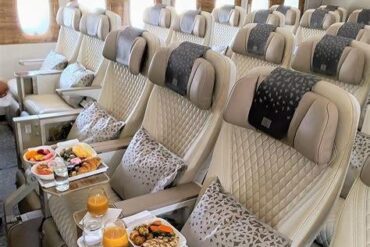
The airline has also invested heavily in making the Airbus A380 an experience rather than simply a means of transportation. First Class shower spas, the iconic onboard lounge, spacious Business Class seating, and the gradual rollout of Premium Economy continue to differentiate Emirates from competitors operating more conventional widebody cabins.
Operationally, the aircraft still offers compelling advantages. Regional sectors such as Cairo and Jeddah improve fleet utilization between long-haul connection banks, while flagship destinations like London, Paris, and Bangkok fully exploit the aircraft’s enormous seating capacity and premium revenue potential.
The Airbus A380 Still Defines High-Capacity International Travel
Despite repeated predictions of its decline, the Airbus A380 remains an indispensable asset within Emirates’ global operation. The airline’s 2026 schedule demonstrates that the superjumbo continues to excel wherever exceptional passenger demand, premium traffic, and airport slot limitations converge.
From short regional sectors across the Middle East to flagship intercontinental services linking Europe and Asia, Emirates has successfully adapted the A380 to markets that consistently justify its immense size. Together, the five busiest routes account for well over seven million annual seats, with Dubai–London Heathrow alone exceeding 2.23 million seats.
As long as Emirates continues expanding its hub-and-spoke network and passengers remain drawn to the aircraft’s distinctive onboard experience, the Airbus A380 will continue serving as the flagship of the world’s largest international airline, proving that in the right network, bigger can still be better.