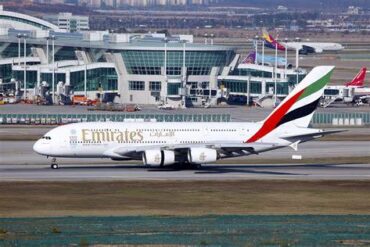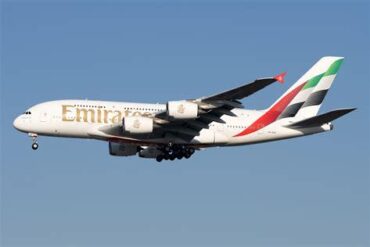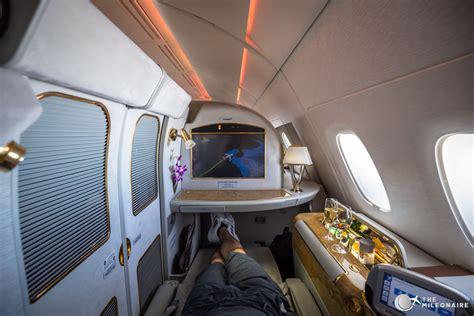
The aviation industry received a surprising ripple of intrigue at the recent IATA AGM, where Emirates President Sir Tim Clark unveiled plans to keep the Airbus A380 in the sky until 2040—a bold move in an era where most carriers are phasing out the superjumbo. More tantalizing, however, was Clark’s revelation that a new First Class suite for the A380 is ‘on the drawing board.’ While that statement alone sent waves through the aviation community, the skeptical undercurrent can’t be ignored.
Emirates’ Commitment to the A380: Strategic or Sentimental?
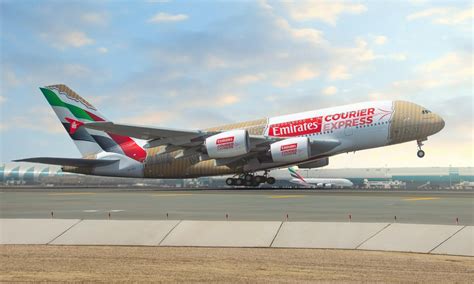
Emirates operates the world’s largest fleet of Airbus A380s, and its strategy to extend the life of these aircraft until 2040 is both ambitious and unconventional. While most global airlines have consigned the A380 to retirement, Emirates has made it central to its long-haul ambitions. The decision is less about nostalgia and more about leverage—leveraging Dubai’s strategic geographic location, its position as a global connector, and the A380’s unparalleled capacity.
Clark likened the aircraft to a luxury hotel, emphasizing that “you’ve got to keep at it”—suggesting Emirates is committed to refreshing and renewing the in-flight experience. While this philosophy may echo across Emirates’ marketing materials, what it means in practical terms is still murky.
The First Class Conundrum: Why Reinvention May Not Add Up
At first glance, a new First Class product on the A380 seems like a logical next step for an airline known for opulence at altitude. But beneath the glamour lie hard realities that complicate such aspirations.
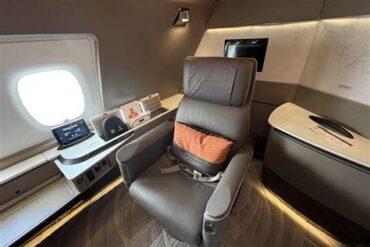
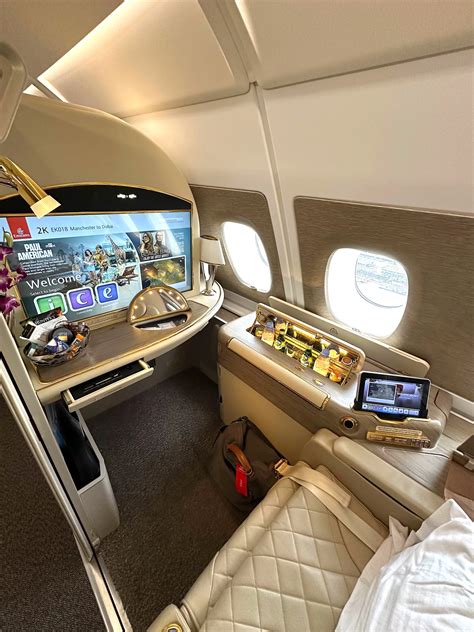
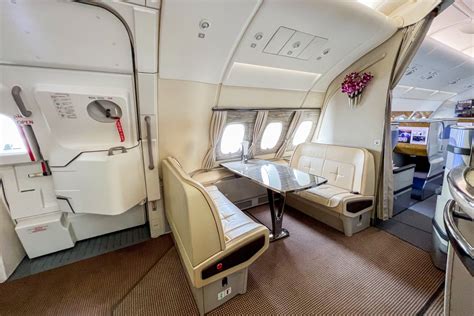
The existing Emirates A380 First Class product, first introduced in 2008, has aged better than most, thanks to periodic cosmetic upgrades. While the core structure remains unchanged—14 suites at the front of the upper deck—features like raised privacy doors, larger screens, and updated lighting have kept it visually competitive.
Yet the promise of a ground-up redesign feels more aspirational than actionable. Clark’s phrasing, that the product is still “on the drawing board,” suggests the concept remains embryonic. Given the multi-year certification, engineering, and retrofitting process, we’re likely looking at a 2030 implementation window at best—which leaves only a decade before the aircraft’s projected phase-out.
Engineering Constraints: The A380’s Upper Deck Is a Challenge
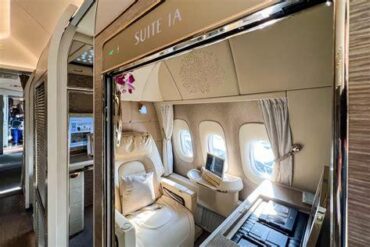
One of the least discussed, yet most critical, obstacles to a revamped First Class suite is the physical structure of the A380 itself. While the aircraft is enormous, its upper deck is actually narrower than that of the Boeing 777’s fuselage. That presents a unique challenge: Emirates can’t simply transplant the new 777 First Class suites into the A380 cabin.
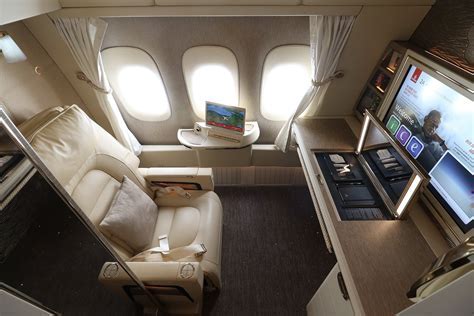
The newer 777 suites offer an ultra-private, floor-to-ceiling design with just six seats per cabin. This format would likely reduce the First Class seat count on the A380, which could clash with Emirates’ business model. Emirates doesn’t just chase luxury for its own sake—it optimizes it for revenue. The A380’s current 14-suite layout strikes a delicate balance between exclusivity and profitability.
Historical Precedents Show Conservative Evolution
If history is a reliable guide, Emirates will likely favor incremental refinement over radical redesign. Consider the rollout of the 777 First Class suites, first unveiled in 2017. Despite their fanfare, only nine aircraft have been fitted with the product over an eight-year span. Even as Emirates begins retrofitting its 777 fleet with new Business Class and Premium Economy cabins, the carrier is choosing to retain its original First Class suite.
Why? Because the new suites, while visually stunning, come at a cost: they take up more space, reducing seat count. In a high-demand market like First Class, fewer seats can mean lost revenue unless yields skyrocket—which is not how Emirates operates.
Emirates sells First Class not as an elite experience for a select few, but as a mass-market luxury product. That may sound paradoxical, but it’s a successful strategy. The airline offers competitive pricing, frequent upgrade paths for elite members, and a consistently excellent soft product. It’s less about exclusivity and more about accessibility without compromising allure.
The Economics Don’t Favor Overhaul
One of the biggest arguments against a ground-up First Class redesign for the A380 is simple economics. The cost of redesigning, certifying, and retrofitting a fleet of aircraft is astronomical. That’s before considering the operational downtime required to remove aircraft from service for retrofitting—an expensive proposition for a product that’s still performing well commercially.
Given that the A380 is now 17 years into service and Emirates plans to keep them for another 15 years, any major capital expenditure must offer a strong return on investment. With aircraft being retired progressively until 2040, retrofitting each with a new First Class product only makes sense if the airline commits to keeping them all operational until the end. And that’s a gamble Emirates may be unwilling to take.
Expect Polished Evolution, Not Reinvention
What’s more likely is a significant refresh of the existing First Class experience, not an entirely new design. This could mean:
- Enhanced seat finishes and cabin lighting
- Upgraded in-flight entertainment with 4K resolution
- New fabrics and materials for a modernized look
- Possibly reworked privacy partitions for more enclosure
Such changes would align with Emirates’ existing patterns of cabin evolution, offering a renewed passenger experience without the logistical burden of a redesign. It’s a path that delivers fresh appeal while maintaining the same 14-seat layout that balances capacity with comfort.
The Reality Behind the Rhetoric
When Clark says the new product is on the drawing board, it is a declaration of intent, not a guarantee of transformation. Given Emirates’ methodical pace and business-driven decisions, it’s prudent to temper expectations.
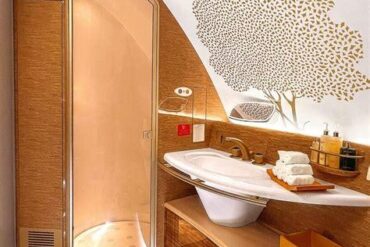
The A380 is still a passenger favorite, and Emirates’ First Class remains a benchmark in luxury aviation. Showers at 40,000 feet, a dedicated onboard bar, and attentive service mean the soft product alone can sustain the brand’s elite image. In this context, aesthetic polish trumps architectural overhaul.
And there’s another angle: competitive positioning. Emirates’ real competition in First Class is narrowing. Airlines like Air France, Singapore Airlines, and Lufthansa offer world-class First Class experiences, but few operate at the same scale. Emirates’ broad accessibility—both in terms of routes and pricing—means it often wins by being the best available, even if not the best absolute.
Final Descent: A Future Wrapped in Familiar Luxury
Emirates is at a crossroads: the promise of innovation clashes with the pull of practicality. While a new A380 First Class suite may sound like a revolution, it’s far more plausible that Emirates will opt for a refined version of its current product. The numbers don’t justify a redesign, and history doesn’t suggest one is imminent.
Clark’s vision is undoubtedly forward-thinking, but whether it materializes in the form of a cabin overhaul or just another series of upgrades remains to be seen. What’s certain is that Emirates will continue to market its First Class as the gold standard—whether in a reimagined suite or simply a polished legacy.
Until then, the A380 will continue to soar, and passengers will keep stepping into a First Class cabin that may not be revolutionary, but is undeniably Emirates.