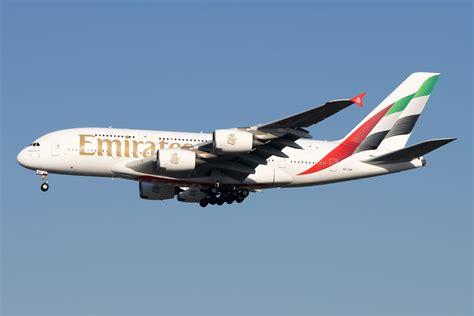
In an unexpected twist that has grabbed global aviation headlines, Emirates has deployed its iconic Airbus A380 superjumbo on an ultra-short hop between Dubai (DXB) and Madinah (MED)—temporarily establishing the shortest scheduled A380 service in the carrier’s network. However, despite the excitement such a deployment generates, this historic routing is far from routine. A closer examination reveals a complex interplay of logistics, strategic marketing, and religious tourism dynamics.
The A380’s One-Off Return to Madinah
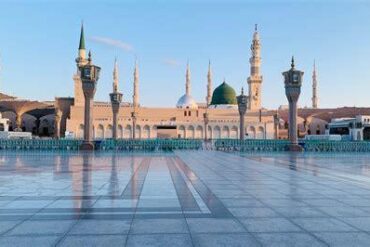
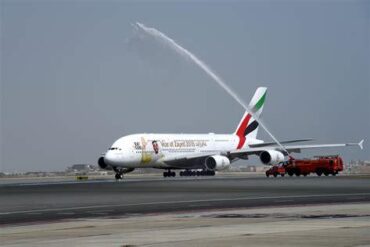
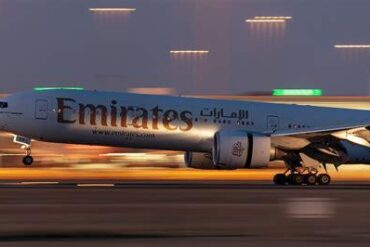
On November 20, Emirates will operate flight EK809 from Dubai to Madinah using a 615-seat, two-class Airbus A380. This one-day-only deployment is not part of a broader strategy to serve this route with the double-decker on a recurring basis. Instead, the decision was driven by a surge in demand linked to Umrah pilgrims, particularly from a single large tour group requiring high-capacity transport.
While the A380’s use on short-haul routes is rare, it is not unprecedented. What makes this occasion remarkable is the gap of more than six years since the aircraft last touched down in Madinah. Previous visits were logged in August 2017 and August 2019, underscoring just how special this reappearance is.
The flight’s blocked duration is just 2 hours and 30 minutes, shaving 15 minutes off Emirates’ former shortest A380 route between Dubai and Jeddah. With such a short block time, Madinah briefly becomes the airline’s shortest A380 route ever scheduled, eclipsing even the brief stint of A380 service to Bahrain earlier this year.
A Route Fueled by Spiritual Demand
Madinah, one of Islam’s holiest cities, consistently sees surges in air travel demand during periods of religious significance. The Umrah pilgrimage, though non-mandatory, draws millions annually. In this context, the A380’s deployment appears to be a calculated move to accommodate exceptional traffic levels.
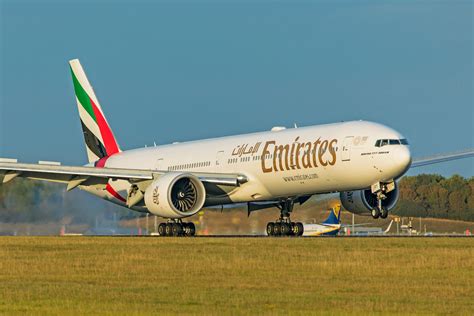
The pricing further confirms the demand spike: On November 20, a one-way economy ticket from Dubai to Madinah on EK809 is priced at an eye-watering $2,086, as listed on Google Flights. By comparison, the next day’s service aboard the more typical Boeing 777-300ER costs just $346. The return leg (EK810) is similarly marked down, reflecting the directional demand imbalance and underlining how Emirates is leveraging yield optimization for a high-value tour group.
Configuration Matters: The 615-Seat Workhorse
For this unique flight, Emirates has selected its densest A380 configuration—a two-class layout without First Class that seats 615 passengers. This model is primarily designed for routes with maximum economy demand and minimal premium traffic, which aligns well with the needs of group travel for religious pilgrimages.
This aircraft differs significantly from Emirates’ more premium-heavy variants, which include:
- Four-class layout: 468 seats (with First, Business, Premium Economy, and Economy)
- Three-class layout: 517–550 seats depending on sub-variant
- Two-class layout: 615 seats, no First Class
The use of this layout signals a deliberate move to maximize revenue per flight while still meeting the group’s logistical demands.
A Look Back: Emirates’ History With Madinah
Emirates began serving Madinah in 2010, and over the last 15 years, it has cycled through seven different aircraft types on the route:
- Airbus A330-200
- Airbus A340-300 (limited use)
- Boeing 777-200ER and -200LR
- Boeing 777-300 and -300ER
- Airbus A380 (very rare appearances)
The Boeing 777-300ER has been the dominant workhorse, accounting for 73% of all flights. Yet, it is the occasional A380 deployments that continue to capture attention, precisely because of their rarity and spectacle.
In the 12 months ending September 2025, Emirates carried approximately 274,000 round-trip passengers on this route. Of these, 38% were point-to-point travelers, while 62% connected via Dubai to long-haul destinations.
Strategic Hubs and Religious Gateways
Madinah’s traffic profile is unique. Its primary international feeder markets include:
- Pakistan
- India
- Malaysia
- Indonesia
- Bangladesh
The top city pair was Kuala Lumpur–Madinah, followed by Jakarta, Karachi, Dhaka, and Lahore. While London Heathrow was the top European market, it ranked only 54th overall, highlighting the route’s focus on Asia-Pacific and South Asian diaspora.
With Emirates’ expansive global network, its Dubai hub acts as a centralized transit point for pilgrims from across the Islamic world. The deployment of the A380 on this corridor showcases not just demand management, but also Emirates’ positioning as a preferred carrier for religious travel, especially during high-traffic windows.
Emirates’ Other Short A380 Routes
November’s schedule reveals that Madinah is not alone in the elite club of short-haul A380 services. Other Emirates routes with similar block times include:
- Dubai–Jeddah: 2h 45m
- Dubai–Amman: 2h 55m
- Dubai–Mumbai: 3h 05m
- Dubai–Bangkok–Hong Kong: 2h 55m (sector-based)
Historically, Emirates has also flown its A380s on even shorter routes:
- Muscat: 1h 05m
- Doha: 1h 10m
- Bahrain: 1h 15m
- Riyadh & Kuwait: 1h 45m
These are often special flights or test runs, with operational decisions influenced by airport infrastructure, pilot training, and marketing exposure rather than profitability alone.
The Global Picture: Is Madinah the Shortest A380 Route Ever?
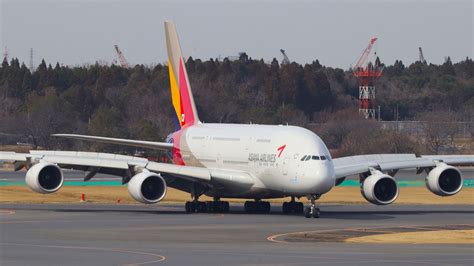
While Madinah now leads Emirates’ internal rankings, it is not the world’s shortest A380 flight in operation this month. That distinction goes to Asiana Airlines, which is running Tokyo Narita–Seoul Incheon flights at just 2h 20m. Korean Air follows closely with Seoul–Taipei at 2h 25m.
Still, the Dubai–Madinah pairing holds special significance due to the aircraft’s rarity on this path and the specific cultural context.
Why This Matters for Emirates and the Aviation Industry
This one-off service offers a masterclass in strategic fleet utilization. By capitalizing on a niche yet high-demand movement, Emirates is showing how a superjumbo—typically suited for long-haul trunk routes—can be dynamically deployed for maximum yield.
It also reinforces the continuing relevance of the A380 despite its gradual phase-out from several global fleets. Emirates, which operates the largest A380 fleet in the world, remains committed to leveraging the aircraft in creative ways, be it for pop-up demand, luxury positioning, or capacity relief during peak periods.
In a broader context, this move is a testament to religious tourism’s influence on aviation networks. From pilgrimage-driven charter flights to temporary up-gaugings like this, the intersection of faith and flight continues to reshape airline strategies across the Middle East and beyond.
Final Thoughts
Emirates’ decision to deploy the A380 on its shortest-ever scheduled route is not just a novelty—it’s a calculated operational decision grounded in strong demand forecasting and branding. While fleeting, the flight’s impact is lasting: it underscores the carrier’s agility, the enduring appeal of the A380, and the significance of Madinah as a strategic spiritual gateway.
As the aviation world watches this superjumbo touch down in the city of the Prophet once again, it does so with awe—not just for the aircraft’s engineering, but for the intricate tapestry of faith, commerce, and innovation that made it possible.