The Boeing 777 has quietly become one of the defining machines of modern global mobility. It is a flying paradox: a twin-engine aircraft that dethroned four-engine giants, a long-haul behemoth that can also handle medium-haul routes with uncanny efficiency, and a commercial success that reshaped airline economics. Understanding which airline operates the most Boeing 777s is not just a trivia exercise—it reveals how global aviation strategy, geography, and corporate ambition converge in aluminum, composites, and kerosene.
The Boeing 777: The Twin-Engine Titan That Rewrote Long-Haul Aviation
When Boeing launched the 777 program in the late 1980s, the aerospace world was cautiously skeptical. Twin-engine aircraft were still shaking off the stigma of limited range and redundancy concerns, and airlines were accustomed to relying on tri-jets and quad-jets for long-haul missions. The 777 shattered those assumptions.
Its first flight in 1994 marked the beginning of a new design philosophy: digitally designed, fly-by-wire, optimized for efficiency, and engineered to bridge the gap between smaller widebodies like the 767 and legendary giants like the 747. Over time, the 777 evolved into a versatile family of aircraft capable of covering ultra-long-haul intercontinental routes while carrying hundreds of passengers and massive cargo payloads.
What truly made the 777 transformative was Extended-range Twin-engine Operational Performance Standards (ETOPS). With robust reliability and powerful engines from GE, Rolls-Royce, and Pratt & Whitney, the 777 became a symbol of how twin-engine aircraft could safely dominate long-haul operations.
The result was staggering demand. More than 2,300 orders have been placed, and over 1,750 aircraft delivered, making it the most produced widebody airliner in history.
Inside the Boeing 777 Family: Variants That Conquered the Skies
The Boeing 777 family is a case study in evolutionary engineering. Each variant was tailored to airline needs, balancing range, capacity, and economics.
The 777-200 laid the foundation, offering transcontinental and transoceanic capability with typical three-class seating around 305 to 320 passengers. The 777-200ER extended the range dramatically, while the 777-200LR pushed boundaries further, enabling ultra-long-haul missions approaching 8,555 nautical miles.
The 777-300 and its highly successful 777-300ER variant redefined capacity, stretching the fuselage to nearly 242 feet and seating up to 380 passengers in three-class layouts. The 777-300ER, in particular, became a favorite among airlines for its blend of range, efficiency, and passenger capacity.
Then came the 777F, a dedicated freighter version with payload capacity exceeding 100 tonnes, transforming global cargo logistics.
Looking forward, the 777X family—including the 777-8, 777-9, and 777-8F—represents Boeing’s attempt to future-proof the platform with composite wings, folding wingtips, and next-generation GE9X engines. These aircraft promise ranges exceeding 8,700 nautical miles and seating capacities approaching or surpassing 400 passengers, ensuring the 777 lineage remains relevant for decades.
Which Airline Operates the Most Boeing 777s? Emirates’ Unchallenged Lead
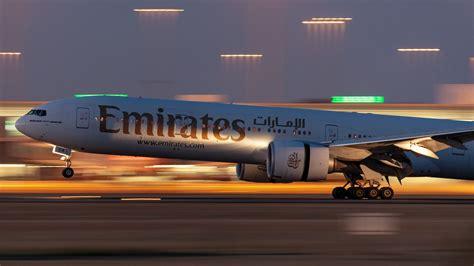
Among all airlines worldwide, Emirates stands alone as the largest operator of the Boeing 777. As of early 2026, the Dubai-based carrier operates 140 Boeing 777 aircraft in active service, spanning passenger and cargo operations.
This dominance is not accidental. Emirates built its business model around long-haul connectivity via a central hub in Dubai, perfectly suited to the 777’s capabilities. The airline’s strategy is straightforward but ambitious: connect almost any city to almost any other city with a single stop in Dubai, using large, efficient widebody aircraft.
The Boeing 777, with its massive capacity and range, fits this model like a precision-engineered puzzle piece.
Emirates’ 777 Fleet Breakdown: Variants, Age, and Operational Strategy
Emirates operates three main variants of the Boeing 777:
- 777-300ER, the backbone of the fleet and representing about 85% of Emirates’ 777 aircraft
- 777-200LR, a smaller but long-range subfleet
- 777F, dedicated cargo aircraft supporting Emirates SkyCargo
The airline’s 777-300ERs average just 12.6 years old, meaning they remain in the prime of their operational lifecycle. These aircraft are expected to stay in service for many years, supported by Emirates’ aggressive maintenance and refurbishment programs.
The 777-200LRs, averaging 17.7 years, are older but still capable of ultra-long-haul missions, while the 777F fleet, with an average age of just 5.3 years, underscores Emirates’ commitment to cargo growth.
This fleet composition reveals Emirates’ philosophy: passenger revenue for global connectivity and cargo revenue for resilient profitability.
Cabin Configurations: Emirates’ Modular Approach to Passenger Experience
Unlike many airlines that standardize cabin layouts, Emirates uses multiple cabin configurations across its 777 fleet. This modular strategy allows the airline to tailor aircraft to specific markets and demand profiles.
Some aircraft feature three-class layouts with first class, business class, and economy, while others include premium economy or high-density economy-heavy configurations for leisure routes.
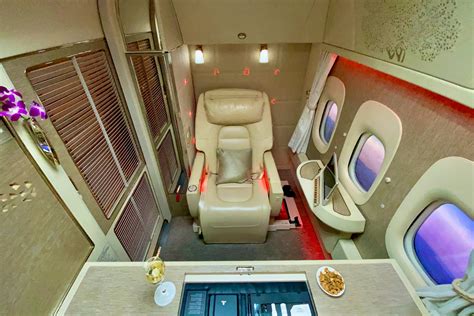
One standout innovation is Emirates’ “Game Changer” first class suite, installed on select 777s. These suites feature floor-to-ceiling doors, virtual windows for middle seats, and near-private-jet levels of privacy. By reducing the number of suites from eight to six, Emirates prioritized exclusivity over density—a bold statement in premium aviation.
Behind first class, business class layouts vary between 1-2-1 fully aisle-accessible seating and older 2-3-2 configurations, while economy cabins typically offer 32 inches of pitch, personal entertainment screens, and universal power outlets.
This layered product strategy allows Emirates to extract maximum revenue across passenger segments, from ultra-luxury travelers to mass-market economy passengers.
The Boeing 777 in Emirates’ Global Network Strategy
The Boeing 777 is not just another aircraft in Emirates’ fleet; it is a strategic instrument of global connectivity. The aircraft operates across an astonishing range of route lengths, from ultra-long-haul intercontinental flights to short regional hops.
One of Emirates’ longest 777 routes connects Dubai to Dallas/Fort Worth, covering 8,038 miles across Europe, the Atlantic, and North America. This route demonstrates the 777’s ability to connect distant markets non-stop with a twin-engine aircraft—once unimaginable territory for anything short of a four-engine jumbo.
At the other extreme, Emirates occasionally deploys the 777 on regional routes like Dubai to Bahrain, a flight of just 303 miles. While rare, these short missions highlight the airline’s willingness to deploy widebodies on high-demand regional routes when passenger volume justifies the capacity.
More frequently, the 777 dominates medium-haul routes such as Dubai to Male, Delhi, Riyadh, Manila, Johannesburg, Chennai, Hyderabad, and Mumbai, where high passenger demand and cargo needs align perfectly with the aircraft’s economics.
The Seat Machine: Why Emirates Loves High-Capacity Aircraft
The economics of long-haul aviation are brutally simple: fill seats, move cargo, and minimize unit costs. The 777 excels at all three.
On routes like Dubai to Male, Emirates operates over 1,400 round-trip 777 flights annually, offering nearly half a million seats. On the Dubai–Delhi route, the number climbs even higher, exceeding 525,000 seats per year.
These staggering numbers reveal why Emirates prefers large aircraft. High-density routes demand capacity, and the 777’s ability to carry 300 to 400 passengers plus cargo gives Emirates a competitive advantage over airlines using smaller widebodies.
The 777 vs A380: Complementary Giants in Emirates’ Fleet
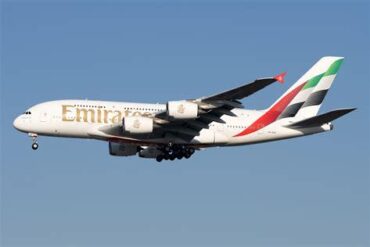
Emirates is famous for its Airbus A380 fleet, but the 777 is arguably more important to its network. While the A380 excels on ultra-high-demand trunk routes, the 777 offers flexibility across a broader range of markets.
The 777 can serve airports that cannot accommodate the A380, operate with lower passenger demand, and still deliver strong economics. This makes it the perfect companion to the superjumbo, allowing Emirates to tailor capacity to demand without sacrificing global reach.
Other Major Boeing 777 Operators: The Global Hierarchy
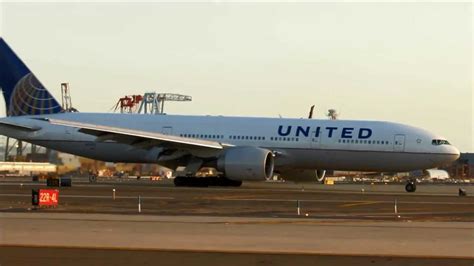
While Emirates dominates, several other airlines operate the 777 at scale. United Airlines ranks second with 96 aircraft, including 777-200s, 777-200ERs, and 777-300ERs. United uses the type across international and high-density domestic routes, although its oldest aircraft are approaching retirement age.
Qatar Airways follows closely with 92 777s, including a significant freighter fleet. The airline’s heavy investment in cargo highlights the 777’s dual-role capability as both passenger carrier and freight powerhouse.
Other notable operators include:
- American Airlines with 67 aircraft
- Air France with 63
- British Airways with 59
- Cathay Pacific with 52
- FedEx with 51 freighters
Each of these airlines uses the 777 as a cornerstone of long-haul operations, reinforcing its status as a global workhorse.
Why Emirates Outpaces Everyone in 777 Numbers
Several structural factors explain Emirates’ dominance in Boeing 777 operations.
Geography is destiny. Dubai sits at a crossroads between Europe, Asia, and Africa, making it an ideal hub for connecting long-haul routes. The 777’s range and capacity perfectly match this hub-and-spoke model.
Business strategy is the second factor. Emirates deliberately chose a fleet composed primarily of large widebody aircraft, rejecting narrowbody expansion in favor of global scale. This decision magnifies the importance of aircraft like the 777.
Finally, capital investment plays a role. Emirates has consistently placed massive aircraft orders, securing favorable pricing and long-term fleet stability. This aggressive purchasing strategy explains why Emirates’ 777 fleet dwarfs that of most competitors.
The Future of Emirates’ Boeing 777 Fleet: The 777X Era
Emirates is not just the largest operator of the current 777 generation; it is also the largest customer for the future 777X family. As of late 2025, Emirates had 215 777X aircraft on order, later expanded by an additional 65 aircraft, bringing the total to a staggering 280 next-generation 777s.
These orders represent a multibillion-dollar bet on Boeing’s future widebody platform. The 777X promises composite wings, folding wingtips, and next-generation efficiency, potentially reducing fuel burn per seat while increasing range and capacity.
The proposed 777-10 variant, with potential seating beyond 400 passengers, could become the largest twin-engine passenger aircraft ever built, blurring the line between twin-engine widebodies and traditional jumbo jets.
The 777’s Role in Cargo and Global Trade
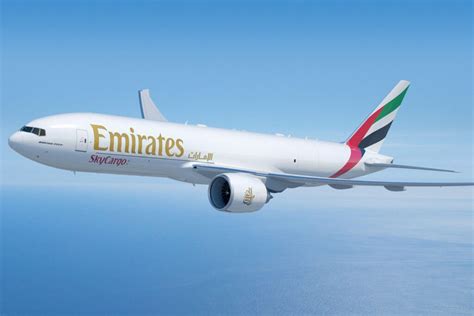
Beyond passenger travel, the 777 plays a critical role in global cargo logistics. The 777F has become one of the most efficient long-haul freighters, capable of carrying over 100 tonnes of cargo across intercontinental distances.
Emirates SkyCargo leverages this capability to connect global supply chains, transporting everything from electronics and pharmaceuticals to perishables and e-commerce shipments. The rise of online retail and just-in-time logistics has made the 777F a cornerstone of modern freight networks.
Other cargo giants, such as FedEx, have also embraced the 777F, underscoring its importance beyond passenger aviation.
The Economics of Scale: Why Big Airlines Love the 777
The Boeing 777 thrives on scale economics. Larger aircraft reduce cost per seat and per tonne of cargo, making them attractive to airlines operating global hubs with high demand.
For airlines like Emirates, Qatar Airways, and United, the 777 enables long-haul connectivity with fewer frequencies but higher capacity. This strategy simplifies scheduling, maximizes slot usage at congested airports, and improves profitability on trunk routes.
However, this model is not universally applicable. Airlines focused on point-to-point travel or lower-demand markets often prefer smaller aircraft like the A350 or 787. The dominance of the 777 in certain fleets reflects not just aircraft performance, but broader network philosophy.
Passenger Experience: The 777 as a Flying Ecosystem
The 777 is not just a transport machine; it is a flying ecosystem of cabins, galleys, entertainment systems, and connectivity infrastructure.
Emirates’ 777 aircraft feature high-definition entertainment screens, satellite Wi-Fi, mood lighting, and advanced cabin pressurization systems. While not as advanced as some newer aircraft, the 777 remains a comfortable platform for long-haul travel, especially when paired with premium products like Emirates’ first and business class offerings.
For economy passengers, the aircraft’s wide fuselage allows for relatively comfortable seating layouts, although density varies depending on airline configuration.
Longevity and Retirement: How Long Will the 777 Fly?
Aircraft lifecycles in commercial aviation often exceed 25 to 30 years, and many 777s are expected to remain in service well into the 2040s and beyond. Emirates’ relatively young fleet suggests that many of its current aircraft will continue operating for decades, supported by maintenance programs and cabin retrofits.
The introduction of the 777X will gradually replace older variants, but the transition will be slow due to production delays, certification challenges, and the sheer size of existing fleets.
The Boeing 777 as a Cultural Icon of Aviation
Few aircraft have achieved the cultural recognition of the Boeing 777. Known affectionately as the “Triple Seven”, it symbolizes the modern era of globalized travel. It appears in airline advertisements, aviation documentaries, and even popular culture as a symbol of long-haul luxury and intercontinental connectivity.
Emirates’ heavy branding of the 777 further cements its image, with distinctive liveries, cabin products, and marketing campaigns showcasing the aircraft as a flagship of modern aviation.
Final Perspective: Emirates and the Triple Seven Legacy
So, which airline operates the most Boeing 777s? The answer is unequivocal: Emirates. With 140 active aircraft and 280 next-generation 777X orders, the airline is not just the largest operator today—it is shaping the future of the 777 platform.
The Boeing 777’s success story is inseparable from Emirates’ rise as a global aviation powerhouse. Together, they represent a philosophy of scale, ambition, and technological confidence. As the 777X era approaches, Emirates’ commitment ensures that the Triple Seven lineage will continue to dominate skies across continents, connecting cities, cultures, and economies with relentless efficiency.
In the grand narrative of aviation history, the Boeing 777 stands as a turning point, and Emirates stands as its most prolific steward—a testament to how strategy, geography, and engineering can converge to reshape how humanity moves across the planet.