In a development that has raised eyebrows across the global aviation industry and political sphere, five Boeing 777-200ER aircraft have been transferred to Iran, bypassing strict U.S. sanctions that prohibit the sale or delivery of aircraft with U.S.-made components. This covert fleet addition highlights a longstanding pattern in which Iran has sidestepped restrictions through a web of indirect registrations, opaque ownership channels, and silent ferry flights.
The aircraft in question—originally delivered to Singapore Airlines in the early 2000s—recently surfaced in Iran after being stored in Cambodia and then quietly flown to the Islamic Republic. While authorities continue to trace the murky transaction chain, the incident underscores the growing difficulty in enforcing international aviation sanctions in a globalized and fragmented regulatory environment.
From Singapore to Iran: The Journey of the Boeing 777-200ERs
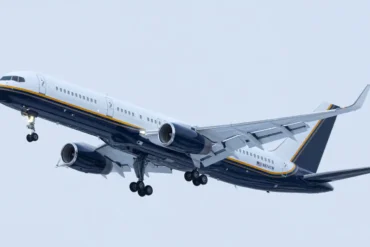
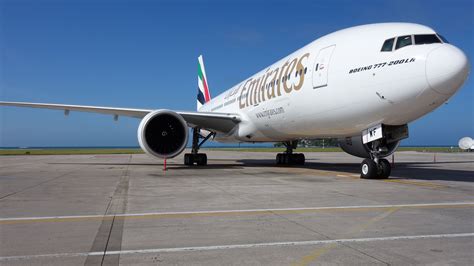
Originally operated by Singapore Airlines between 2001 and 2003, the five Boeing 777-200ERs were transferred to NokScoot, a now-defunct Thai low-cost carrier. After NokScoot’s closure, the jets sat dormant until mid-2024, when they were unexpectedly reactivated. Between July 4 and July 15, all five aircraft were moved to Siem Reap Angkor International Airport (SIA) in Cambodia.
A key moment came on July 15, when one of the aircraft, bearing the registration 5R-HER, departed from Siem Reap. During its flight, the aircraft’s ADS-B transponder was deliberately deactivated while over Afghanistan, a tactic frequently used in covert aircraft deliveries to Iran. Once off-radar, the aircraft quietly landed at Mashhad International Airport (MHD) in Iran.
This specific method—flying with transponders off—allows operators to avoid being tracked by civilian airspace surveillance systems, evading attention from regulators and intelligence services alike.
Mahan Air: The Likely Operator Behind the Acquisition
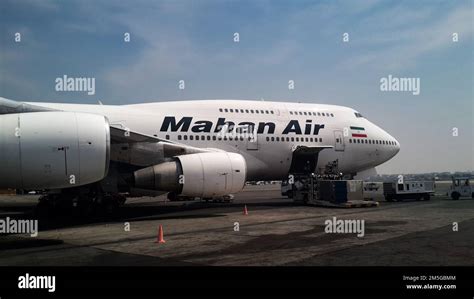
The aircraft are reportedly intended for Mahan Air, an Iranian airline under U.S. Treasury sanctions since 2011. Mahan Air has long been accused of facilitating arms transfers and personnel deployments for Iran’s Islamic Revolutionary Guard Corps (IRGC), particularly into conflict zones in Syria and Lebanon. Despite international condemnation and continuous sanctions, Mahan Air has managed to keep its operations afloat—often expanding its fleet through creative means.
Planespotters.net data and various aviation observers have confirmed that the five Boeing 777-200ERs, despite their advanced age, are being configured for use on long-haul routes. Their operational reentry raises broader concerns about how sanctioned airlines continue to acquire high-capacity aircraft, posing both commercial and geopolitical risks.
A Pattern of Illicit Acquisitions: Iran’s Sanction Evasion Playbook
This is far from Iran’s first circumvention of aviation sanctions. The country has developed a well-honed playbook that involves intermediate owners, frequent registration changes, and blackout flight paths. Several recent examples underscore this trend:
In April 2024, two Airbus A330-200s, originally operated by Hong Kong Airlines, appeared in Iran after departing Oman. Their arrival came without prior announcements or flight tracking visibility, with suspicions pointing toward reflagging and shell company transfers.
In May 2023, two Airbus A340-200s, previously flown by the French Air and Space Force, were transferred from Indonesia. These aircraft were initially re-registered in Mali and disappeared from radar near India before reemerging in Chabahar, where they are now operated by Meraj Air, another Iranian carrier believed to be tied to state operations.
More recently in early 2024, two A340s belonging to Macka Invest, a Gambian leasing firm, diverted from their supposed delivery destination in the Philippines and landed instead at Mehrabad International Airport in Tehran and Chabahar Konarak Airport. Once again, flight tracking was disabled, and the aircraft were never officially recorded entering Iranian airspace.
The Sanctions Wall: Why Boeing Jets Are Supposed to Be Off Limits
U.S. sanctions against Iran explicitly bar the export of any aircraft that contains more than 10% U.S.-origin content. This includes almost all Boeing jets and even a large portion of Airbus models, which incorporate U.S.-made avionics and engines. Under these restrictions, direct aircraft sales, maintenance support, and delivery of spare parts are all prohibited.
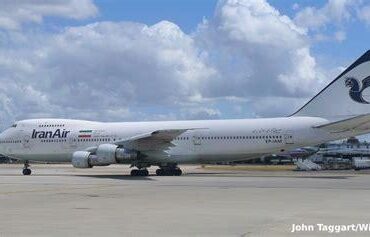
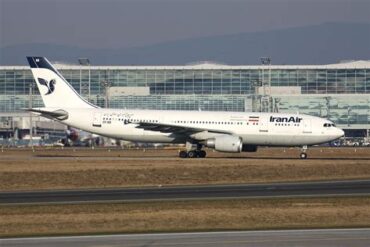
As a result, Iran’s aviation industry has struggled to maintain a modern and reliable fleet. Of the roughly 330 registered aircraft, less than 200 are operational, with many grounded due to lack of certified maintenance and parts. The country’s airlines continue to fly aging aircraft such as the McDonnell Douglas MD-80 series, Airbus A300s, and now, secondhand 777-200ERs, none of which receive direct support from their manufacturers.
Technical Snapshot: Boeing 777-200ER at a Glance
The Boeing 777-200ER is a wide-body, long-haul twinjet with a strong safety and performance record. First flown in 1996, the 777-200ER (Extended Range) model became a workhorse for major international carriers.
- Length: 209 ft 1 in (63.7 m)
- Wingspan: 199 ft 11 in (60.9 m)
- Height: 60 ft 9 in (18.5 m)
- Typical Range: Up to 7,065 nautical miles
- Passenger Capacity: Around 314 to 396 (three-class)
These jets are equipped with GE90 engines, also of U.S. origin—thus falling squarely under the sanctions regime. That Iran is still able to secure and operate such aircraft speaks volumes about the gaps in enforcement and the sophistication of its procurement network.
The Brief Window of Hope: JCPOA and Iran’s Short-Lived Orders
Following the signing of the Joint Comprehensive Plan of Action (JCPOA) in 2015, Iran enjoyed a brief but significant opening to modernize its fleet. Between 2016 and 2018, the country placed massive orders with Boeing, Airbus, and ATR, totaling billions of dollars in commitments.
- Boeing: 80 aircraft
- Airbus: 100 aircraft
- ATR: 20 aircraft
However, only a handful of deliveries materialized before the U.S. pulled out of the JCPOA in 2018, and reimposed sanctions that blocked further deliveries. Since then, Iran has returned to its workaround strategies, sourcing aircraft via third parties, unregulated registries, and deceptive flight operations.
A Global Sanctions Challenge: Why the Transfers Keep Happening
The persistence of such transfers illustrates the inherent limits of global aviation enforcement. Aircraft leasing markets are notoriously complex, with numerous intermediaries and ownership shell companies, often registered in jurisdictions with lax oversight. Once a plane changes hands multiple times, tracking its final destination becomes increasingly difficult.
Enforcement is further complicated by non-cooperating states and regions. Some countries or airport operators—motivated by economic or geopolitical interests—may choose not to report aircraft transactions that ultimately benefit Iran. In these cases, sanctioned deliveries happen not because enforcement failed outright, but because it was never attempted.
The Geopolitical Fallout: Aviation as a Strategic Tool
Iran’s fleet acquisitions are not just about commercial air travel. The ability to move personnel, cargo, and possibly military resources across long distances remains strategically critical. Airlines like Mahan Air and Meraj Air have been accused of supporting military operations in conflict zones, and their expanding capabilities could bolster Iran’s influence in regional theaters such as Syria, Iraq, and Lebanon.
Furthermore, these moves send a message to the international community: that Iran remains undeterred by sanctions and continues to find ways around them. This has implications not only for aviation regulators, but also for diplomatic negotiations and security frameworks.
Conclusion: An Ongoing Sanctions Test Case
The silent arrival of five Boeing 777-200ERs in Iran marks another chapter in a growing dossier of sanctions evasion strategies. The aircraft may soon enter commercial service with Mahan Air, or they could support governmental transport efforts. Regardless, their acquisition highlights a deeply rooted enforcement challenge and a critical blind spot in global aviation regulation.
Until international mechanisms become more transparent, agile, and unified in enforcement, Iran’s parallel aviation supply chain will continue to grow, operating in the shadows—just off radar, both literally and diplomatically.