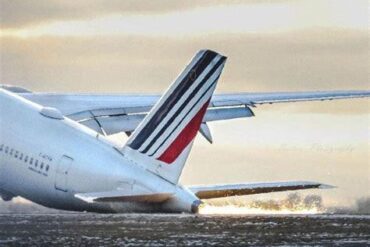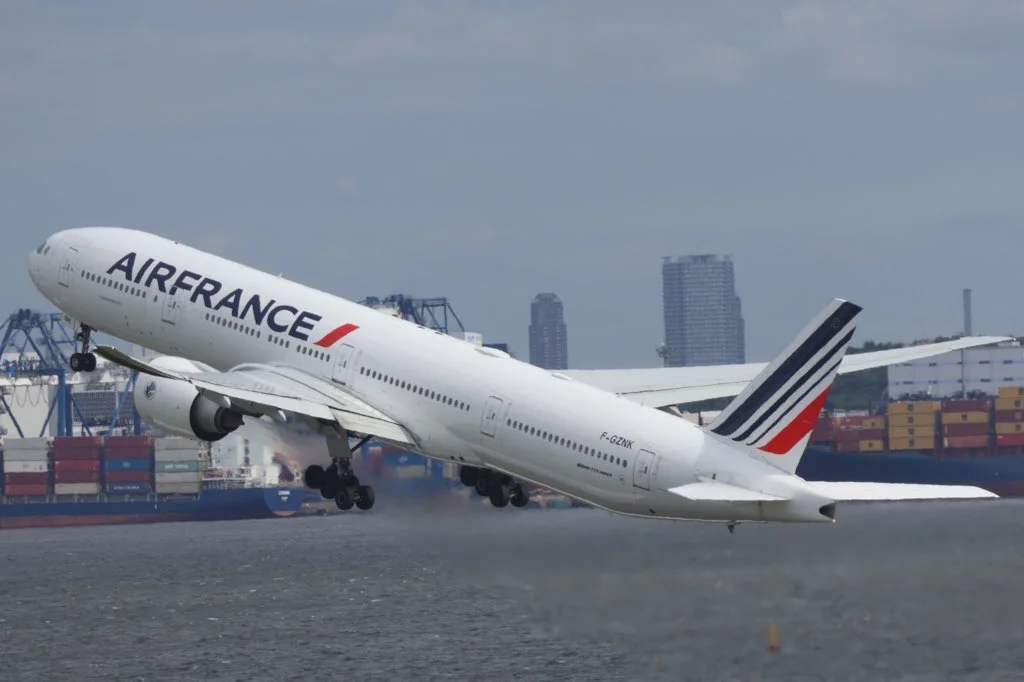
Air France’s long-haul strategy has quietly evolved into a study of precision capacity, where aircraft size, seat density, and route economics intersect with remarkable clarity. With the Airbus A380 and Boeing 747 now firmly in history, the airline’s widebody backbone tells a more nuanced story—one centered on the Boeing 777-300ER, and in particular, an unusually dense variant designed to move extraordinary volumes of passengers at ultra-competitive costs.
This high-capacity aircraft is not a marketing showcase or a prestige flagship. Instead, it is a deliberate commercial instrument, tailored for routes where demand is deep, yields are thinner, and volume is king. Understanding where and why Air France flies its 472-seat Boeing 777s reveals how modern network airlines optimize fleets in a post-superjumbo era.
Air France today operates a widebody fleet of 120 aircraft, with twin-aisle jets accounting for over half of its mainline capacity. Among 43 Boeing 777-300ERs, a subset stands apart—not for range or technology, but for sheer seat count and a configuration that prioritizes economy travelers above all else.
The 472-Seat Boeing 777-300ER: A Purpose-Built Giant
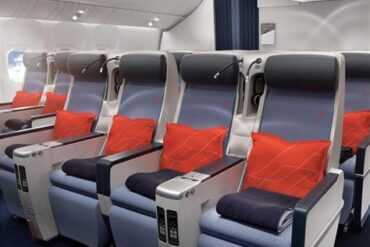
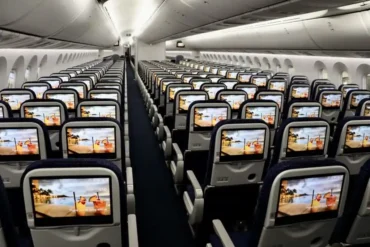
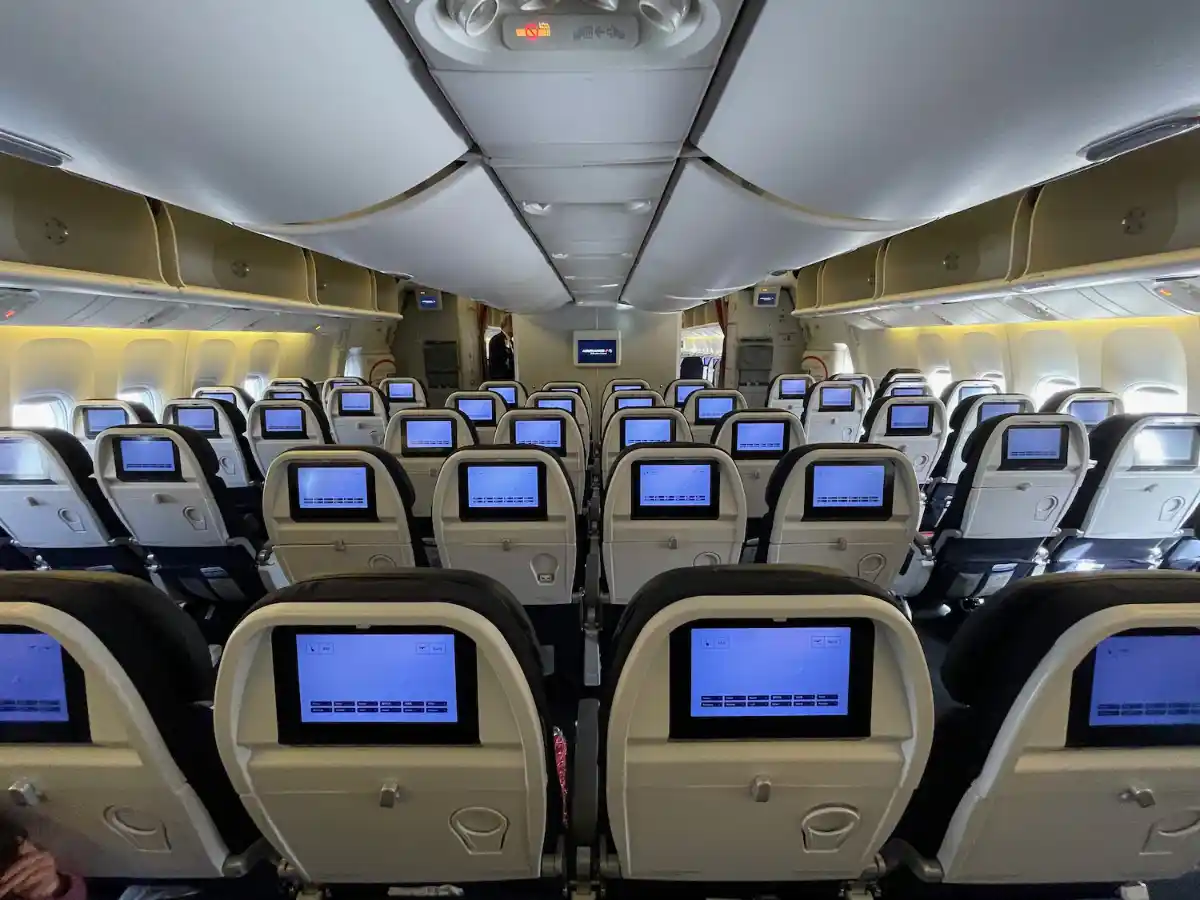
Unlike its premium-heavy siblings, Air France’s densest 777-300ER configuration is unapologetically utilitarian. Out of 472 seats, only 14 are allocated to business class, complemented by 28 premium economy seats. The remaining 430 seats sit in economy, arranged in a tight 3-4-3 layout that maximizes floor space and minimizes unit cost.
This means 91% of total capacity is economy, a ratio rarely seen among full-service network carriers. The aircraft are heavy, expensive to operate per trip, and less flexible than lower-density alternatives. Their advantage lies in an exceptionally low cost per seat-mile, allowing Air France to profit on routes where premium demand is limited but passenger numbers are vast and reliable.
The airline operates 12 of these high-density 777s, aged between roughly 14 and 20 years. They represent the highest-capacity aircraft currently in Air France service, a role once filled by the A380.
Why Density Matters More Than Luxury on Certain Routes
High-capacity aircraft only make sense where demand is consistent and resilient. These 777s are not scheduled randomly; they are deployed where leisure traffic and visiting-friends-and-relatives (VFR) flows dominate, and where travelers are price-sensitive but plentiful.
By spreading operating costs across nearly five hundred passengers, Air France can sustain routes that might otherwise struggle with profitability. The trade-off is comfort, but on long-established leisure corridors, volume consistently outweighs premium expectations.
Mapping the Network: Where the 472-Seat 777 Actually Flies
Between January and June 2026, scheduling data shows 28 routes operated by the 472-seat Boeing 777-300ER. The vast majority—25 routes—depart from Paris Charles de Gaulle, with the remaining three operating from Paris Orly, where this configuration accounts for 100% of widebody flying.
Charles de Gaulle remains the core hub, hosting over 1,250 departures by the type during the period, compared with 261 from Orly. Even so, these aircraft represent just 4% of Air France’s widebody departures from CDG, underscoring how specialized their role truly is.
Many destinations see only a handful of flights, particularly in Africa, the Near East, and South America, where seasonal demand spikes justify short-term deployment of maximum-capacity jets rather than sustained service.
Caribbean and Indian Ocean Strongholds Dominate Utilization
The gravitational center of 472-seat 777 operations lies firmly within France’s overseas departments. Guadeloupe, Martinique, and Réunion together account for 57% of all flights operated by this configuration. These routes combine high frequency, cultural ties to mainland France, and consistent year-round demand, making them ideal candidates for ultra-dense widebodies.
Crucially, these destinations are served from both CDG and Orly, giving Air France operational flexibility while ensuring aircraft utilization remains high. Outside of these routes, Orly sees no other deployment of the 472-seat 777, reinforcing how tightly controlled the aircraft’s mission profile is.
Ottawa, Phuket, and the Rise of Opportunistic Deployments
Beyond France’s overseas territories, Air France uses the 472-seat 777 selectively on long-haul leisure and secondary markets. Ottawa emerged as a notable example, with limited but recurring deployments that fluctuate from weekly to five-times-weekly service depending on seasonal demand.
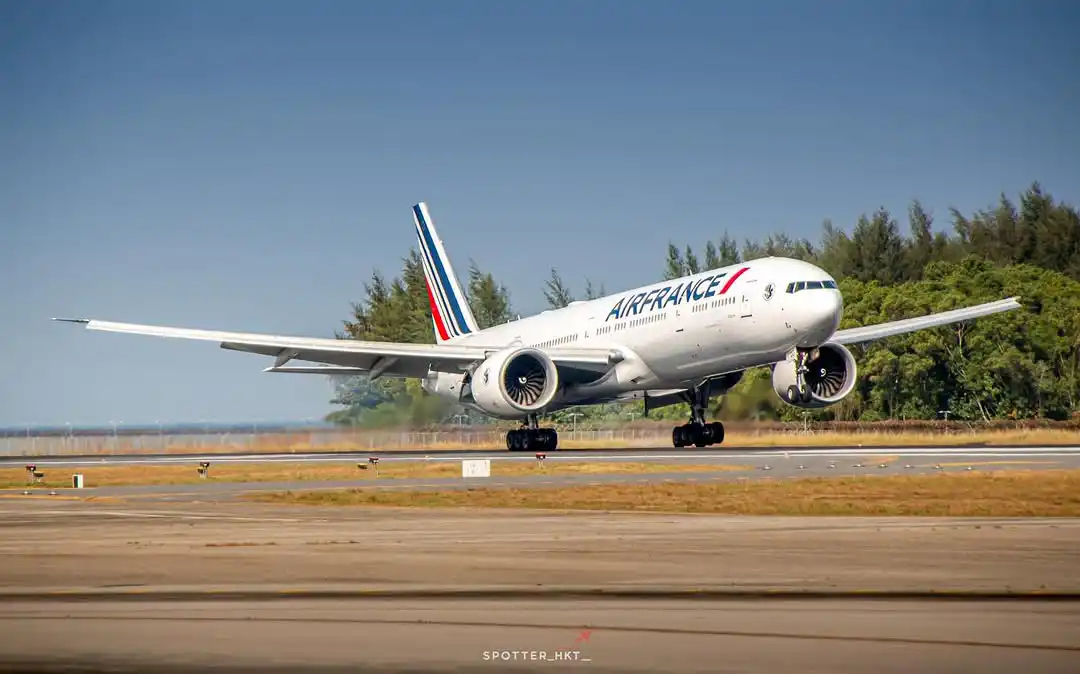
In Asia, Phuket marked a milestone when Air France launched service in December 2025. The route’s leisure-heavy passenger mix made it an immediate candidate for high-density equipment, allowing the airline to enter the market aggressively without committing premium-heavy capacity.
Punta Cana’s Return Highlights the Strategy Perfectly
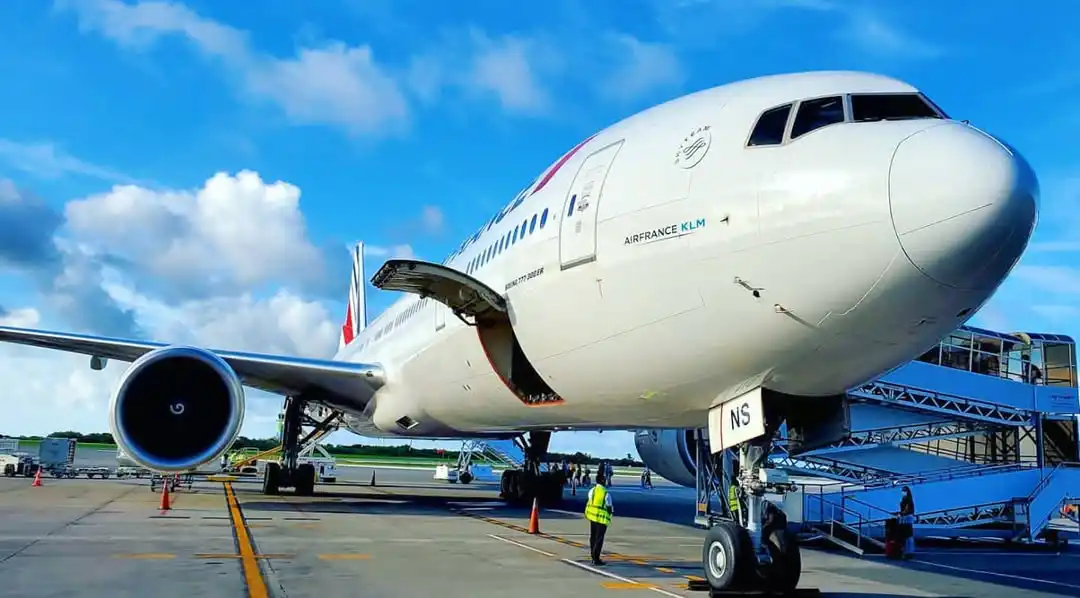
The clearest illustration of this aircraft’s purpose came in January 2026, when Air France reinstated service to Punta Cana after a three-year hiatus. Once served daily, the Dominican Republic gateway returned with three weekly flights, operated exclusively by the 472-seat 777-300ER.
The service is seasonal, ending in late March, and mirrors Air France’s historic use of high-capacity aircraft on the route, including multiple generations of the Boeing 747. Here, the airline trades frequency and premium density for maximum passenger throughput, capturing pent-up leisure demand during peak winter travel.
A Fleet Strategy Built on Precision, Not Nostalgia
Air France’s very high-capacity Boeing 777s are not relics of an outdated philosophy. They are carefully deployed tools, filling the void left by retired superjumbos while offering far greater flexibility. In an era where efficiency defines competitiveness, these aircraft demonstrate how density, when applied intelligently, can still anchor long-haul profitability.
By aligning aircraft configuration with route economics, Air France proves that even within a modern, diversified fleet, there is room for extremes—so long as every seat serves a purpose.