All Nippon Airways has quietly pulled off one of the most audacious cabin-density moves in modern commercial aviation. While the Boeing 787 family is typically associated with long-haul comfort and moderate seating counts, ANA has bent that narrative sharply inward, creating the world’s highest-capacity Boeing 787 configuration. With 429 seats packed into select 787-10s, ANA has transformed the Dreamliner into a domestic people-mover on an almost unprecedented scale.
This is not a theoretical layout or a one-off experiment. These aircraft are flying daily, serving some of the busiest short-haul routes on Earth, primarily from Tokyo Haneda. The result is a fascinating case study in how aircraft design, national travel patterns, and airport constraints collide to create something uniquely Japanese.
Why ANA Built a 429-Seat Dreamliner
Globally, the Boeing 787-10 usually carries 300 to 330 passengers, depending on cabin mix and airline philosophy. ANA’s domestic variant pushes that figure to the edge of certification limits, just 11 seats shy of the maximum approved capacity. This extreme density is not about cutting corners; it is about matching aircraft to demand with surgical precision.
Japan’s domestic air market is unlike most others. High-speed rail is excellent but not always practical for long north–south journeys. Road travel is slow. Slot constraints at Tokyo Haneda encourage airlines to maximize passengers per movement, not add frequencies. ANA’s answer was to revive a philosophy it once perfected with aircraft like the 565-seat Boeing 747-400D, but in a quieter, more fuel-efficient, twin-engine form.
The 429-seat 787-10 continues a lineage of high-density domestic widebodies that once included 514-seat Boeing 777-300s and the legendary domestic Jumbo Jets. This is capacity thinking shaped by geography and demand, not marketing trends.
Inside the Cabin: High Density, Carefully Engineered
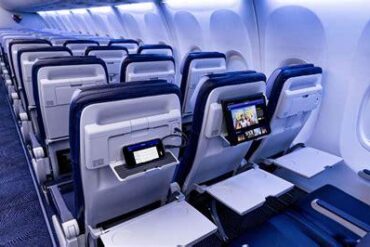
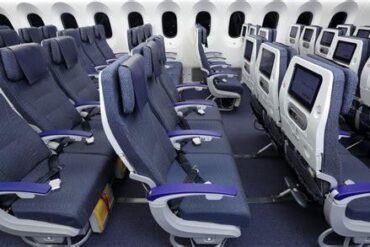
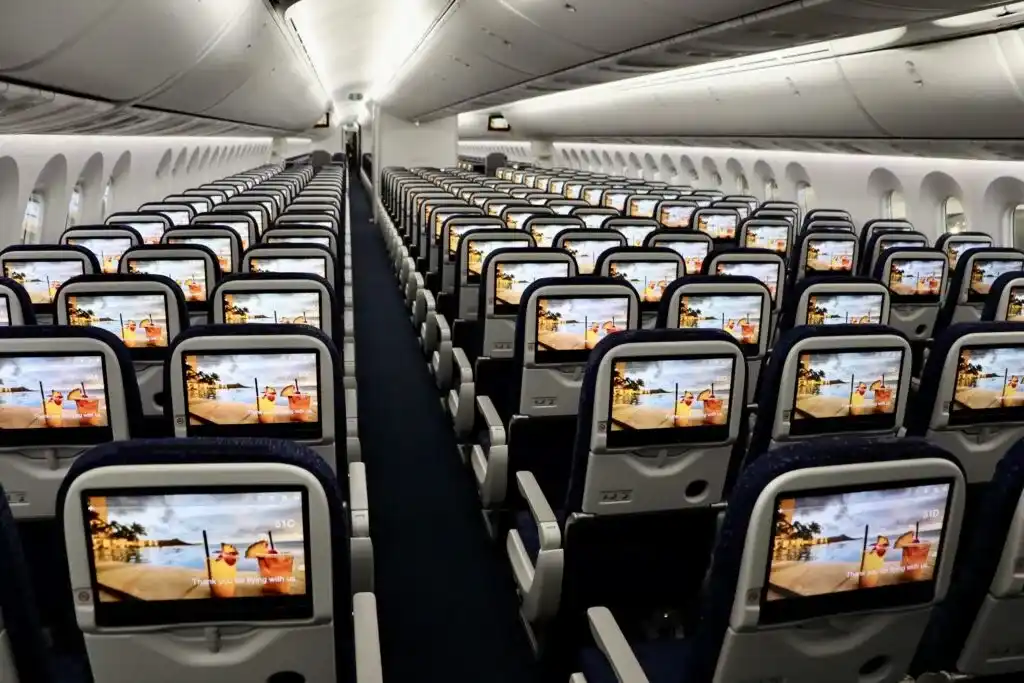
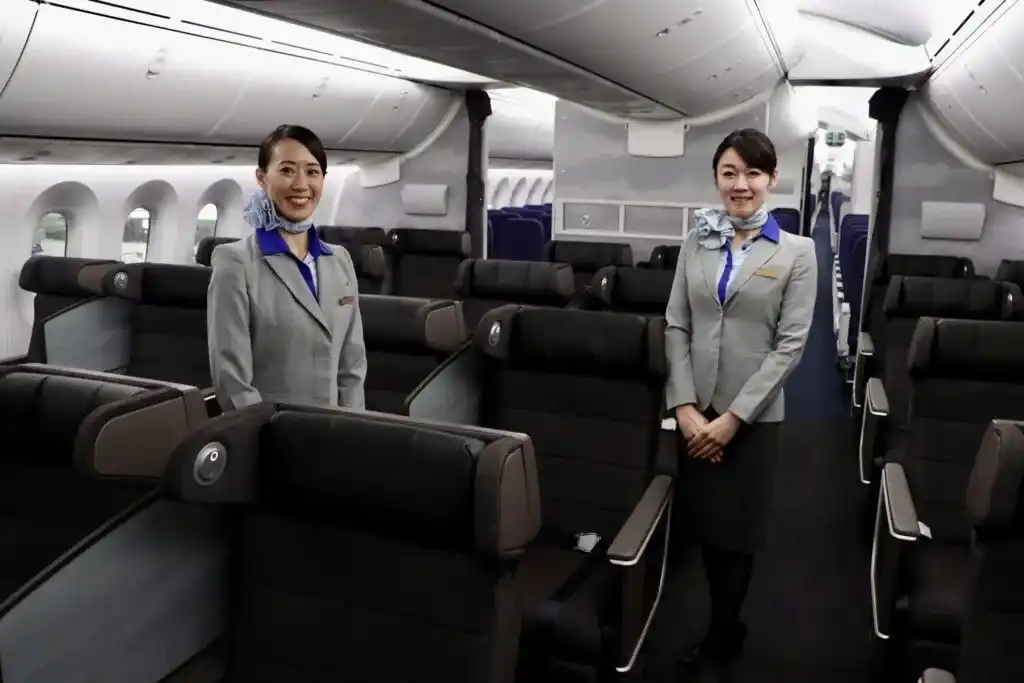
The layout itself is unapologetically functional. Each aircraft features 28 premium seats arranged in a 2-2-2 configuration with a generous 50-inch pitch, designed for Japan’s frequent business travelers. Behind them sits the real headline: 401 economy seats in a 3-3-3 layout, each with a 31-inch pitch.
That economy cabin alone carries more passengers than the entire capacity of many airlines’ 787-10s. Yet ANA has preserved operational efficiency and cabin consistency, using standardized interiors optimized for rapid turnarounds and predictable passenger flows.

Why the 787-10 Is Perfect for Domestic Japan
The Boeing 787-10 is the least popular Dreamliner variant globally, largely because its shorter range limits intercontinental flexibility. For ANA, that limitation is irrelevant. Domestic sectors rarely exceed two hours, allowing the aircraft to exploit its high payload capability and low operating costs without range penalties.
ANA operates ten 787-10s, split between two configurations. Three aircraft, seating 294 passengers, are used on international routes under the Air Japan brand. The remaining seven aircraft are the ultra-dense 429-seat variants, with the first delivered in March 2024.
This bifurcated strategy lets ANA extract maximum value from the same airframe while keeping fleet complexity manageable.
The Core Routes: Where the 429-Seat Giants Fly
Deployment of these aircraft is entirely predictable once Japan’s traffic flows are understood. According to schedule data, the 429-seat 787-10s are concentrated on three core domestic trunk routes, all linking Tokyo Haneda with major regional hubs.
Haneda–Sapporo is the standout, with 7.7 million passengers annually, making it one of the busiest air routes in the world. Haneda–Fukuoka follows closely with 7.4 million passengers, while Haneda–Okinawa adds another 5.4 million. For context, New York JFK–Los Angeles sees only 2.5 million passengers per year.
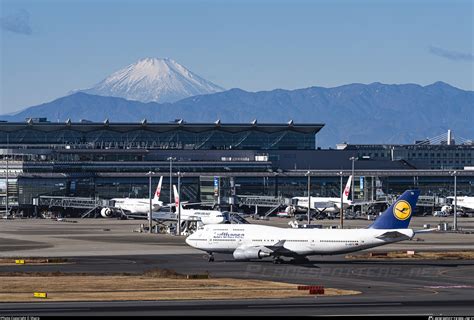
On these routes, the 429-seat aircraft appear with striking regularity. Between January and June 2026, they account for 32% of Haneda–Okinawa flights, 18% on Haneda–Sapporo, and 14% on Haneda–Fukuoka. Across all domestic operations, they represent just 5% of ANA’s total departures, yet nearly 40% of its widebody flying.
A Day in the Life of a 429-Seat 787
At peak utilization, these aircraft can operate up to 16 daily departures from Haneda, an extraordinary figure for a widebody. On select days, flights depart from early morning through late evening, rotating between Sapporo, Fukuoka, Okinawa, and occasional services to Kagoshima.
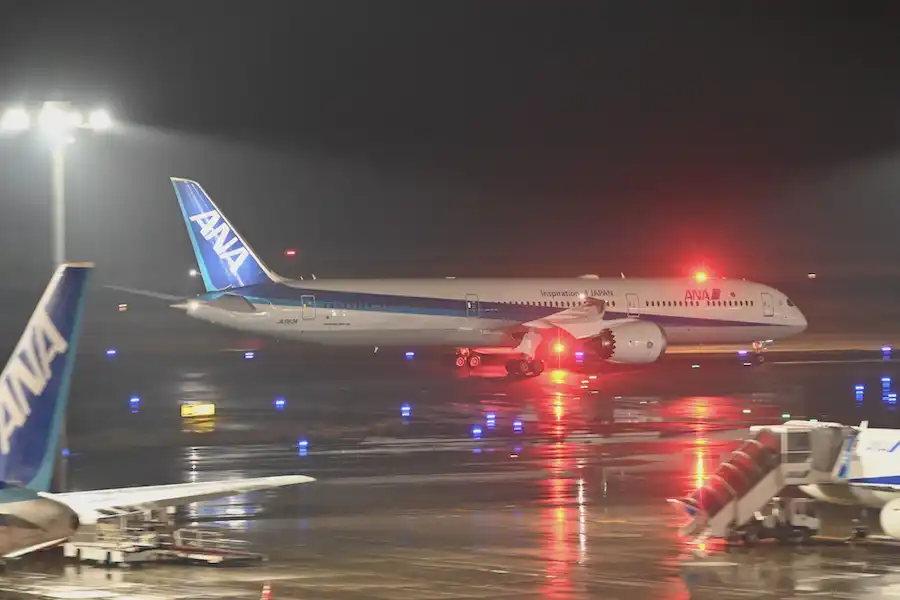
This intense utilization reflects both demand and design. Short sectors, fast turnarounds, and dense seating allow ANA to move enormous volumes of passengers while preserving precious airport slots. It is capacity discipline taken to its logical extreme.
A Strategy That Only Works in Japan
What makes ANA’s 429-seat Dreamliner so compelling is not just the number itself, but the context. Few countries combine ultra-high domestic demand, constrained hub airports, and passenger willingness to fly widebodies on short routes. Japan does all three.
The result is an aircraft that feels almost paradoxical: a long-haul airliner repurposed as a domestic shuttle, quietly carrying more people per flight than almost any twin-engine jet in service. In an era obsessed with flexibility and modularity, ANA has chosen specialization, and the numbers suggest it works.
The 429-seat Boeing 787-10 is not a global trendsetter. It does not need to be. It is a precisely tuned answer to a uniquely Japanese question, and one of the most fascinating examples of modern airline fleet strategy in operation today.