Economy class in 2026 has become a quiet engineering contest, fought not with new routes or flashy branding, but with centimeters, certification charts, and seat tracks. As airline margins remain under pressure, the humble economy cabin has turned into one of the most aggressively optimized spaces in commercial aviation. The question most airlines are now answering—sometimes loudly, sometimes discreetly—is how many passengers can reasonably be placed inside a fuselage without breaking safety rules, brand promises, or customer patience. The result is a global patchwork of ultra-dense cabins that redefine what “standard economy” actually means.
Across both short-haul and long-haul networks, carriers are increasingly diverging into two camps. One group still treats legroom as a selling point. The other treats it as negotiable. In 2026, the densest economy cabins in the world sit firmly in the latter category, revealing how far airlines are willing to go to protect yields, sustain low fares, and squeeze more revenue from every flight hour.
Why Economy Cabins Are Getting Denser in 2026
The forces driving tighter economy seating are neither subtle nor temporary. Airlines continue to grapple with high fuel costs, persistent aircraft delivery delays, and elevated labor expenses. While fare increases help at the margins, price-sensitive demand—especially on short-haul routes—limits how far airlines can push ticket prices before losing passengers to competitors. Increasing seat density offers a brutally efficient alternative: sell more seats on the same flight, using the same crew, fuel, and airport slots.
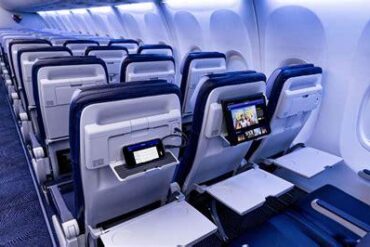
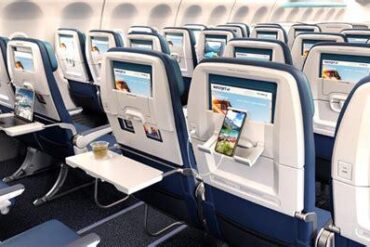
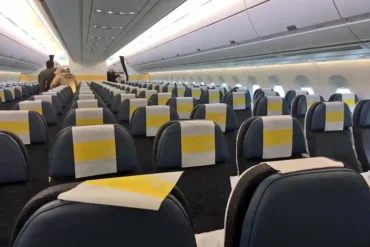
Modern seat design has made this approach easier to justify. Slimline economy seats use thinner backs, sculpted cushions, and reduced recline angles, allowing rows to be placed closer together without technically violating comfort standards. Certification rules focus on safety, evacuation times, and structural integrity, not perceived spaciousness. Airlines operate squarely within the rules while still delivering cabins that feel dramatically tighter than those of a decade ago.
This strategy is no longer limited to ultra-low-cost carriers. In 2026, even some full-service airlines quietly adjust seat pitch downward on select aircraft, betting that most passengers prioritize price and schedule over personal space—at least up to a point.
Ryanair’s Boeing 737 MAX 8-200 and the Art of Extreme Density
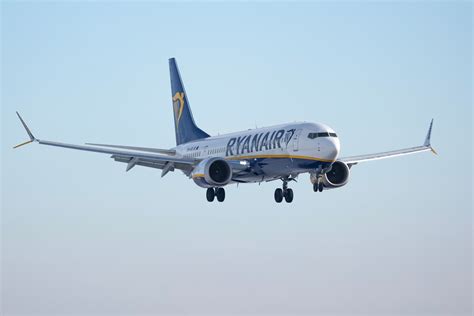
Ryanair remains the undisputed reference point when discussing dense economy cabins, and its Boeing 737 MAX 8-200 fleet illustrates just how far narrowbody aircraft can be pushed. This aircraft variant exists almost entirely to serve one purpose: carrying more passengers than the standard MAX 8 while remaining fully compliant with evacuation and safety regulations.
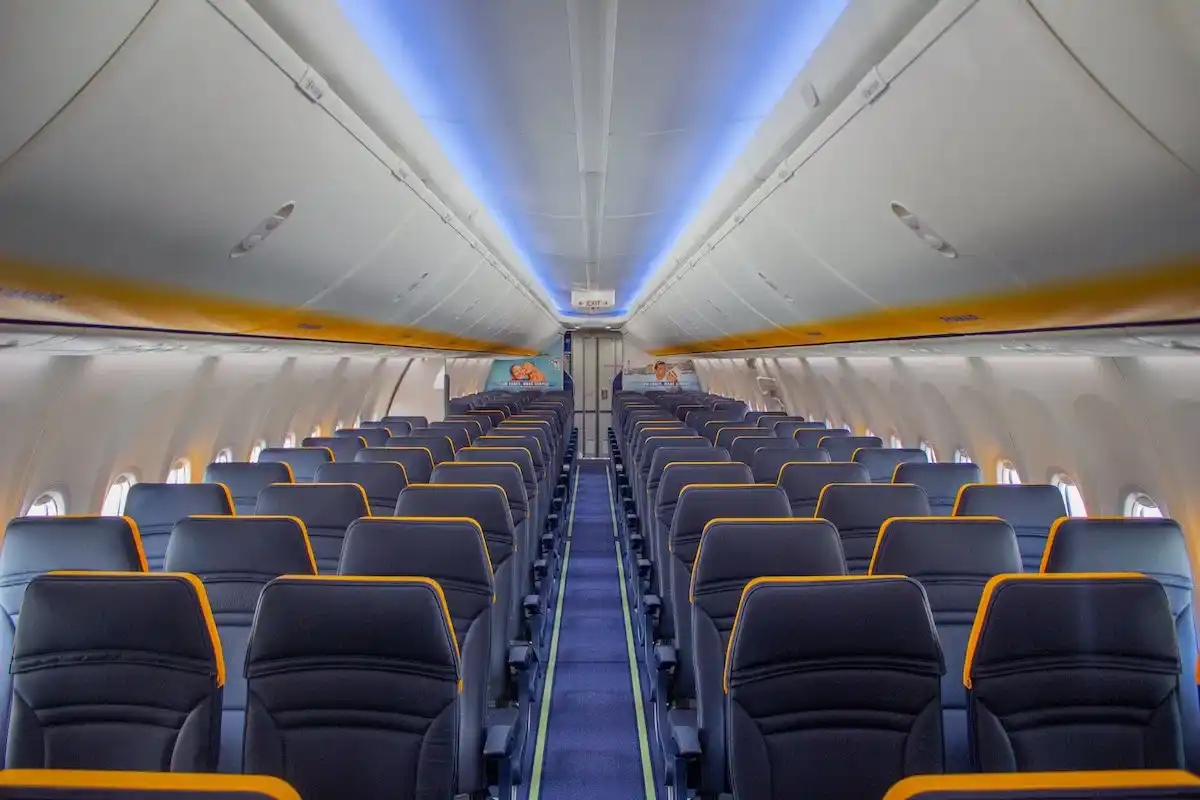
A typical Boeing 737 MAX 8 operated by network airlines seats between 162 and 178 passengers. Ryanair’s MAX 8-200, by contrast, carries 197 passengers, a staggering figure for a single-aisle jet. This jump is made possible by additional mid-cabin emergency exits, which allow Boeing to certify the aircraft at higher seating densities.
Inside the cabin, the experience is unapologetically minimalist. Seat pitch sits at approximately 28 inches, compared with the 29 to 31 inches more commonly found on full-service carriers. Seats are slim, lightweight, and lightly padded, with limited recline and minimal seatback features. Every design decision prioritizes durability, weight reduction, and ease of maintenance over comfort.
On short sectors of one to two hours, this configuration aligns with Ryanair’s value proposition. On longer flights approaching four hours, the difference becomes far more noticeable. Still, Ryanair’s model works precisely because expectations are set clearly. Passengers choosing the airline understand that low fares come with physical trade-offs, and the airline’s consistently high load factors suggest that, for millions of travelers, the math still checks out.
Cebu Pacific and the Densification of Widebody Economy
If Ryanair represents the extreme end of narrowbody density, Cebu Pacific demonstrates how widebody aircraft—traditionally associated with comfort—can be transformed into high-capacity people movers. The airline’s Airbus A330 fleet is among the densest widebody economy configurations in commercial service.
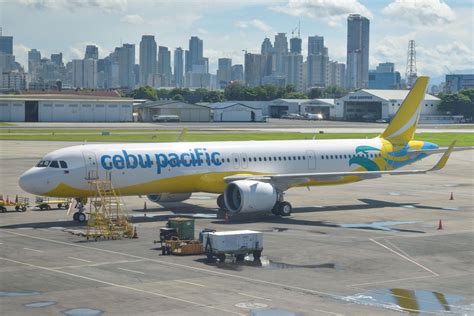
Most A330 operators configure the aircraft with a mix of economy and premium cabins, typically seating between 250 and 300 passengers. Cebu Pacific takes a radically different approach. Its A330-300 aircraft operate in a single-class, all-economy layout seating up to 430 passengers. The key change is the adoption of a nine-abreast (3-3-3) configuration, replacing the more traditional eight-abreast 2-4-2 layout.
While seat pitch generally remains around 30 to 31 inches, seat width shrinks noticeably. Combined with the sheer number of passengers onboard, the cabin feels busy, dense, and operationally intense. Boarding takes longer. Aisles stay crowded. Lavatories see near-constant use on full flights. The psychological effect of density becomes just as important as the physical measurements.
Cebu Pacific’s newer A330-900neo aircraft push this concept even further, with seating totals approaching 460 passengers, among the highest ever certified for the type. Despite improvements in noise levels and fuel efficiency, the passenger experience remains firmly oriented toward cost efficiency rather than comfort. On long-haul routes lasting eight to ten hours, these cabins provoke strong reactions, illustrating how tolerance for density drops sharply as flight duration increases.
When Density Conflicts With Brand: WestJet’s Reversal
Not every airline can successfully adopt ultra-dense seating without consequences. WestJet’s experience in the mid-2020s offers a cautionary tale about the limits of passenger tolerance when expectations are misaligned.
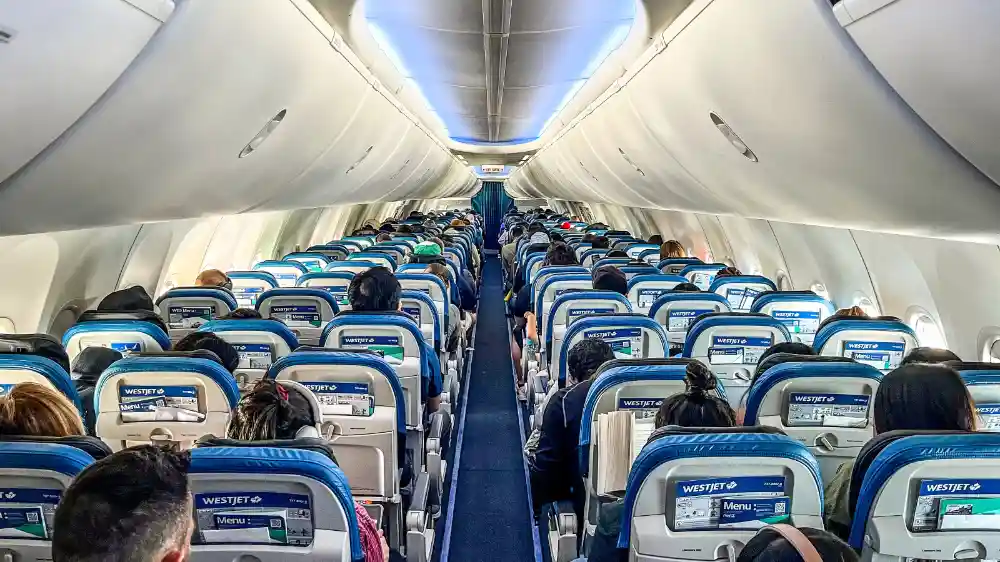
The Canadian carrier explored denser economy configurations on parts of its Boeing 737 fleet, reducing seat pitch and adding rows to better compete with ultra-low-cost rivals. From a purely financial standpoint, the logic was sound. More seats meant lower unit costs and greater pricing flexibility.
The customer response, however, was swift and negative. WestJet had long positioned itself as a more comfortable, customer-friendly alternative to bare-bones budget airlines. Tighter seating clashed directly with that image. Social media backlash and critical reviews amplified dissatisfaction far beyond the flights involved.
By early 2026, WestJet reversed course and restored its previous seating standards. The episode underscores a key reality of cabin densification: it is not merely an operational decision, but a brand-defining one. Airlines that push density without preparing customers for the change risk eroding trust faster than they can offset gains in efficiency.
Dense Widebodies Done Quietly: Air Canada’s High-Capacity 777s
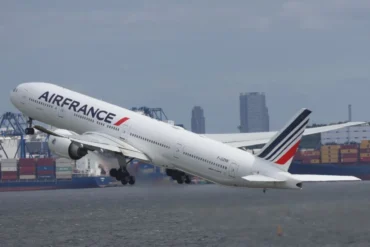
Some airlines pursue dense economy layouts with less fanfare, embedding them within large, complex fleets. Air Canada’s high-capacity Boeing 777-300ER aircraft exemplify this quieter approach to densification.
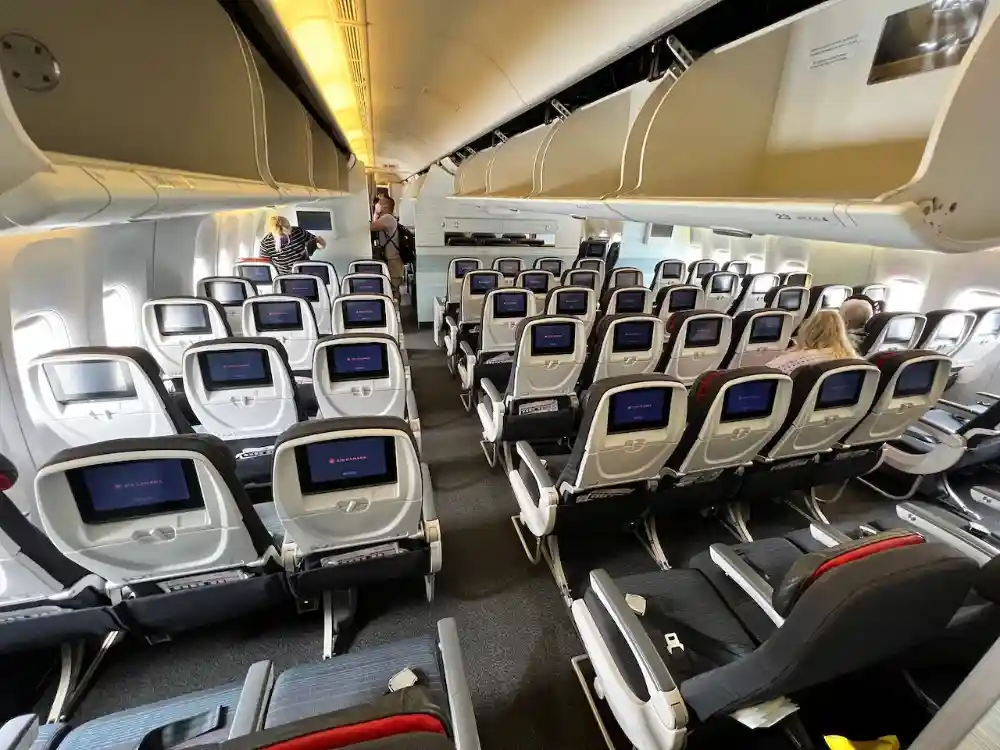
Configured with up to 450 seats, these aircraft operate primarily on high-demand international routes where passenger volumes justify the layout. Unlike Cebu Pacific’s all-economy approach, Air Canada still offers premium cabins, but economy seating is compressed to accommodate sheer scale.
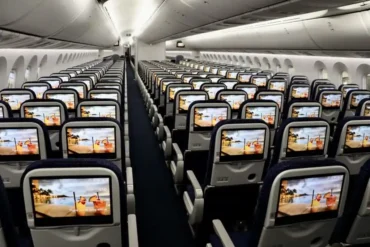
Seat pitch remains within industry norms, yet the cabin’s density is immediately apparent. Large economy sections stretch deep into the fuselage, creating an environment optimized for throughput rather than relaxation. For passengers, the experience varies significantly depending on seat selection, timing, and personal tolerance for crowded spaces.
This strategy highlights a subtle shift in full-service airline thinking. Instead of marketing economy comfort universally, carriers increasingly segment their offerings, allowing density to rise where demand is strongest while preserving more generous layouts elsewhere.
Norse Atlantic and the Case for Moderation
Against this backdrop of aggressive densification, Norse Atlantic stands out by choosing restraint. Operating Boeing 787-9 Dreamliners on long-haul routes, the airline demonstrates that low-cost does not automatically mean extreme density.
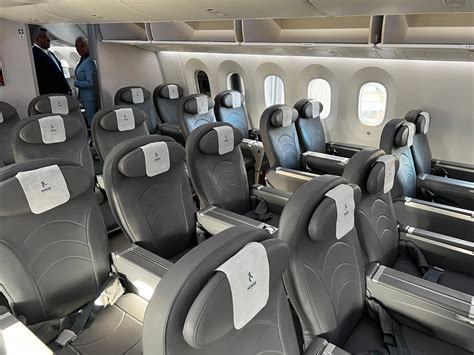
Economy class on Norse Atlantic typically offers 31 to 32 inches of seat pitch, noticeably more than the 28 inches common on ultra-dense narrowbody configurations. Total economy seating stays just under 300 seats, paired with a premium cabin offering significantly increased legroom and recline.
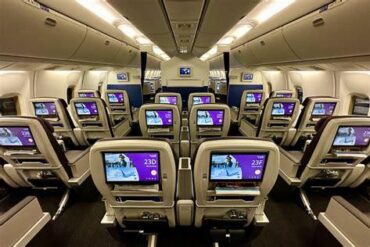
This approach reduces maximum capacity but improves passenger comfort on flights lasting six to ten hours. The result is a cabin that feels calmer, less claustrophobic, and operationally smoother during boarding and service. Norse’s model relies on upselling premium seats and ancillary products rather than maximizing seat count alone.
In 2026, Norse Atlantic serves as a reminder that density is a choice, not an inevitability, and that different cost structures allow for different interpretations of “low-cost” travel.
Passenger Comfort Versus Profitability: The Ongoing Trade-Off
The densest economy cabins in 2026 reveal an industry walking a narrow line between efficiency and endurance. From the airline perspective, tighter seating remains one of the most effective tools for controlling costs without reducing network reach. Every additional seat lowers the average cost per passenger, protecting margins in a volatile operating environment.
For passengers, awareness has never been higher. Seat pitch, width, and configuration are now openly discussed on booking platforms, forums, and social media. Travelers increasingly know what they are buying—and what they are sacrificing. The backlash faced by airlines that misjudge tolerance levels shows that density has reputational consequences as well as financial ones.
Looking ahead, the likely outcome is further segmentation rather than uniform compression. Basic economy products with very tight seating will coexist alongside paid upgrades offering more space, quieter zones, or enhanced ergonomics. In that sense, the densest economy cabins of 2026 are not the end of the story, but a snapshot of an industry still testing the limits of what passengers will accept in exchange for lower fares.
Economy class has always been a compromise. In 2026, it is simply a more precisely calculated one.