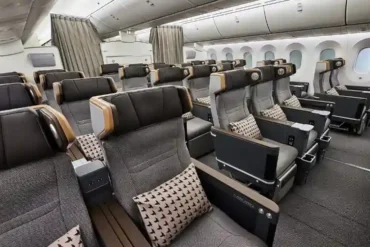
In commercial aviation, space is currency. Every additional seat represents potential revenue, every inch of cabin width is a strategic advantage, and every row added must pass one uncompromising test: evacuate everyone in 90 seconds or don’t fly. In 2026, a select group of airlines have pushed aircraft seating density to its practical and regulatory limits, creating some of the world’s most high-density economy cabins. These configurations are not accidents of design; they are deliberate economic calculations shaped by certification rules, airframe geometry, and passenger demand for low fares.
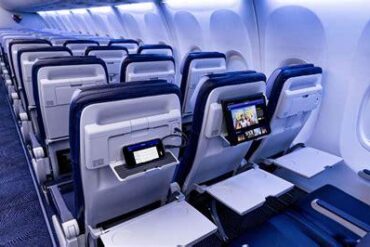
The story divides neatly between narrowbody and widebody aircraft. Narrowbodies like the Boeing 737 and Airbus A320 families are structurally locked into six-abreast economy seating. There is no magical seventh seat to squeeze in. The game here is seat pitch—the distance between a point on one seat and the same point on the seat in front. Shave an inch, add a row. Do that repeatedly, and the economics shift dramatically.
Widebodies are a different beast. Aircraft like the Airbus A350 and Boeing 777 allow airlines to adjust seating not just front-to-back but side-to-side. That is where 2026 gets fascinating. Some carriers now fly ten-abreast A350s. One Philippine airline operates the densest A330neos ever placed into service. And one European leisure airline has pushed the A350-1000 to its maximum certified seating limit. The margins are razor-thin, and the implications ripple through ticket pricing worldwide.
Ryanair And The Engineering Of Minimalism: The 737 MAX 8-200
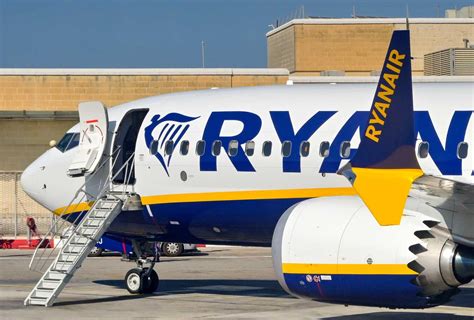
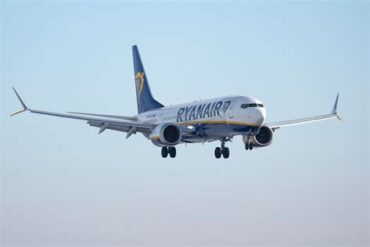
Ryanair does not pretend to sell comfort. It sells mobility at the lowest possible fare. On the surface, its Boeing 737 MAX 8-200 looks like any other six-abreast narrowbody jet. The fuselage width is fixed. The aisle is still there. The armrests are not vanishing into quantum foam. Yet Ryanair configures these aircraft with 197 passenger seats, pressing close to regulatory limits.
The magic is in the exit doors. Aircraft must demonstrate that all passengers and crew can evacuate within 90 seconds. A standard 737 MAX 8 cannot legally carry as many passengers as its physical cabin might allow because it lacks sufficient exits. Boeing’s response was surgical: add extra exit doors and certify a new variant. The MAX 8-200 exists primarily because Ryanair demanded it.
The result is an aircraft capable of seating up to 210 people including crew in theory, though European regulators cap practical configurations lower. Ryanair’s approach is methodical. Seat pitch hovers around 28–29 inches. Premium seating zones are minimized. The airline extracts maximum value from each square meter of aluminum tube.
What is striking is not that the cabin feels tight—many airlines operate similar pitches—but that the design is optimized around regulatory geometry. This is industrial efficiency wearing a boarding pass.
The A350 Width Wars: Nine-Abreast Versus Ten-Abreast
The Airbus A350 was originally conceived for nine-abreast economy comfort. That was the sweet spot: roughly 18-inch-wide seats, decent aisles, tolerable long-haul endurance. But aircraft cabins are not static monuments. They are adaptable ecosystems.
Airbus introduced a revised production standard that increased internal cabin width by roughly four inches. Four inches sounds trivial. In aviation, it is transformative. Those inches determine whether ten seats across becomes feasible without descending into absurdity.
The Boeing 777 has long flown with ten-abreast economy, despite originally being designed for nine. Its fuselage is slightly wider, making the squeeze more manageable. The A350’s narrower cross-section makes ten-abreast more controversial—and more revealing of airline strategy.
Only a handful of carriers operate ten-abreast A350-1000s. Among them, two French leisure airlines pushed early-production aircraft into that configuration, where seat widths can dip into the 16–16.7 inch range. That is intimate. Elbow diplomacy becomes a survival skill.
French Bee: The 480-Seat A350-1000
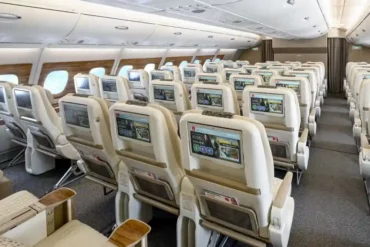
French Bee has done something no other airline has matched in 2026: configure its Airbus A350-1000 to the aircraft’s maximum certified seating of 480 seats. Out of these, 440 are economy seats and 40 are premium economy.
This is not theoretical density. It is operational reality. French Bee deploys these aircraft on long-haul leisure routes between Paris and destinations such as the Caribbean and Tahiti. The target market prioritizes price over pampering.
The A350-1000’s fuselage length allows additional rows to compound the gains from ten-abreast seating. Switching from nine to ten seats across does not merely add one passenger per row; it multiplies that gain over dozens of rows. The revised production standard further optimized interior layout, allowing roughly 30 extra seats in typical configurations.
In practical terms, French Bee’s cabin is a masterclass in high-density long-haul economics. The airline extracts the absolute maximum regulatory capacity from its airframes. That makes it the undisputed champion of widebody economy density in 2026.
Air Caraïbes: High Density With A Leisure Twist
Air Caraïbes, a sister carrier within Groupe Dubreuil, also configures its A350-900s and A350-1000s at unusually high densities. Its A350-900s carry 389 passengers, including 326 economy seats, 45 premium economy seats, and 18 business class seats. The -1000 variant rises to 429 total seats.
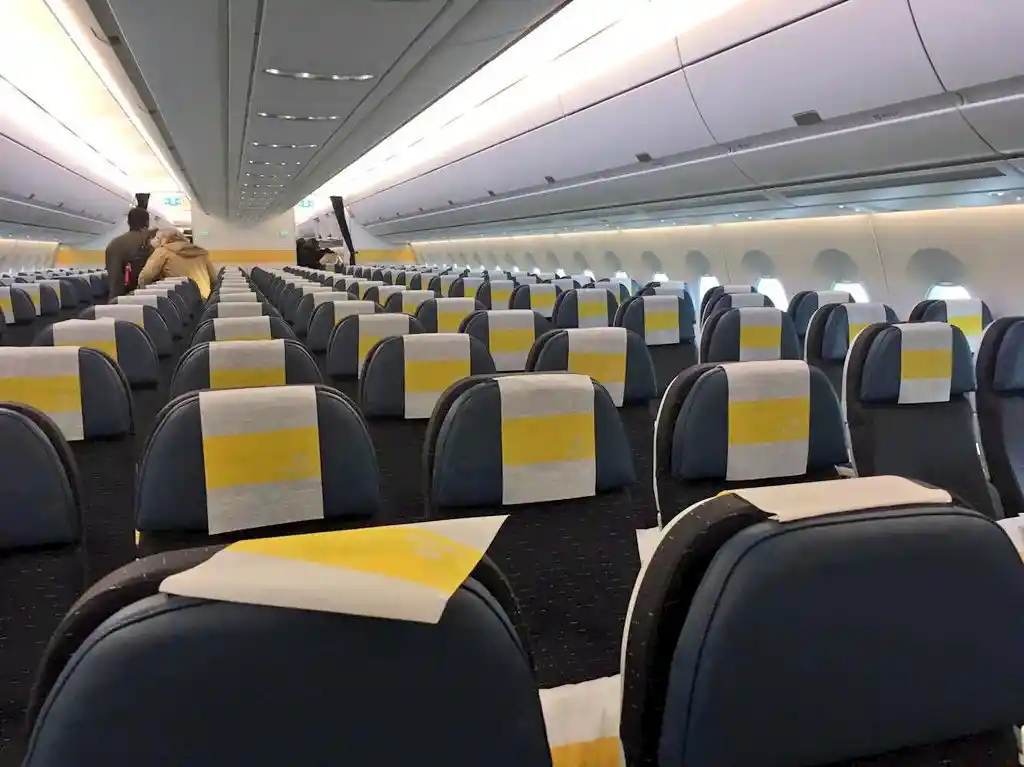
These aircraft serve transatlantic leisure markets between France and the Caribbean. Unlike pure low-cost carriers, Air Caraïbes blends density with modest premium cabins. The configuration reflects a hybrid strategy: maximize revenue from economy while retaining higher-yield seating at the front.
Seat widths on older production aircraft are tight. The experience is deliberately optimized for affordability. The airline’s calculus is simple: if customers accept narrower seats in exchange for lower fares to tropical destinations, the model works.
Philippine Airlines: A Flag Carrier Breaks The Mold
Density is expected from leisure and ultra-low-cost airlines. It becomes more surprising when a mainline flag carrier adopts similar tactics. Philippine Airlines (PAL) stands alone in 2026 as the only full-service flag carrier operating ten-abreast A350-1000s.
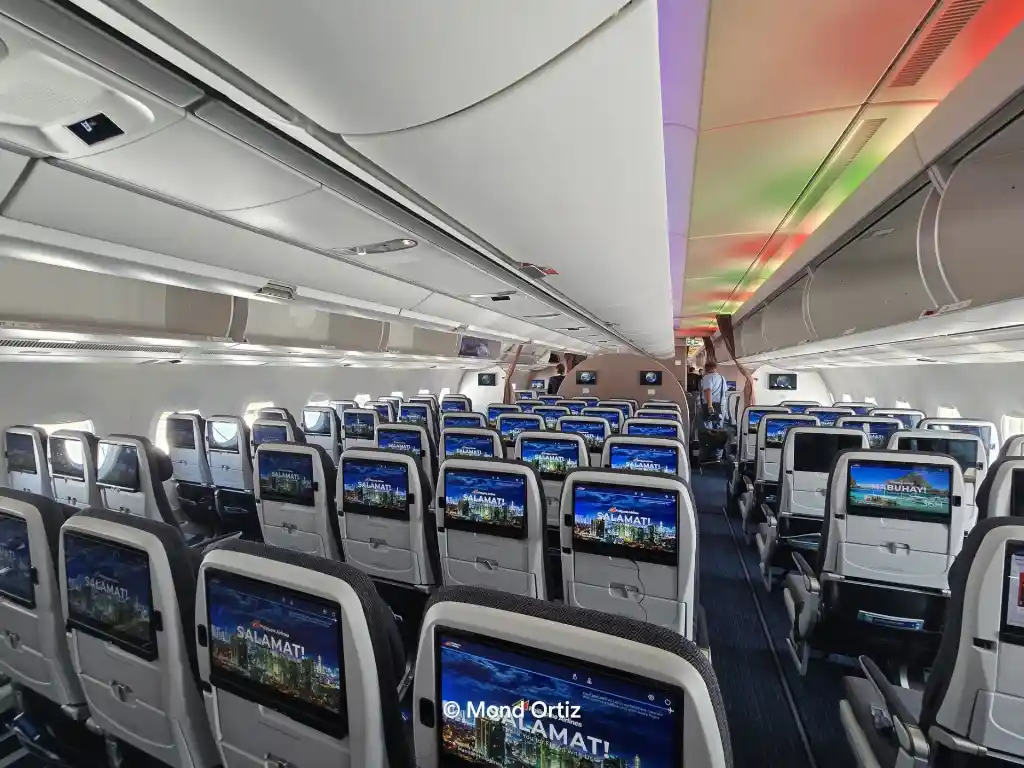
PAL’s aircraft are delivered under the newer production standard, benefiting from the additional cabin width. Seat widths measure around 17 inches, slightly more generous than French Bee’s tighter layouts. That difference may seem marginal. On a long-haul flight across the Pacific, it matters.
PAL configures its A350-1000s with 382 seats, blending high density with full-service branding. The strategy reflects competitive realities in Southeast Asia, where price sensitivity remains strong even on intercontinental routes.
The airline’s approach illustrates a broader trend: high density is no longer confined to low-cost branding. It is a structural tool in global competition.
Cebu Pacific And The 459-Seat A330neo
If French Bee owns the densest A350-1000, Cebu Pacific claims the record for the densest Airbus A330-900 (A330neo) in operation. Each of its eight aircraft seats 459 passengers in an all-economy configuration.
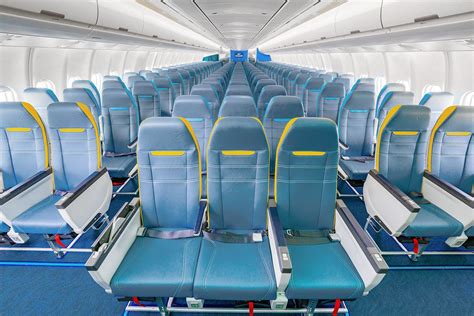
The A330 fuselage cannot accommodate ten-abreast seating without absurd compromises, so Cebu Pacific retains nine-abreast rows. The density comes from eliminating premium cabins entirely and optimizing seat pitch.
The certified maximum for the A330neo approaches 465 seats. Cebu Pacific flies remarkably close to that ceiling. These aircraft operate on domestic and regional leisure routes where low fares dominate purchasing decisions.
To put this in perspective, many Airbus A380 superjumbos carry fewer passengers because they dedicate large areas to business and first class. Cebu Pacific’s twin-engine A330neo can exceed their economy capacity in pure passenger count. That is not marketing spin; it is raw arithmetic.
Lion Air, AirAsia, And The Broader Density Ecosystem
Cebu Pacific is not alone in pushing A330 density. Lion Air has configured A330s with up to 440 seats. AirAsia operates A330-300s with as many as 367 seats. Charter carriers often pack between 400 and 430 passengers into similar airframes.
Contrast that with Delta Air Lines, which configures its A330-900s with around 281 seats across multiple classes. The same airframe. Radically different philosophies.
These divergences reveal aviation’s central tension. One branch of the industry chases ultra-low fares through maximum density. Another pursues yield through premium segmentation. Both strategies are rational responses to market forces.
Why The Boeing 777X Will Not Join The Density Race
At first glance, the massive Boeing 777-9, part of the 777X family, seems like a candidate for record-breaking capacity. It is larger than the A350-1000 and replaces the 777-300ER. Yet certification strategy changes everything.
Boeing has reduced the number of exits on the 777-9 compared with older high-capacity variants. As a result, maximum passenger certification is expected to be around 475 seats, lower than the 777-300ER’s theoretical 550-seat certification and possibly lower than a maximized A350-1000.
This is intentional. The 777X is positioned as a premium, long-haul flagship for trunk routes. Airlines ordering it prioritize range, efficiency, and high-yield cabins rather than sheer density.
In effect, Airbus designed the A350-1000 with the flexibility to serve both premium and ultra-dense markets. Boeing steered the 777X toward a more exclusive mission profile. One aircraft stretches toward leisure density; the other leans into prestige and premium economics.
The Economics Behind Extreme Cabin Density
Every high-density configuration reflects a cold calculation. Fuel burn per seat drops as more seats are added. Airport fees are spread across more passengers. Crew costs are amortized over higher load factors. The revenue potential per flight increases.
The trade-off is comfort. Narrower seats and reduced pitch alter passenger perception. Airlines must judge whether their target market will accept these constraints in exchange for lower fares.
Regulation imposes hard boundaries. The 90-second evacuation rule is non-negotiable. Exit placement, aisle width, and crew positioning become architectural constraints. Engineers and interior designers operate within those lines like chess players constrained by a board.
The fascinating truth is that aircraft cabins are living economic diagrams. A French leisure carrier, a Philippine ultra-low-cost airline, and a European flag carrier can all operate the same model aircraft in dramatically different ways. The aluminum shell is constant; the business model shapes the interior reality.
In 2026, the airlines with the world’s most high-density economy cabins are not reckless outliers. They are precise operators exploiting every inch permitted by physics and regulation. French Bee’s 480-seat A350-1000, Cebu Pacific’s 459-seat A330neo, Ryanair’s 197-seat 737 MAX 8-200, Air Caraïbes’ ten-abreast leisure layouts, and Philippine Airlines’ mainline adaptation all represent different expressions of the same idea: capacity is power.
The aircraft cabin has become a battlefield of inches. In that battlefield, strategy matters more than width, and regulation matters more than bravado. The result is a global aviation landscape where some of the densest cabins ever flown are now routine, carrying millions of passengers who value affordability above all else.