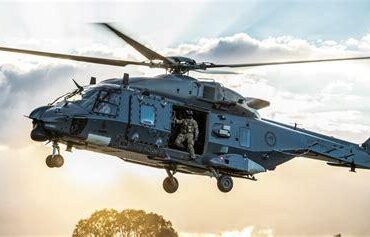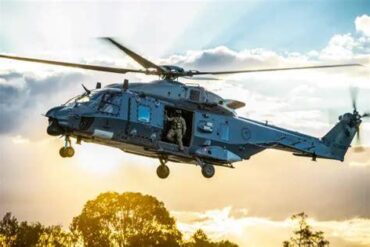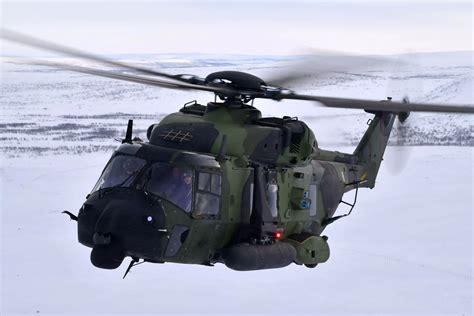
More than two decades after Norway’s ambitious leap into next-generation maritime helicopter capabilities, the saga of the NHIndustries NH90 has ended in a bitter retreat and a €375 million out-of-court settlement. Norway’s Defense Ministry has officially closed the curtain on what it calls the most disappointing procurement failure in the country’s military history.
The agreement, struck with the NHIndustries consortium — composed of Airbus, Leonardo, and GKN Fokker — involves the return of all NH90 helicopters, spare parts, mission equipment, and tools. These assets will now be recycled for other clients. In exchange, Norway walks away with over $432 million, halting a legal showdown that could have unspooled decades of internal dysfunction and contractual conflict.
Two Decades of Broken Promises and Persistent Failures
Norway signed the initial contract in 2001 to procure 14 NH90 helicopters, destined for anti-submarine warfare (ASW) and Coast Guard missions, with the goal of replacing the aging Westland Lynx fleet. The acquisition was marketed as a leap forward in maritime aviation, built to meet the rigorous operational demands of NATO-aligned nations.
Originally slated for delivery by 2008, the NH90s arrived years behind schedule. Of the 14, only 13 were delivered, and only eight met the bare minimum operational standards. By 2022, Norwegian officials were forced to admit that no amount of manpower or parts would ever render the platform fit for duty.
The Maintenance Nightmare: NH90’s Operational Achilles’ Heel
At the heart of the NH90 disaster lies a catastrophic failure in maintainability and reliability. Despite being billed as a high-end multirole aircraft, the NH90 suffered from unprecedented downtime.
The operational data is damning:
- 30–40 hours of maintenance required per flight hour, significantly more than the 10–12 hours required by the Sikorsky MH-60R Seahawk.
- Fleet-wide availability in Norway plummeted to an average of 700 flight hours annually, well below the required 3,900 hours.
- At the end of its service, some aircraft were logging as few as 100 flight hours per year.
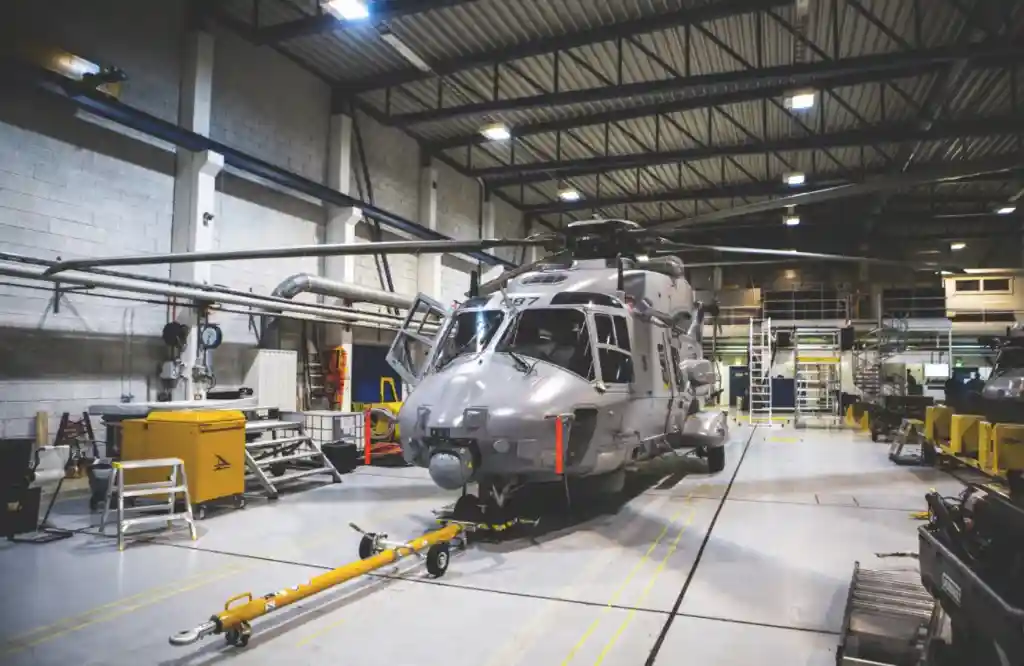
The reasons were multifaceted. Reports cited poor avionics reliability, unintelligible technical documentation, and complex integrated systems that could not be efficiently supported. A chronic shortage of spare parts led to cannibalization between helicopters, while the consortium repeatedly missed timelines and failed to deliver promised upgrades — including the long-delayed Final Operational Configuration (FOC).
Environmental Degradation: Arctic Realities Clash with Engineering Hype
The NH90 was never truly built to withstand the Arctic. Norwegian defense officials observed severe corrosion on rotors, airframes, and engine intakes that exceeded even worst-case environmental forecasts. Mission aborts caused by icing on sonar systems and mission masts became a recurring problem during winter operations.
These real-world challenges exposed a critical gap between the helicopter’s marketed versatility and its actual resilience in harsh climates. Despite receiving operational feedback from Norwegian teams, NHIndustries remained largely inert to modification requests, ultimately eroding Oslo’s patience.
Legal War Averted: Settlement Over Scandal
In June 2022, then-Defense Minister Bjørn Arild Gram issued a scathing public rebuke, stating, “We have concluded that no matter how many hours our technicians work, it will never make the NH90 capable of meeting the requirements of the Norwegian Armed Forces.”
By 2023, Norway had already decided to procure six US-built MH-60R Seahawks to replace the failed NH90s. Facing a looming lawsuit that risked exposing systemic failures within the NHIndustries consortium, both sides opted to settle. The Oslo District Court had scheduled a hearing for November 2025, but the decision to settle preempted further legal scrutiny.
A filing by the state described the NH90’s shortcomings as “almost unparalleled in any other contract for the manufacturing of military equipment.”
Australia, Sweden & Belgium Also Abandon Ship
Norway’s case is not an isolated anomaly. A domino effect has swept across NATO and allied militaries, all reaching similar conclusions about the NH90’s unsustainable lifecycle costs and flawed design.
Australia: Billions Lost, Trust Shattered
Australia’s MRH90 Taipan — its local variant of the NH90 — became another high-profile casualty. Initially touted as a transformative battlefield utility helicopter, the fleet was plagued by delays, safety incidents, and a support system that failed spectacularly.
By 2021, all 47 MRH90s were grounded due to safety concerns. In July 2023, one tragically crashed during an exercise, killing four personnel. In response, the Australian government began dismantling and burying the helicopters — a symbolic gesture marking the end of a failed project that cost over $15 billion, including $11.3 billion in maintenance alone.

Australia has since transitioned to the UH-60 Black Hawk, emphasizing the need for reliable and predictable systems for frontline troops. The Taipan’s design flaw — its inability to fire a door gun while deploying troops — was the final straw in a long line of grievances.
Sweden: Low Availability, High Frustration
Sweden’s Air Force experienced availability rates as low as 30%, plagued by spare parts shortages, persistent software bugs, and high maintenance hours. Though it chose not to cancel its contract outright, Sweden announced a phased retirement of all NH90s by 2035.
To fill the immediate gap, Sweden ordered 15 UH-60M Black Hawks and received retrofitted NH90s to full operational capability. However, the move underscored how even retrofitting could not salvage a platform deemed fundamentally unreliable.
Belgium: “Bad Purchase” Declared
In July 2025, Belgium’s Defense Minister Theo Francken called the NH90 a “bad purchase,” publicly denouncing its unsustainable maintenance costs. Belgium will retire its four TTH models by September 2025 and replace them with 15 Airbus H145Ms by 2028. Though the navy will continue operating four NFH variants, the move reflects a clear pivot away from NH90 in land-based roles.
How Did the NH90 Get It So Wrong?
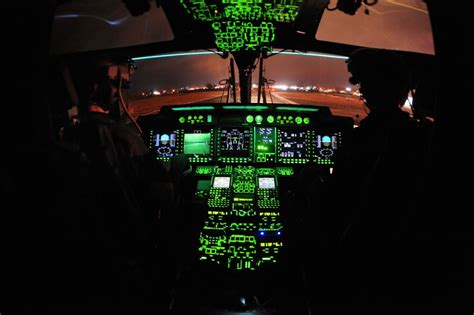
Marketed as a modular, NATO-spec multi-role helicopter, the NH90 seemed ideal on paper. With its twin engines, full digital cockpit, and integrated mission systems, it promised to dominate both land and maritime environments. Its potential to serve in search and rescue, anti-submarine warfare, medical evacuation, and special operations made it a natural choice for joint forces across Europe.
Yet reality proved otherwise. The NH90’s over-engineered complexity made it nearly impossible to maintain, while its cost-to-performance ratio quickly spiraled out of control. Every failed upgrade, delayed part shipment, and missed deadline painted a picture of an aircraft conceptually impressive but operationally disastrous.
A Broader European Procurement Crisis?
The NH90 debacle lays bare a more systemic issue plaguing European defense procurement — a combination of over-ambitious engineering, underwhelming accountability, and fragmented multinational management. The NHIndustries consortium, while symbolizing European industrial cooperation, also created a diffuse chain of command, diluting responsibility.
Each operator faced different logistical needs, environmental challenges, and mission requirements. Yet the NH90 was designed as a “one-size-fits-all” solution, incapable of scaling with user-specific demands. The result: widespread underperformance across diverse theaters.
Conclusion: The Rise of the Black Hawk, the Fall of the NH90
With Norway, Australia, Sweden, and Belgium all turning to the American-made UH-60 Black Hawk as a replacement, confidence in the NH90 has plummeted. While Germany and other European nations still operate variants, they do so under the shadow of mounting evidence that the NH90’s long-term viability is questionable.
The €375 million payout to Norway may seem substantial, but it’s a small price for NHIndustries to pay to avoid courtroom scrutiny that could irreparably damage future contracts.
The NH90 will go down in defense aviation history not as a technological leap, but as a cautionary tale of how innovation without reliability can become an enduring strategic liability. For the countries that trusted its promise, the aircraft is no longer a platform — it’s a parable. One written in delayed deliveries, lost lives, and billions in sunk costs.