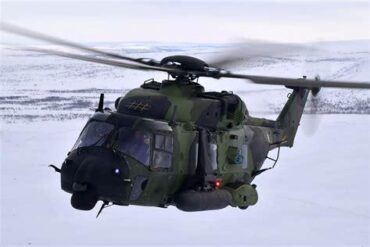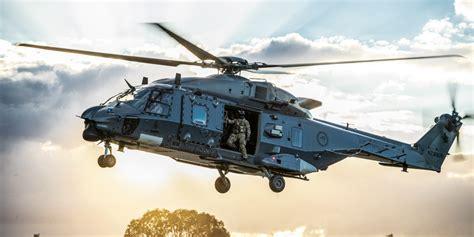
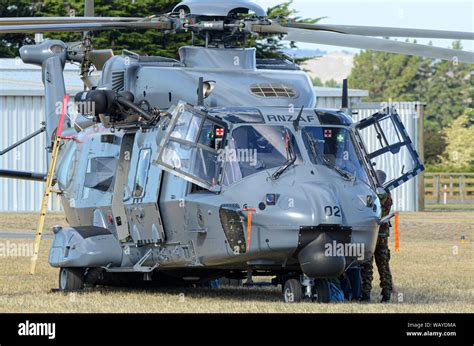
In a bold demonstration of operational agility and strategic foresight, the Royal New Zealand Air Force (RNZAF) has successfully validated a long-range overwater operations concept for its NH90 medium utility helicopters, marking a pivotal shift in how New Zealand projects air mobility across the Pacific theatre.
On 12 November 2025, the RNZAF conducted a series of extended ferry flights between Papua New Guinea, Australia, and New Zealand, taking the NH90 well beyond the traditional 50-nautical-mile safe limit from land. This ambitious initiative relied on external fuel tanks, upgraded avionics, and detailed risk management protocols, proving the NH90’s capability to traverse expansive maritime distances independently.
Expanding Reach in the Southwest Pacific
The success of these long-range sorties enhances New Zealand’s strategic posture, offering a self-reliant and rapid-response aviation asset in a region increasingly shaped by geopolitical volatility and climate-driven emergencies. The RNZAF’s new operational profile empowers No. 3 Squadron to deploy rotary-wing assets without relying solely on HMNZS Canterbury or allied strategic airlift like the C-17 Globemaster.
Using the return leg from Papua New Guinea as a live exercise, the squadron implemented a meticulous “crawl, walk, run” approach—initially testing shorter legs before tackling the more challenging Australia–New Zealand sector. The flights covered distances up to 660 miles, including approximately 480 nautical miles over open ocean, conducted under instrument flight rules (IFR).
Technology-Driven Performance Enhancements
The NH90, developed by Airbus, stands out for its fly-by-wire controls, ice protection systems, and composite structure, making it well-suited for the harsh and variable conditions of the Tasman Sea and tropical Pacific. The missions were further supported by the recent Software Release 2 update and secure communications enhancements, ensuring robust long-range command and control.
Key capabilities enabling these operations include:
- External fuel tanks integrated with an advanced fuel-management system for real-time performance optimisation.
- Weather-mapping radar and modern navigation systems that enhance situational awareness during open-ocean transits.
- De-icing systems critical for maintaining safe flight envelopes in unpredictable maritime weather.
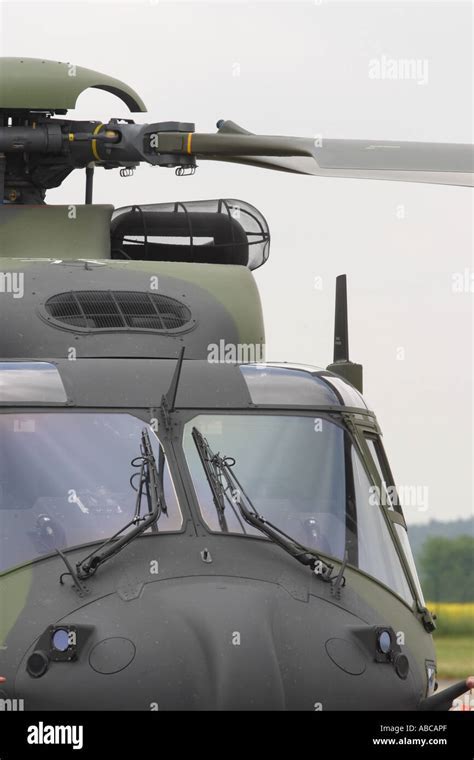
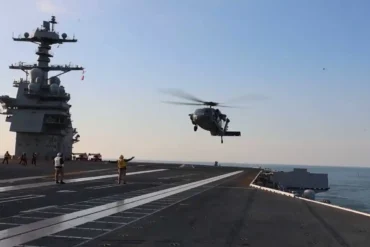
These features distinguish the NH90 from legacy platforms like the UH-1 Iroquois, and even modern peers such as the UH-60 Black Hawk and AW101 Merlin, particularly in terms of variant commonality, logistics efficiency, and operational range.
Strategic Implications for Regional Engagement
New Zealand’s newfound ability to deploy NH90s autonomously across the Pacific significantly alters its military and diplomatic footprint. In military terms, it enables rapid insertion of special forces, medevac teams, and engineering units to remote island nations, accelerating disaster response or stabilisation missions without dependency on naval or partner assets.
In the broader geopolitical context, this enhanced mobility strengthens New Zealand’s role as a credible and responsive security partner to Pacific island states. In an era of intensifying influence competition, particularly in the Indo-Pacific, such capabilities carry both humanitarian and strategic leverage.
From Tactical Platform to Strategic Enabler
The transformation of the NH90 from a tactical battlefield transport into a strategic enabler underscores a significant evolution in New Zealand’s defence doctrine. By integrating modern technology, operational experience, and doctrinal innovation, the RNZAF is now equipped with a flexible toolset to meet complex regional demands—be it natural disaster relief, security cooperation, or defence contingencies.
Ultimately, the NH90’s long-range overwater capability is more than a technical achievement—it is a symbol of New Zealand’s intent to maintain a sovereign, agile, and credible presence in the Pacific. It ensures that the RNZAF can respond under its own power, with speed and confidence, wherever Pacific commitments call.