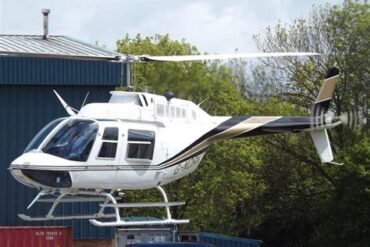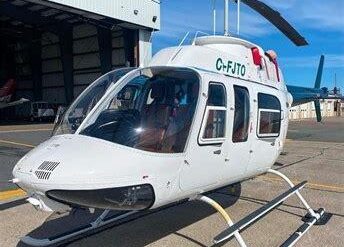
Few helicopters have carved out a legacy as enduring and versatile as the Bell 206. Born from a U.S. military contract that initially passed it over, this two-bladed rotorcraft rose from rejection to become a global icon in both civilian and military aviation. Produced from 1962 until 2017, with over 7,300 units delivered, the Bell 206 has proven its adaptability through continuous development, broad mission utility, and unrivaled service longevity.
The Bell 206’s origin traces back to Bell Helicopter’s response to a U.S. Army requirement for a Light Observation Helicopter (LOH). Its initial version, the YOH-4A, made its maiden flight on December 8, 1962, but failed to impress due to its uninspired design—earning it the derisive nickname “Ugly Duckling.” However, instead of fading into obscurity, Bell engineers redesigned the fuselage and transformed the helicopter into what would become the JetRanger series.
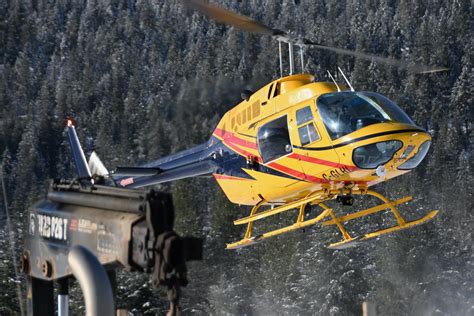
From Rejection to Renaissance: The JetRanger Reborn
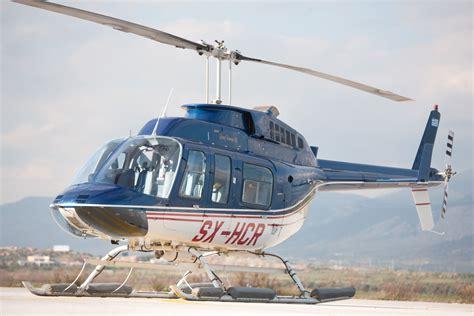
After the initial military setback, Bell focused on the commercial market. By redesigning the airframe to be more aerodynamic and expanding the cabin volume by 16 cubic feet, the company introduced the Bell 206A JetRanger. The new design made its first flight on January 10, 1966, received FAA certification in October of the same year, and entered service by January 13, 1967. The JetRanger’s combination of reliability, performance, and low operating costs made it an instant favorite.
The aircraft became even more significant when the U.S. Army, recognizing the improved design, adopted it in the form of the OH-58 Kiowa, a model that would go on to see decades of military service.
Stretching the Legacy: The Bell 206L LongRanger
To cater to the growing demand for greater capacity, Bell introduced the 206L LongRanger in 1975. This variant featured a 30-inch fuselage stretch, expanding seating to accommodate up to seven occupants. It was powered by the Allison 250‐C20B turboshaft engine and quickly became a go-to aircraft for corporate transport, medevac operations, and utility roles.
The LongRanger family continued to evolve with the 206L-1, 206L-3, and 206L-4, integrating progressively advanced engine types like the C28 and C30P, which offered enhanced performance in high-altitude environments. Military applications followed, notably the 206L TexasRanger, developed in 1981 for specialized missions.
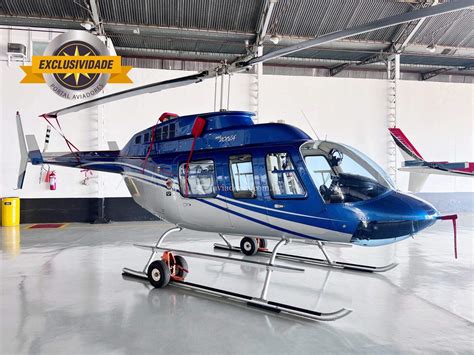
Even as late as 2007, upgrade kits were introduced to convert older L-1 and L-3 models to L-4 specifications, increasing maximum takeoff weight by 300 pounds. When production ended in June 2017, more than 3,800 LongRangers had been built, cementing its place as one of the most successful light helicopters in history.
The Twin Revolution: Gemini ST and Bell 206LT TwinRanger
Responding to the market’s need for twin-engine reliability, particularly in over-water and IFR conditions, the Gemini ST emerged as a notable twin-engine conversion. Certified between 1989 and 1994 by Tridair, the Gemini ST turned the 206L into a platform capable of both single- and twin-engine operation.
Bell took the concept further by building the 206LT TwinRanger between 1994 and 1997, producing 13 units before the type was ultimately replaced by the more advanced Bell 427. These developments illustrated the flexibility of the original 206 airframe and its capacity to adapt to the changing needs of operators.
Operational Versatility Across Continents and Roles
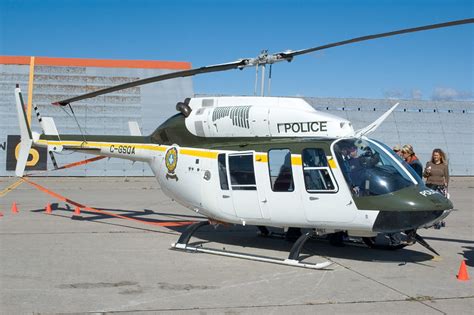
The Bell 206’s service record is extensive and diverse. Militaries, police forces, television stations, corporate executives, and even record-setting pilots have flown the type across a wide array of missions. In 1968, the U.S. Navy adopted the 206A as the TH-57 Sea Ranger for training, while the U.S. Army committed to the OH-58 Kiowa in the same period.
Further improvements led to the 206B JetRanger II in 1971 and the 206B-3 JetRanger III in 1977, both of which featured enhanced tail rotor designs and upgraded engine performance. The JetRanger became the helicopter of choice for news broadcasters, while the LongRanger found success in aerial ambulance operations, thanks to its larger cabin and stable flight characteristics.
Remarkably, the aircraft was also involved in record-breaking global flights:
- In 1982, Ross Perot Jr. completed the first helicopter circumnavigation of the globe in a Bell 206.
- In 1983, Australian Dick Smith became the first person to complete a solo around-the-world helicopter flight.
- In 1994, Ron Bower set a world speed record for helicopters in its class.
Global Variants and Custom Builds
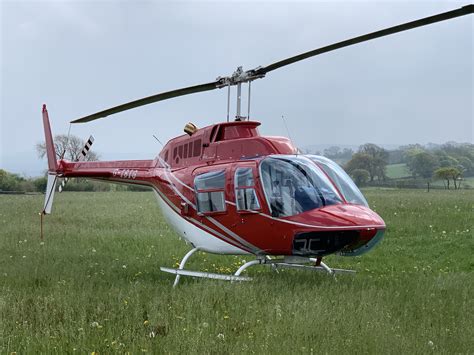
Beyond its American roots, the Bell 206 has been produced or modified under numerous designations. Civilian types include:
- 206A/B (JetRanger)
- 206L (LongRanger series)
- 206LT (TwinRanger)
Military variants extend the type’s reach further:
- OH-58 Kiowa (U.S. Army)
- TH-57 Sea Ranger (U.S. Navy)
- CH-139 (Royal Canadian Air Force)
- Hkp 6 (Sweden), IH-6 (Italy), and many others tailored for foreign militaries.
These variations underscore the platform’s scalability and adaptability, enabling its longevity across decades of evolving aviation requirements.
Global Operator Footprint
The Bell 206 has served with dozens of national air forces, police departments, and private operators. Former users include the Australian Army and the Canadian Armed Forces, both of whom retired the type after decades of frontline service. In the civil world, its low maintenance costs and ease of operation kept it a favorite for flight schools, VIP transportation, and charter services well into the 21st century.
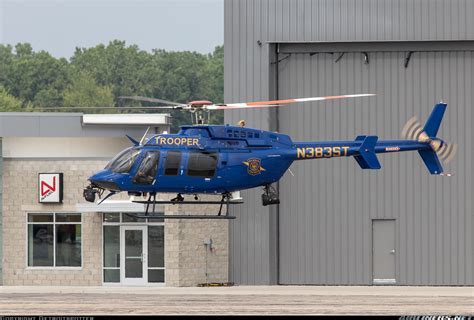
Tragic Incidents and Lessons Learned
Despite its solid safety record, the Bell 206 has not been immune to high-profile accidents:
- 1977: Crash kills pilot Francis Gary Powers, noted U-2 pilot, and his cameraman.
- 1990: Blues guitarist Stevie Ray Vaughan and three others perish.
- 1991: Promoter Bill Graham dies in a nighttime crash into a utility tower.
- 2019: Brazilian journalist dies in Sao Paulo after main rotor failure.
- 2025: Sightseeing Bell 206 crashes in the Hudson River; multiple injuries reported.
Each of these incidents has contributed to ongoing improvements in rotorcraft safety, pilot training, and regulatory oversight.
Specifications of the Bell 206B JetRanger II
To understand its performance profile, the Bell 206B JetRanger II features the following specifications:
- Crew: 1 pilot + 4 passengers
- Length: 38 feet, 9.5 inches
- Empty Weight: 1,455 lbs
- Maximum Takeoff Weight: 3,200 lbs
- Engine: Allison 250-C20 turboshaft, 400 horsepower
- Maximum Speed: 122 knots
- Range: 337 nautical miles
- Service Ceiling: 20,000 feet
These capabilities made the 206B well-suited for short-haul missions, mountainous regions, and a broad spectrum of civil operations.
Cultural Presence and Popular Media
The Bell 206 isn’t just a workhorse—it has also become a recognizable symbol in popular culture. It was prominently featured in the 1980s British TV series “Treasure Hunt,” where it served as the main method of transport and a mobile communication relay. This visibility further solidified the aircraft’s image as a reliable and sleek utility helicopter.
Conclusion: The Bell 206’s Enduring Legacy
With a production span exceeding half a century, the Bell 206 remains a definitive chapter in rotary-wing aviation. Whether as the agile JetRanger, the spacious LongRanger, or the robust TwinRanger, it has consistently demonstrated reliability, adaptability, and effectiveness. While production may have ended in 2017, its legacy continues in hangars, heliports, and flight lines around the globe.
Its successor, the Bell 505 Jet Ranger X, now carries the torch forward, but the original Bell 206 remains an enduring benchmark in helicopter design—a machine that did more than just fly. It connected continents, saved lives, trained pilots, and told stories in the sky.