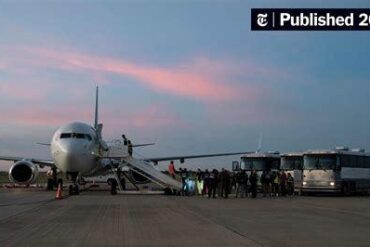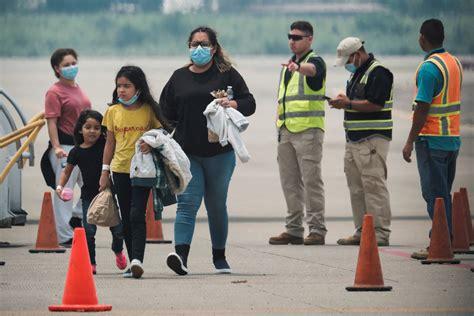
Venezuela is taking significant strides in its commitment to family reunification, as evidenced by the return of 206 migrants on a special repatriation flight from Texas. This operation, organized under government initiatives led by the Bolivarian authorities, highlights the nation’s ongoing dedication to supporting its citizens abroad. The flight, which took place on a recent Friday, transported a diverse group of individuals consisting of 186 men, 17 women, and three girls, all eager to return to their homeland after facing various challenges overseas.
Upon arrival at Simón Bolívar Maiquetía International Airport, these returning citizens underwent comprehensive health screenings as part of strict medical protocols established by the Bolivarian government. This process is designed to safeguard public health and ensure a smooth transition for each individual. The rigorous checks aimed to identify any potential health risks, ensuring that no infectious diseases were brought back to the country, while also verifying the identities and travel documents of the migrants. Such meticulous attention to detail underscores Venezuela’s commitment to protecting its populace as they reintegrate into society.
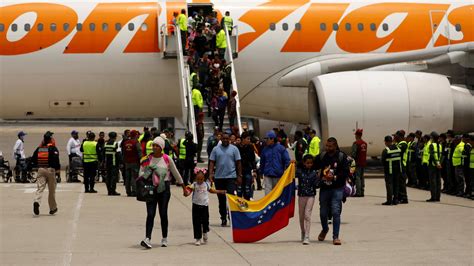
The reception at the airport was well-coordinated, involving a team of Venezuelan authorities including officers from the Scientific, Criminal, and Criminal Investigation Corps, the Bolivarian Intelligence Service, the Bolivarian National Guard, and the Bolivarian National Police. Their primary role was to maintain security, provide logistical support, and facilitate a seamless reintegration process for the returnees. Authorities recognized the importance of creating an environment that minimizes confusion and bottlenecks, ensuring that each returning citizen received necessary assistance promptly.
Venezuelan officials emphasized that the support for returnees extends far beyond their arrival at the airport. The government has initiated various measures aimed at providing temporary shelter, food supplies, and opportunities for social support, enabling returnees to rebuild their lives in their homeland effectively. This initiative is part of a broader strategy to address the needs of Venezuelans who have faced legal, economic, or humanitarian hardships while living abroad.
This recent repatriation is not an isolated event; it follows a similar operation just ten days prior, where 130 Venezuelans returned home from the United States. These flights have become a regular facet of Venezuela’s strategy to bring back citizens, especially those who have encountered difficulties while abroad. Since the inception of these programs, over 5,600 Venezuelans have returned from various countries, predominantly from the United States and Mexico. This notable figure illustrates the growing momentum of the government’s repatriation efforts and its commitment to ensuring the safety and dignity of its citizens.
The foundation for these repatriation flights can be traced back to an agreement reached in January between Caracas and Washington during the administration of former President Donald Trump. This agreement aimed to address the rising number of Venezuelans crossing borders in search of work or safety, only to find themselves in precarious situations. Many migrants faced challenges such as legal troubles, deportation proceedings, or financial hardship, which prompted the Venezuelan government to create safe pathways for their return.
The Bolivarian government has framed these operations as integral to a larger humanitarian policy, emphasizing the right of every migrant to return to their homeland with dignity. Officials consistently reaffirm that it is their moral obligation to safeguard the well-being of Venezuelan citizens, regardless of their location. This narrative resonates deeply as international observers highlight the pressing migration pressures facing the nation due to ongoing economic instability, political challenges, and international sanctions, which have driven millions of Venezuelans to seek refuge abroad.
While these repatriation programs offer relief and hope to thousands of returning citizens, they also illuminate the ongoing challenges within Venezuela. The current situation underscores the need for a multifaceted approach to address the root causes of migration, including economic recovery, political stability, and social reintegration. As the government continues to advocate for international partnerships to bolster these efforts, the call for collaborative support resonates strongly among both national and international stakeholders.
Looking ahead, the Venezuelan government has announced plans for more scheduled repatriation flights in the coming weeks, demonstrating its steadfast commitment to reuniting families and providing a pathway for returnees to reintegrate into their communities. Authorities have pledged to maintain strong coordination with international agencies to ensure that these returns are conducted safely and humanely. As Venezuela navigates the complexities of social and economic pressures, these flights serve as a vital lifeline for many who aspire to reunite with their families and resume their lives in their homeland.
In conclusion, Venezuela’s push to reunite families through organized repatriation flights reflects a broader humanitarian commitment to its citizens. With a focus on dignity, safety, and reintegration, the government remains resolute in its mission to leave no Venezuelan behind who wishes to come home. As these operations continue, they promise to foster hope and resilience among a population striving for stability and a brighter future.