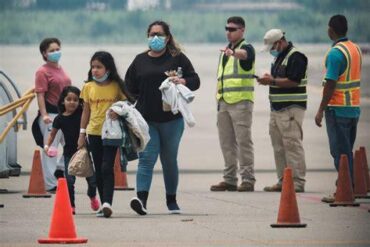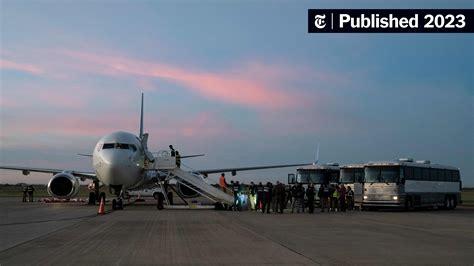
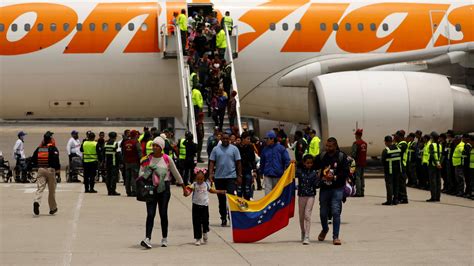
On Friday, June 27, 2025, a chartered deportation flight originating from Texas marked a pivotal moment in the migration crisis unfolding across the Americas. Aboard the flight were 206 Venezuelan nationals—186 men, 17 women, and 3 children—deported from the United States and repatriated under Venezuela’s state-led initiative, the Vuelta a la Patria (“Return to the Homeland”) program. As the aircraft touched down at Simón Bolívar International Airport in La Guaira, it signaled not only a logistical operation but the human consequences of complex geopolitical shifts.
A Humanitarian Response in a Politicized Landscape
The Vuelta a la Patria program, established in 2018, was designed as a humanitarian bridge for Venezuelans who had migrated abroad—often under duress caused by economic collapse and political instability—to return home safely. With migration corridors stretched thin and many countries, particularly the United States, tightening immigration controls, the program has assumed increased relevance. The June 27 flight was the second such mass deportation from the U.S. in the month, coming on the heels of a similar repatriation of 203 Venezuelans on June 24.
Upon arrival, returnees were met by a coordinated team of Venezuelan government institutions, including:
- Scientific, Criminal and Criminal Investigations Corps (CICPC)
- Bolivarian National Intelligence Service (SEBIN)
- Bolivarian National Guard (GNB)
- National Police of Venezuela (PNB)
These agencies implemented structured reintegration protocols: comprehensive health screenings, vaccination drives, and psychological evaluations. According to AVN (Venezuelan News Agency), these procedures are tailored to ensure the health and stability of returnees, while maintaining public safety within communities receiving them.
Systematic Reintegration: Health, Security, and Dignity
The Maduro administration has sought to frame these repatriation efforts as emblematic of national resilience and care. Beyond transportation, the Vuelta a la Patria program extends tangible post-arrival support. Migrants receive access to temporary housing, medical services, and in some cases, economic stipends to facilitate their return to civil life. This signals a broader intent—not only to retrieve Venezuelan nationals from foreign borders but to reintegrate them in a way that is humane, systematic, and socially productive.
For many deportees, returning to Venezuela is both a moment of relief and of reckoning. They arrive back in a country still straining under hyperinflation, unstable public infrastructure, and limited job opportunities. However, the state’s visible presence during the repatriation process is designed to provide a sense of order and reassurance. Health ministry officials, social workers, and security personnel were all mobilized to ease the often traumatic return to a homeland many had fled years earlier.
A Broader Trend: Thousands Returning Amid Political Shifts
Since its inception, the Vuelta a la Patria initiative has facilitated the repatriation of more than 20,000 Venezuelans, with flights originating from Brazil, Colombia, and now increasingly, the United States. Each new wave of returnees highlights a fundamental truth: that the global community’s response to migration—particularly forced migration—is reshaping population movements at a rapid pace.
The increase in deportations from the U.S. follows intensifying immigration policy enforcement, particularly along the southern border. Venezuelan nationals, who represent one of the largest migrant populations in Latin America, have found themselves in a precarious position, often undocumented and exposed to legal limbo, detentions, and summary removals. For these individuals, the Vuelta a la Patria program represents an alternative to indefinite detention or statelessness.
June’s Dual Flights: A Testament to Continuity
The proximity between the June 24 and June 27 flights underscores the Venezuelan government’s renewed focus on structured, high-volume repatriations. The Minister of Interior, Justice, and Peace, in an official statement posted on social media, emphasized that each arriving group would receive “immediate medical attention and psychological support,” along with reintegration guidance from designated government bodies.
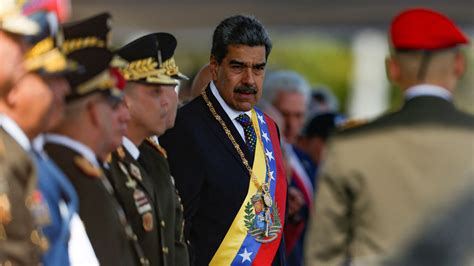
These gestures, while commendable, must be interpreted within the wider matrix of international scrutiny, domestic challenges, and ongoing migration dynamics. The logistical capability to manage successive repatriation flights demonstrates a degree of state functionality—an assertion that is politically symbolic for the Maduro administration amid continued diplomatic isolation.
Challenges Upon Return: Reintegration vs. Reality
Despite the program’s humanitarian intentions, the reality awaiting returnees is far from straightforward. Most deportees arrive with few possessions, fractured family ties, and uncertain job prospects. The Venezuelan economy, while showing signs of slight stabilization in some sectors, remains broadly under strain, with oil production still below pre-2015 levels and the private sector cautious about new investments.
For many returnees, especially those who spent significant time in foreign countries adapting to new systems, cultural reintegration can be psychologically taxing. Several advocacy groups have raised concerns over limited employment opportunities, bureaucratic delays in service allocation, and regional disparities in the support provided to returnees. These factors can hamper the long-term success of reintegration, even if the initial reception is efficient and well-resourced.
An Instrument of Sovereignty Amid Global Migration Tensions
Politically, the Vuelta a la Patria program operates not only as a logistical tool but as an instrument of national sovereignty. Amid heightened rhetoric from Western nations about illegal migration, border enforcement, and deportation diplomacy, Venezuela’s active repatriation of its citizens sends a counter-narrative: that the state retains responsibility and capacity to welcome its people back—even under duress.
This narrative resonates with governments across the Global South, many of whom are also grappling with how to repatriate or resettle nationals amid deteriorating global refugee protections. In this context, Venezuela’s model—however imperfect—is being quietly studied and, in some regions, emulated.
Looking Ahead: Sustainability and Scaling the Effort
While the Venezuelan government has demonstrated the infrastructure and political will to receive deportees, questions linger about the sustainability of this initiative. Financial constraints, international sanctions, and domestic instability all pose threats to the program’s continuity. Maintaining high standards of reintegration support for thousands of returnees requires consistent funding, inter-agency coordination, and community-level engagement—elements that are not guaranteed in a fragile economy.
However, each successful return flight reaffirms the state’s intention to prioritize its diaspora, positioning repatriation not as a punitive act, but as part of a broader recovery strategy. The human capital embedded within returning migrants—skills, experiences, and cross-cultural perspectives—could be an underutilized asset in Venezuela’s future development trajectory, if properly harnessed.
Conclusion: A Defining Moment in the Migration Narrative
The return of 206 Venezuelans on June 27, 2025, marks more than a deportation—it symbolizes the intersection of state responsibility, international migration pressures, and human resilience. The Vuelta a la Patria program, while not without flaws, presents a structured, state-supported alternative to abandonment and detention, offering returning citizens a foothold upon which to rebuild their lives.
As migration continues to define 21st-century geopolitics, Venezuela’s approach will likely remain under the microscope. Its ability to provide not only transit but meaningful reintegration could shape both regional policy and diaspora relations in years to come. For the thousands still abroad, wondering whether to return or remain in uncertainty, each returning flight is not just a passage—but a signal of possibility.