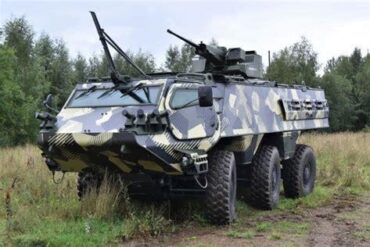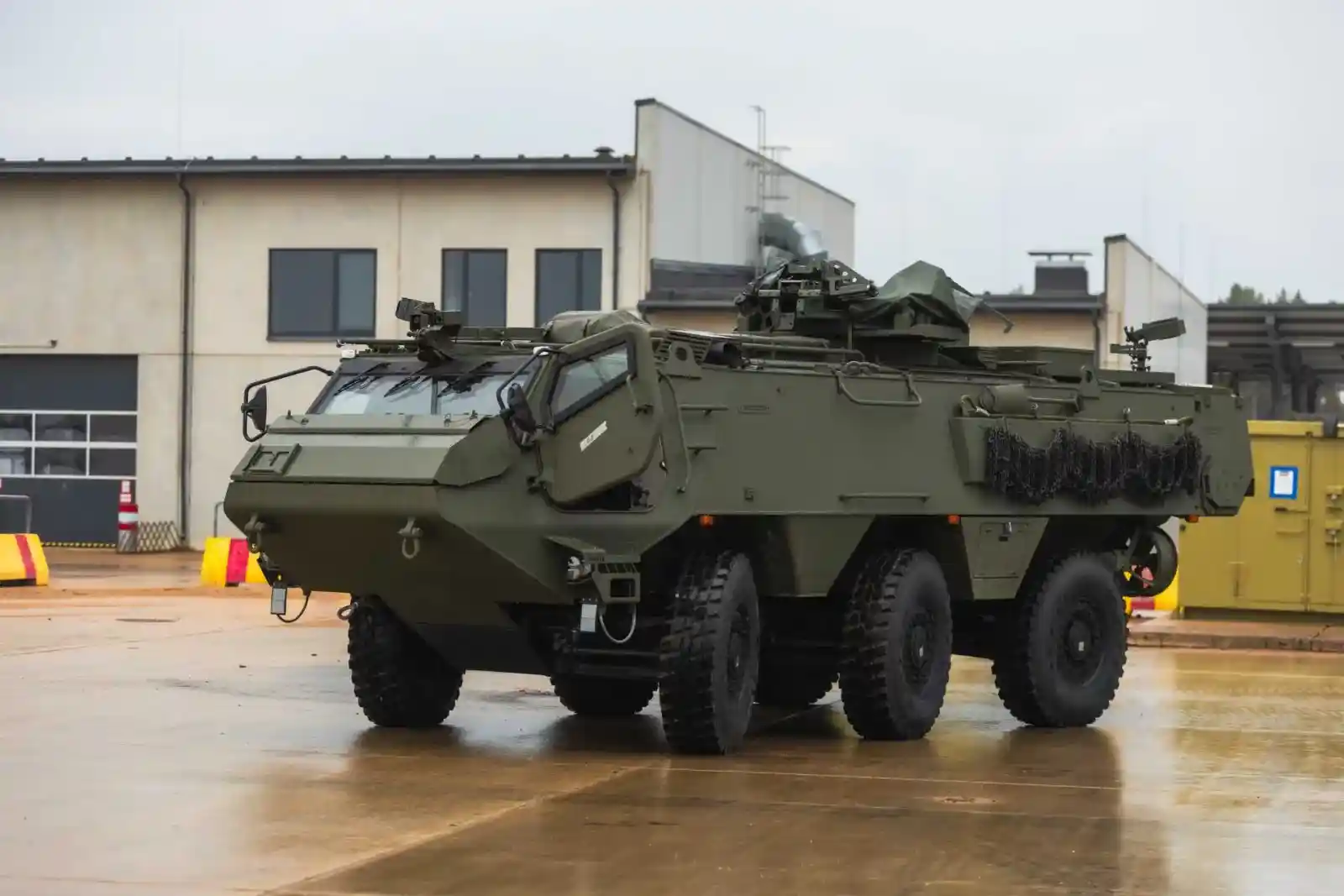
On July 15, 2025, Ukraine officially received its first batch of Patria 6×6 armored personnel carriers during a ceremonial handover in Kyiv, coinciding with the country’s Statehood Day. The transfer, led by Latvian Prime Minister Evika Siliņa, represents a significant milestone in the modernization of Ukraine’s ground forces amid the ongoing war with Russia. In attendance were Ukrainian President Volodymyr Zelensky, Prime Minister Denys Shmyhal, and Parliament Speaker Ruslan Stefanchuk, underscoring the importance of the delivery not only as a military upgrade but also as a symbol of Latvia’s continued commitment to Ukraine’s sovereignty and defense.
Latvia’s Strategic Contribution and the CAVS Framework
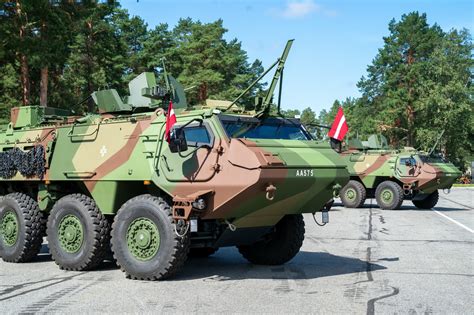
Latvia’s provision of 42 Patria 6×6 armored vehicles is part of a broader €70 million military aid package, which also includes drones and other combat-relevant assets. This transfer is embedded within the Common Armoured Vehicle System (CAVS) initiative, a multinational collaboration launched in 2020 by Finland and Latvia and later joined by Sweden, Germany, and Denmark. The program aims to standardize a next-generation armored vehicle for NATO and allied nations, promoting interoperability and sustainable logistics across platforms.
The vehicles are manufactured at Valmiera, Latvia, a facility that began operation in May 2024 and is managed by Defence Partnership Latvia, a joint venture between Patria and Latvian manufacturer Unitruck. The site’s production capacity of 160 units annually ensures the timely fulfillment of both Latvian and foreign orders, with officials confirming that the Ukrainian order will not disrupt Latvia’s own defense procurement schedules.
Local involvement in production is extensive. Latvian subcontractor EMJ Metāls SIA has achieved certification to independently produce armored hulls and has invested over €4 million in state-of-the-art fabrication technologies. The integration of local industry underscores the long-term defense industrial cooperation between NATO allies and contributes to regional economic development.
Patria 6×6: A Vehicle Built for the Modern Battlefield
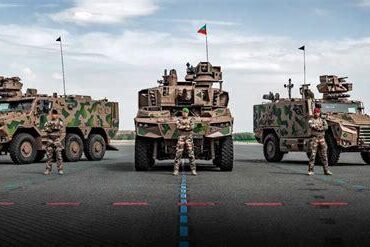
Designed by Finnish defense company Patria, the 6×6 platform represents a balance between protection, mobility, and modularity, tailored for high-intensity and hybrid warfare environments. The vehicle, based on Patria’s AMVXP platform, measures 7.5 meters in length, 2.9 meters in width, and 2.5 meters in height, with a combat weight of 24,000 kilograms and a payload capacity of 8,500 kilograms.
At its core is a Scania DC09 diesel engine, generating 294 kW of power and 1,870 Nm of torque, coupled with a ZF Friedrichshafen 7-speed automatic transmission. This drivetrain allows the Patria 6×6 to reach speeds exceeding 100 km/h and achieve a remarkable operational range of 700 kilometers, supporting extended missions deep into contested territory without frequent refueling.
Tactical Mobility in Ukraine’s Challenging Terrain
For Ukraine, where diverse geography and damaged infrastructure complicate military logistics, the Patria 6×6 offers a significant edge. It is capable of fording water bodies up to 1.5 meters deep, scaling 60% gradients, and traversing 1.2-meter-wide trenches or 0.6-meter-high vertical obstacles. These features are especially valuable in Kherson, Mykolaiv, and Zaporizhzhia Oblasts, regions often characterized by flooding, mud, and broken roads.
Its hydropneumatic suspension and run-flat tires with central inflation systems further enhance mobility on rugged surfaces, forest paths, and agricultural fields — environments where legacy armored vehicles frequently fail. By operating independently for long periods, these vehicles reduce dependency on vulnerable supply lines and can respond swiftly to shifting frontlines or asymmetric threats.
Survivability and Protection for Frontline Forces
The Patria 6×6 is built with NATO STANAG 4569 compliant armor, providing Level 2 ballistic protection as standard, with optional upgrades to Level 4. This includes resistance to 14.5 mm armor-piercing rounds and 10 kg mine blasts, a critical feature for Ukrainian troops facing constant artillery barrages, sniper fire, and IED threats.
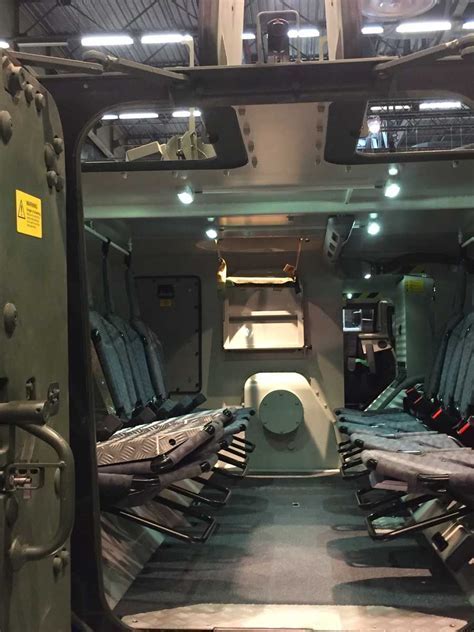
Internally, the vehicle features a fully protected passageway between the driver’s cabin and troop compartment, allowing personnel to stay under armor during ambushes and rapid dismounts. This configuration dramatically increases survivability and tactical flexibility, minimizing exposure during high-risk maneuvers such as urban assaults or river crossings.
A Multi-Role Combat Platform
What sets the Patria 6×6 apart is its modular design, enabling adaptation for various mission profiles beyond troop transport. The vehicle can be configured for command and control, medical evacuation, forward fire support, or reconnaissance. It supports a wide range of weapon systems, from 7.62 mm and 12.7 mm machine guns to 40 mm grenade launchers and remote-controlled weapon stations up to 30 mm caliber.
Of particular strategic interest is its compatibility with the Patria NEMO 120 mm turreted mortar system, capable of rapid indirect fire up to 10 kilometers and firing while on the move. This enables Ukraine to deploy mobile artillery support platforms quickly in fluid battlefield conditions — a tactical necessity amid evolving Russian force deployments and counterbattery tactics.
Operational Integration and Force Multiplication
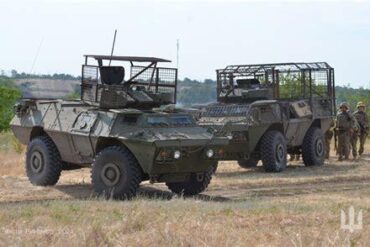
The arrival of the Patria 6×6 is expected to augment Ukraine’s current fleet of wheeled vehicles, such as the domestically produced BTR-4, and replace combat losses suffered during high-intensity engagements. By integrating a common chassis across various battlefield roles, Ukraine can reduce logistical burdens, streamline mechanic training, and consolidate spare parts inventories.
Moreover, the platform’s digital integration options enable synchronization with battlefield management systems, drone reconnaissance feeds, and communication networks, enhancing situational awareness and joint operations with NATO-backed formations.
International Adoption Signals Enduring Credibility
Ukraine joins a growing roster of nations standardizing their armored fleets around the Patria 6×6. Finland has committed to 161 vehicles, Sweden is acquiring 341 units under the “Pansarterrängbil 300” designation, and Denmark has signed a €247 million contract for 129 vehicles, known locally as the XA-300. Germany is investing in mortar and command variants, part of a broader effort to replace its legacy TPz Fuchs vehicles.
The United Kingdom has signed a memorandum of understanding to develop a national version in collaboration with Patria and Babcock, reflecting the platform’s growing appeal within NATO’s modernization framework. As of mid-2025, Latvia has already inducted 25 vehicles into its own military and maintains full-rate production.
This widespread adoption offers Ukraine strategic advantages in interoperability, especially in scenarios involving combined operations, joint training, or future coalition support missions. The ability to share parts, maintenance procedures, and battlefield experience with partner nations can help reduce costs, increase operational uptime, and accelerate adaptation.
Long-Term Cooperation and Industrial Prospects
Beyond the immediate battlefield impact, the Patria 6×6 program lays a foundation for deeper defense collaboration between Ukraine and its European allies. Discussions during the Kyiv visit included potential joint ventures, Ukrainian assembly lines, and cooperation on infrastructure rebuilding projects. Such initiatives could spur economic recovery in war-affected regions while embedding Ukraine more tightly into the European defense supply chain.
The presence of vehicles like the Patria 6×6 on Ukrainian soil not only enhances tactical readiness but also sends a clear message: Ukraine’s modernization is moving forward, powered by international solidarity and cutting-edge battlefield technology. As the country continues its protracted resistance against Russian aggression, platforms like the Patria 6×6 represent a new era of survivability, mobility, and operational autonomy.