Ireland is preparing to undertake the most ambitious overhaul of its land combat capabilities in modern history, with a planned acquisition exceeding €1 billion for French-made Scorpion armored combat vehicles and CAESAR 155mm self-propelled howitzers from KNDS France. The multi-year procurement, first reported by La Tribune on February 21, is expected to deliver new platforms before 2030 and reshape the Irish Defence Forces into a digitally networked, combined-arms formation aligned with contemporary European land warfare standards.
The proposed package introduces the core elements of France’s Scorpion modernization program, a transformation effort designed to replace legacy armored fleets with connected, sensor-rich platforms capable of operating as a single information-sharing combat system. For Ireland, this marks a decisive shift away from a lightly equipped peace support posture toward a force designed for protected mobility, precision fires, and integrated command and control across dispersed units.
This prospective deal also signals a recalibration of Ireland’s industrial partnerships. Between 2015 and 2024, Dublin purchased just over €53 million in French military equipment, making France a marginal supplier. A contract exceeding €1 billion would instantly elevate Ireland into the ranks of Europe’s major armored vehicle customers and place it alongside France and Belgium as operators of the Scorpion family. Beyond procurement, the agreement hints at deeper cooperation in training, sustainment, and potentially localized support infrastructure to sustain the fleet over decades of service.
A Networked Combat System for a New Irish Land Force
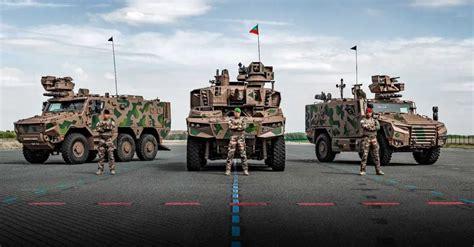
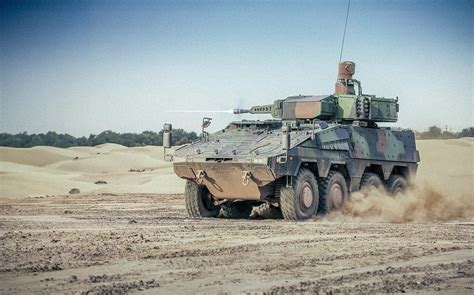
At the center of the acquisition is the Jaguar EBRC 6×6 armored reconnaissance and combat vehicle, designed to replace France’s legacy AMX-10RC and ERC-90 fleets. Jaguar is built around a high-lethality turret featuring the 40 mm CTA International cannon with telescoped ammunition, paired with MMP anti-tank guided missiles and a remotely operated 7.62 mm machine gun. This configuration gives reconnaissance units the ability to detect, track, and destroy armored threats while remaining tightly connected to higher echelons through the Scorpion digital battle management system.
The digital backbone is not cosmetic. Scorpion vehicles operate as nodes in a shared information network that fuses sensor data, target designation, and command orders in near real time. For Ireland, which has historically relied on limited battlefield digitization, this represents a doctrinal leap. Units equipped with Jaguars could cue artillery fires from CAESAR howitzers, coordinate maneuver with infantry in Griffon carriers, and share situational awareness across battalion and brigade levels with a speed that compresses decision cycles and raises operational tempo.
Griffon and Serval: Protected Mobility Across the Battlespace
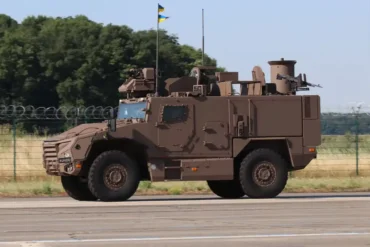
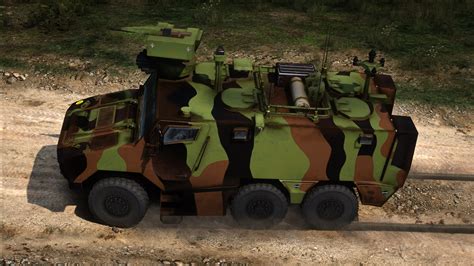
Complementing Jaguar are the Griffon VBMR 6×6 multirole armored vehicles and the lighter Serval 4×4. Griffon is designed to transport infantry sections under enhanced protection against ballistic threats, mines, and improvised explosive devices while serving as a command-and-control platform through modular mission kits. Its design emphasizes survivability without sacrificing the mobility needed for expeditionary deployments and sustained operations in contested environments.
Serval fills the niche between light utility vehicles and heavier armored carriers. Optimized for reconnaissance, liaison, and rapid reaction roles, Serval combines modular armor with high tactical mobility, making it suitable for urban operations, peace-support missions, and rapid deployments by air and sea. Its full integration into the Scorpion digital architecture ensures that even lighter units remain part of the same information ecosystem as heavier maneuver and fire support elements.
CAESAR Howitzers and the Return of Long-Range Precision Fires
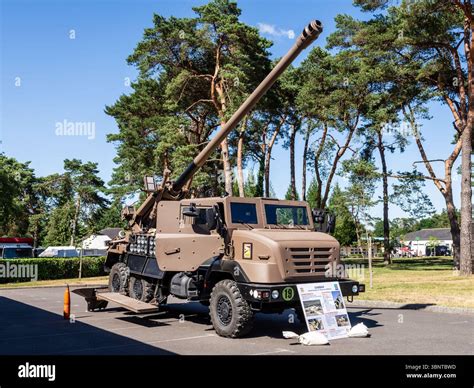
The inclusion of the CAESAR 155 mm self-propelled howitzer would introduce a transformational fires capability for Ireland. Mounted on a wheeled chassis, CAESAR combines strategic mobility with rapid shoot-and-scoot tactics, allowing artillery units to deploy, fire, and relocate before counter-battery threats can respond. With ranges exceeding 40 kilometers using extended-range ammunition and compatibility with modern fire-control systems, CAESAR provides precision strike capacity well beyond the reach of Ireland’s current artillery assets.
Combat-proven in multiple theaters, CAESAR has demonstrated reliability in high-intensity operations and expeditionary contexts alike. For Ireland, the system offers a balance between deterrence and deployability, supporting national defense while enabling meaningful contributions to European Union battlegroups and multinational crisis response missions.
Replacing Aging Fleets and Modernizing Doctrine
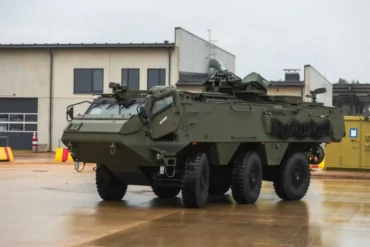
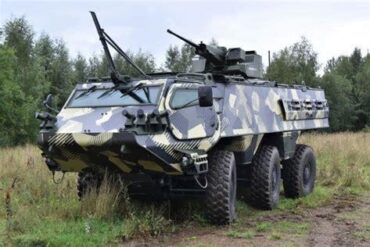
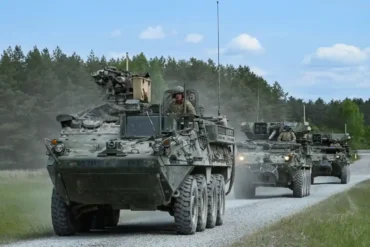
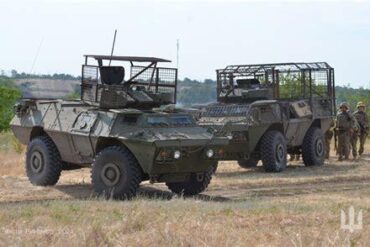
The planned acquisition is structured to replace Ireland’s aging Piranha III 8×8 armored vehicles and RG-32M 4×4 platforms, fleets that entered service in the late 1990s and early 2000s. While these vehicles have served reliably in peacekeeping operations, rising maintenance costs and limited digital integration constrain their relevance in modern high-threat environments. Transitioning to Scorpion vehicles introduces not only new hardware but also a doctrinal shift toward networked operations, sensor-to-shooter integration, and combined-arms maneuver.
This modernization aligns Ireland more closely with European partners pursuing similar upgrades. Interoperability with French and Belgian units operating Scorpion systems could streamline joint training, logistics, and operational planning. Shared digital standards reduce friction in multinational deployments, allowing Irish units to plug into coalition command structures with minimal adaptation.
Strategic Implications for Irish Neutrality and European Security
Ireland’s long-standing policy of military neutrality remains intact, yet the strategic environment around Europe has changed sharply. Russia’s war in Ukraine, persistent hybrid threats, and pressure on European states to reinforce defense readiness have accelerated procurement cycles even among non-NATO countries. The Scorpion and CAESAR acquisition reflects a pragmatic response to these pressures, strengthening territorial defense while preserving Ireland’s ability to contribute meaningfully to UN peacekeeping and EU security missions.
From an industrial perspective, the deal reinforces KNDS France as a central supplier of next-generation land systems in Western Europe. The growing Scorpion user community creates an ecosystem effect, encouraging shared training pipelines, pooled spare parts, and common upgrade paths. Over time, this could reduce life-cycle costs for Ireland while embedding its land forces within a broader European modernization framework.
A Multi-Tranche Investment Toward 2030
Reportedly structured as a multi-tranche program, the procurement would spread deliveries and funding across several years, aligning with Ireland’s defense capital investment plans through 2030. Such phasing allows for gradual force transformation, enabling training pipelines, infrastructure upgrades, and doctrinal adaptation to mature alongside new equipment fielding. The financial scale of the program represents one of the largest defense investments in Irish history, underscoring a decisive shift in national defense priorities.
If finalized, the acquisition will do more than replace vehicles. It will embed the Irish Defence Forces within a networked, combined-arms paradigm defined by protected mobility, precision fires, and digital integration. In practical terms, this means faster decision-making, greater survivability, and a force posture capable of operating credibly alongside Europe’s most modern land forces in an increasingly uncertain security landscape.