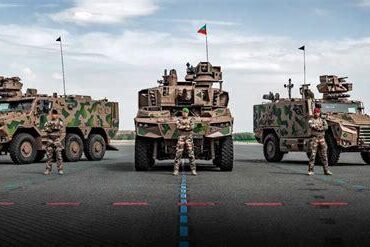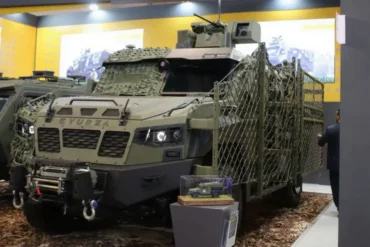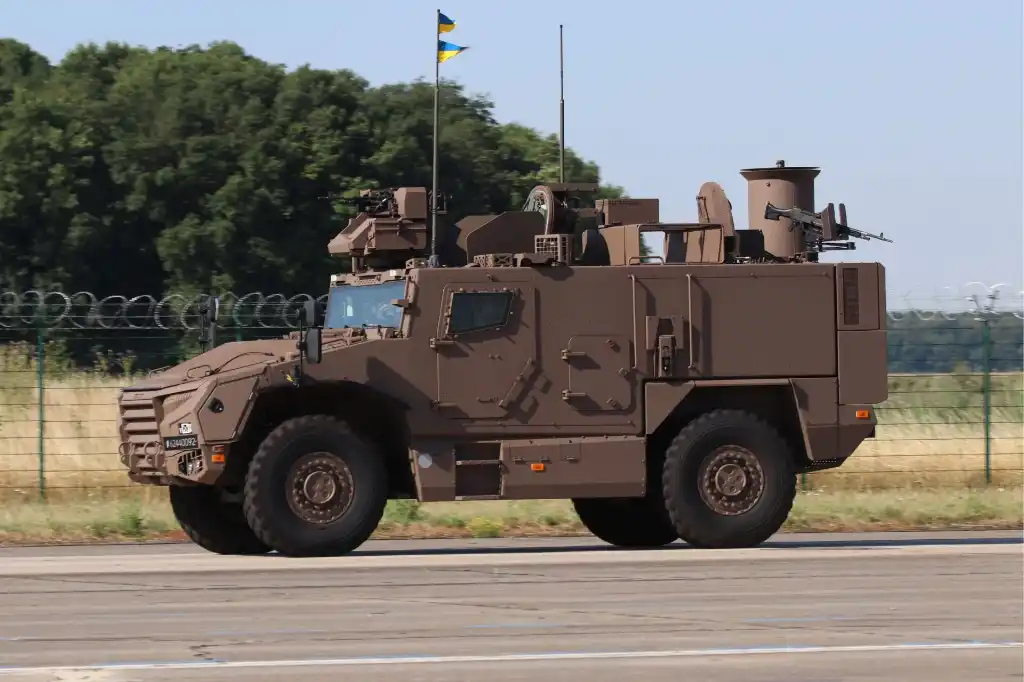
The French Army has officially inducted its first 30 Serval Appui SCORPION armoured vehicles into operational service, marking a concrete transition from industrial production to frontline deployment. Announced by the Ministry of the Armed Forces in January 2026, this delivery is not a ceremonial milestone but a deliberate operational move, reflecting how rapidly the French land forces are adapting to the realities of modern, high-intensity warfare. The Serval Appui is entering units at a moment when European militaries are reassessing force protection, mobility, and digital resilience in response to conflicts defined by drones, precision fires, and contested electromagnetic environments.
This first batch is part of a much larger effort under the SCORPION modernization program, France’s flagship initiative to rebuild its land combat architecture around networked, collaborative, and highly mobile platforms. Unlike earlier introductions of new vehicles that often lingered in testing or evaluation units, these Serval Appui vehicles are being delivered with the explicit intent of immediate operational use. French defense officials have emphasized that the urgency of the current security environment leaves little room for gradualism.
The induction of the Serval Appui SCORPION signals a shift in mindset as much as a shift in hardware. Where past doctrines prioritized expeditionary operations against lightly equipped adversaries, the French Army is now openly preparing for peer or near-peer conflict scenarios. In such environments, survivability, electronic protection, and the ability to integrate seamlessly into a digitized battlespace become decisive factors rather than optional enhancements.
The Serval Appui SCORPION stems from a contract signed in February 2025 with KNDS France and Texelis, covering the production of 530 vehicles for a value exceeding one billion euros. This scale underscores how central the platform is to France’s future land force structure. The initial delivery of 30 vehicles represents the first tangible manifestation of that investment, bridging the gap between industrial ambition and battlefield reality.
At its core, the Serval Appui is derived from the Serval VBMR-L, a 4×4 light multi-role armored vehicle that entered service in 2020. The base Serval rapidly earned a reputation within French units for its agility, modularity, and ease of deployment. The Appui variant builds on these qualities while expanding the vehicle’s role from transport and general-purpose missions into specialized combat support functions essential for high-intensity engagements.
Technically, the Serval occupies a carefully balanced space between light tactical vehicles and heavier armored personnel carriers. With a combat weight typically between 15 and 17 tons depending on configuration, it remains compact without sacrificing protection. Measuring approximately 6.5 meters in length, 2.53 meters in width, and 2.46 meters in height, the vehicle maintains a low profile that enhances survivability while offering a generous internal volume for troops or mission systems. A standard crew of two, driver and commander, is complemented by the capacity to carry up to eight fully equipped soldiers or specialists.
Protection is a defining element of the Serval Appui’s design. Its modular composite armor provides resistance against small arms fire and artillery fragments, while reinforced underbody structures enhance protection against mines and improvised explosive devices. The vehicle can be fitted with additional ballistic kits as threat levels increase, and optional CBRN protection allows crews to operate in contaminated environments. This layered approach to survivability reflects lessons learned from recent conflicts, where adaptability has proven as important as baseline armor thickness.
Mobility remains one of the Serval family’s most praised attributes. Powered by an 8.9-liter diesel engine producing 375 horsepower, the vehicle achieves road speeds exceeding 100 kilometers per hour. Its automatic transmission and advanced suspension system deliver strong off-road performance, allowing it to keep pace with mechanized formations across varied terrain. A range of up to 800 kilometers on roads gives commanders flexibility in planning long-duration operations without constant resupply.
Strategic mobility is equally integral to the Serval’s concept. The vehicle can be airlifted by C-130 Hercules aircraft in transport configuration and by the A400M Atlas, which can carry two Servals in combat configuration. This capability allows rapid reinforcement of distant theaters, a critical requirement for France’s global commitments. Rail and maritime transport options further ensure that the Serval can be deployed wherever national or allied interests demand.
What truly distinguishes the Serval Appui SCORPION from earlier armored vehicles is its deep integration into France’s digital combat ecosystem. The platform incorporates the standard SCORPION vetronics and battle management systems, enabling real-time data exchange with Griffon armored personnel carriers, Jaguar reconnaissance vehicles, and upgraded Leclerc main battle tanks. This connectivity transforms individual vehicles into nodes within a larger combat network, dramatically improving situational awareness and coordination.
The onboard sensor suite reinforces this networked approach. A 360-degree camera system provides continuous visual coverage, while thermal imaging and night vision systems ensure effectiveness in degraded visibility. Laser warning receivers and strike detection sensors alert crews to incoming threats, and electronic warfare capabilities, including the BARAGE jamming system, enhance protection against remote-detonated explosives and hostile drones. Secure communications are handled through CONTACT radios, with options for satellite connectivity via Syracuse IV in certain variants.
The “Appui” designation reflects the vehicle’s mission flexibility. One of its most significant planned roles is short-range air defense for maneuver units. A dedicated variant will be equipped with a turret allowing under-armor firing of Mistral 3 surface-to-air missiles, restoring a capability that many Western armies have struggled to maintain at lower tactical levels. This configuration is designed to counter helicopters, cruise missiles, and low-flying aircraft that increasingly threaten ground forces.
Counter-drone operations form another critical pillar of the Serval Appui concept. Specialized variants will integrate a combination of 3D radar, radio-frequency detection sensors, and fire-control systems linked to a turret-mounted 30×113 mm cannon. Firing specialized ammunition optimized for aerial targets, this setup addresses the proliferation of small, inexpensive drones that have reshaped modern battlefields. French planners see this capability as indispensable in future conflicts, where drone swarms may be as common as artillery fire.
Beyond kinetic roles, the Serval Appui will serve as a mobile backbone for battlefield communications. Tactical communication node variants are designed to function as mobile command and connectivity hubs, combining satellite links, line-of-sight radios, and network distribution systems. These vehicles are intended to keep command elements connected even when adversaries attempt to disrupt communications through electronic attack. In a doctrine centered on sensor-to-shooter loops, such resilience is not merely supportive but operationally decisive.
The industrial dimension of the Serval Appui SCORPION program is equally significant. Production is distributed across several KNDS France sites, including Satory, Bourges, and Roanne, with Texelis providing key mobility components from Limoges. A network of strategic subcontractors, such as MBDA, Safran Electronics and Defense, CS GROUP, and KNDS Ammo France, ensures sovereign control over missiles, sensors, electronics, and munitions. This industrial architecture reinforces France’s strategic autonomy while sustaining high-skilled employment across the defense sector.
Deliveries of all 530 Serval Appui vehicles are scheduled to continue through 2033 under the Véhicule léger tactique polyvalent framework. French Army planners view the platform as a crucial bridge between heavier armored systems and lighter tactical vehicles, offering a blend of protection, agility, and digital integration unmatched in its class. Its role is not to replace existing platforms but to knit them together into a coherent, resilient force structure.
With the first 30 vehicles now in service, the Serval Appui SCORPION moves from concept to capability. As additional specialized variants enter the force, the platform is expected to substantially enhance France’s ability to protect maneuver units, counter aerial and electronic threats, and sustain command and control in the harsh conditions of high-intensity warfare. In doing so, it stands as a clear indicator of how the French Army intends to fight, survive, and prevail in the conflicts of the coming decades.