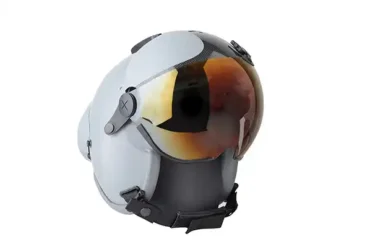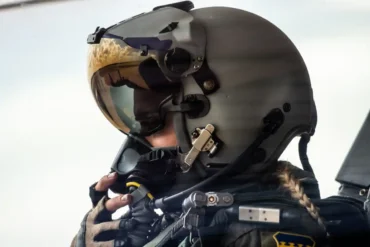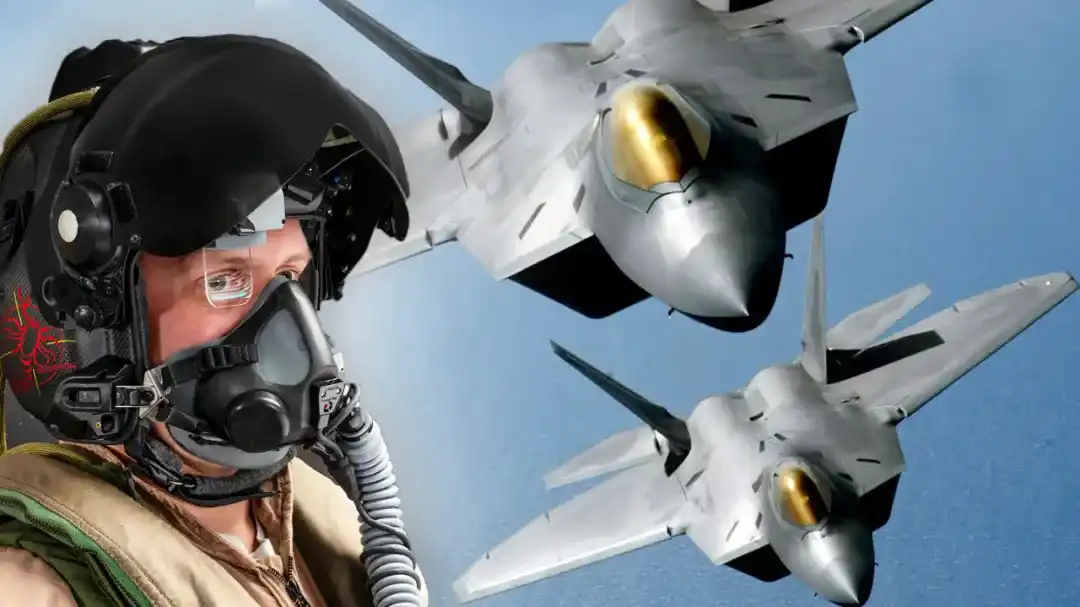
The F-22 Raptor, the world’s premier fifth-generation fighter, is finally receiving a critical capability long absent from its arsenal—a helmet-mounted display (HMD). The Thales Scorpion Helmet Display System marks a significant milestone in the Raptor’s technological evolution, enhancing its situational awareness, targeting efficiency, and combat effectiveness. This upgrade bridges the gap between the F-22 and other advanced fighters already equipped with high off-boresight targeting capabilities.
The Thales Scorpion HMD: Features and Advantages
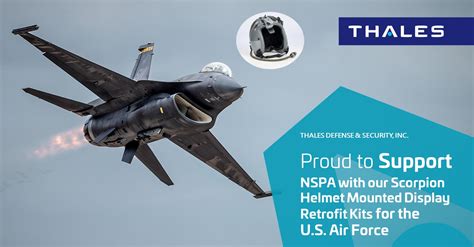
The Thales Scorpion HMD is a modular, lightweight, and ergonomically optimized system that integrates seamlessly with the F-22’s advanced avionics. Unlike earlier systems, which were bulky and restrictive, the Scorpion delivers unparalleled tracking accuracy, augmented reality (AR) capabilities, and compatibility with modern weapon systems.
Modular and Lightweight Design
One of the Scorpion’s standout features is its modular architecture, allowing upgrades without replacing the entire helmet. This design ensures future-proofing, as display modules and tracking systems can be swapped for higher resolution or improved precision.
Additionally, the lightweight structure reduces pilot fatigue by 20-30% compared to older helmet-mounted displays, such as the JHMCS II. It also integrates with AN/AVS-9 and Panoramic Night Vision Goggles (PNVG), offering enhanced night combat capabilities.
Advanced Tracking Technology
The hybrid optical-inertial tracking (HObIT) system provides low-latency, high-accuracy head-tracking, eliminating the need for cockpit calibration. Unlike earlier HMDs that required external sensors, the Scorpion uses magnetic and optical tracking solutions, reducing potential interference with the F-22’s stealth characteristics.
Augmented Reality and Enhanced Situational Awareness
Through augmented reality (AR) integration, the Scorpion HMD projects real-time targeting, navigation, and sensor data onto the pilot’s visor. This capability enables pilots to “see through” the aircraft by fusing sensor data, significantly enhancing combat efficiency in complex engagements.
Seamless Compatibility with the F-22 Raptor
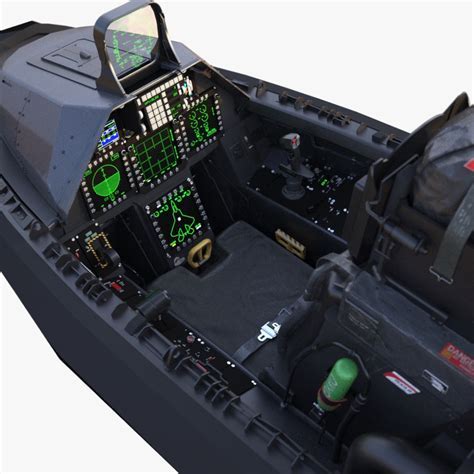
Unlike previous attempts to equip the F-22 with an HMD, the Scorpion is fully compatible with the aircraft’s Ethernet and MIL-STD-1553 data interfaces, allowing for efficient data transmission without extensive modifications. This ensures rapid integration across the fleet while maintaining the Raptor’s combat readiness.
Why the F-22 Lacked an HMD Until Now
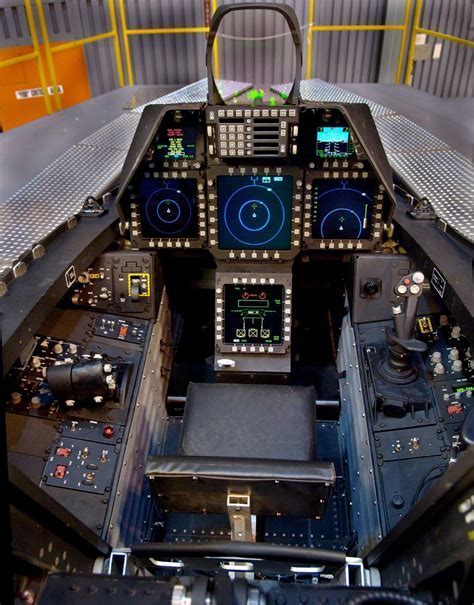
Despite being the world’s most advanced air superiority fighter, the F-22 Raptor has never had a helmet-mounted display. This absence was due to several factors, including cockpit constraints, sensor integration challenges, and reliance on radar-linked targeting systems.
Cockpit Design Limitations
The F-22’s cockpit was designed in the 1990s, prioritizing stealth over pilot ergonomics. Early HMDs, such as the JHMCS, were bulky and restricted head movement, making them impractical for the F-22’s tight cockpit dimensions.
Legacy Sensor Systems and Targeting Workarounds
Before the Scorpion HMD, F-22 pilots used the Helmetless High Off-Boresight (HHOBS) targeting system for AIM-9X Sidewinder missiles. This method relied on radar-cued targeting, which was effective but lacked the real-time visual interface found in modern HMD-equipped fighters such as the F-35 and F-16 Block 50.
The Scorpion HMD resolves these issues, bringing true high off-boresight targeting to the F-22 and improving its dogfighting capabilities against adversaries utilizing similar technologies.
Operational Impact and Deployment
First Deployment: Hawaii Air National Guard
The Hawaii Air National Guard’s 199th Fighter Squadron is the first unit to receive the Scorpion HMD under the ROST-HD (Raptor Open Systems Tactical Helmet Display) program. The program aims to standardize HMD capabilities across all operational F-22 units.

Integration with AIM-9X Block II Missiles
With the Scorpion HMD, F-22 pilots can now lock onto and fire AIM-9X Block II missiles simply by looking at a target. This instantaneous targeting advantage provides a crucial edge in close-quarters air combat, ensuring the F-22 remains lethal in dogfights.
Standardization Across USAF Fighter Fleets
Beyond the F-22, the U.S. Air Force plans to replace legacy JHMCS systems on F-16C/D Block 40/50 aircraft with the Scorpion HMD, creating a unified standard across multiple fighter platforms. This move enhances interoperability and cost-efficiency.
Future Upgrades and Broader Modernization
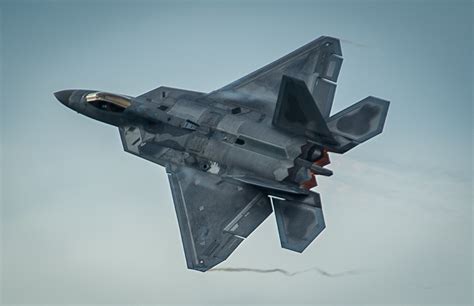
The Scorpion HMD is part of a broader F-22 modernization strategy to ensure its dominance until the Next-Generation Air Dominance (NGAD) fighter is operational in the 2030s.
Advanced Sensor Upgrades
Ongoing tests include Infrared Search and Track (IRST) pods and TacIRST distributed sensor arrays, allowing the F-22 to detect and track stealth threats with greater precision.
Software Enhancements and Open Mission Systems
The Release 4 software update introduces open mission systems architecture, enabling rapid third-party software integration. This allows for faster updates and the incorporation of new capabilities without extensive reprogramming.
Structural Longevity and Service Life Extension
Despite accumulating over 500,000 flight hours, the F-22’s airframe remains robust, requiring only incremental upgrades to remain viable until at least 2040.
Strategic Significance
The integration of the Scorpion HMD into the F-22 Raptor is a transformational leap in its combat capabilities. By adopting a cost-effective, battle-proven HMD, the USAF ensures the F-22 remains the pinnacle of air superiority, capable of engaging both current and emerging threats.
This upgrade brings the Raptor on par with next-generation fighters, reinforcing its role as the premier tactical air dominance platform until NGAD enters full-scale production.
FAQ
1. Why did the F-22 Raptor not have an HMD before?
The F-22 was designed in the 1990s, prioritizing stealth and sensor fusion over helmet-mounted displays. Earlier HMDs were too bulky for the cockpit, and the USAF relied on radar-based targeting as a workaround.
2. How does the Scorpion HMD improve the F-22’s combat performance?
The Scorpion HMD provides high off-boresight targeting, real-time AR data, and improved situational awareness, allowing pilots to engage threats faster and more efficiently.
3. Will all F-22 Raptors receive the Scorpion HMD?
Yes, the USAF plans to equip all active F-22 units with the Scorpion HMD, starting with the 199th Fighter Squadron. The goal is to standardize HMD capabilities across the fleet.