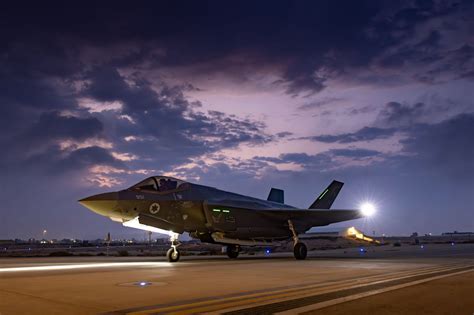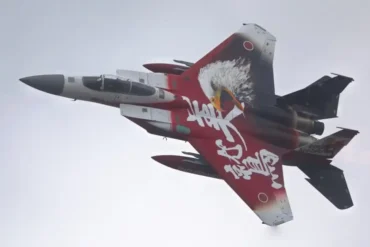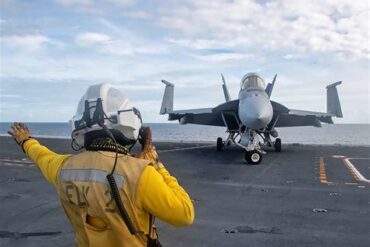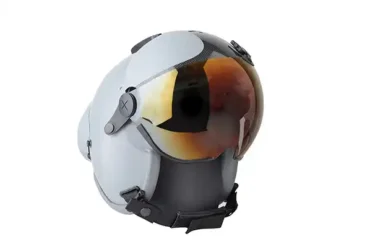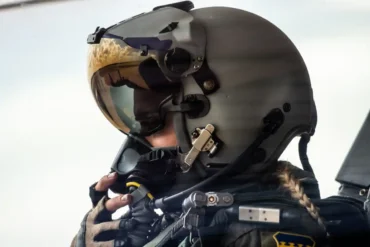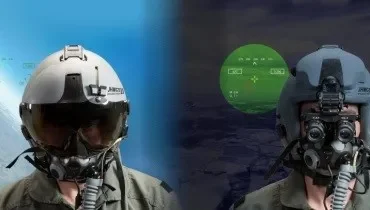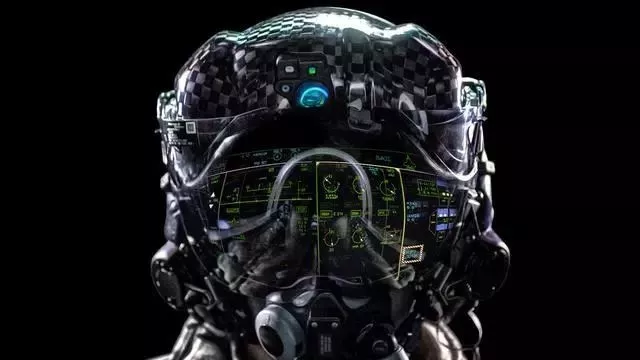
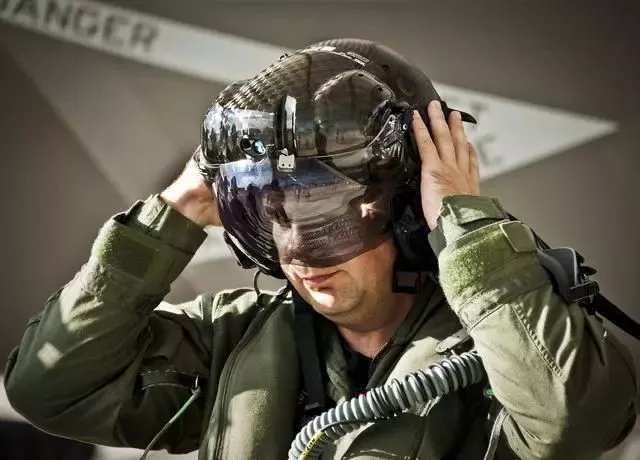
The F-35 helmet, officially known as the Helmet Mounted Display System (HMDS), represents a paradigm shift in how combat pilots engage with their aircraft, the battlefield, and each individual mission. Developed for the F-35 Lightning II Joint Strike Fighter, this third-generation headgear is not simply a helmet; it is an integrated avionics interface that merges human perception with digital data streams, transforming the pilot into a fully aware, augmented decision-maker.
The F-35’s HMDS is the first and only helmet system to project all mission-critical information directly onto the pilot’s visor, using real-time virtual imaging. It renders the traditional cockpit Head-Up Display (HUD) obsolete by integrating flight data, infrared imagery, night vision, targeting symbology, and more—seamlessly overlaid across the pilot’s field of view.
Evolution from HUD to HMDS: A New Era of Situational Awareness
The concept of enhanced pilot situational awareness has been central to aerial warfare since the mid-20th century. Traditionally, fighter pilots relied on a combination of cockpit instruments, visual cues through the canopy, and external data feeds to form a composite understanding of their surroundings.
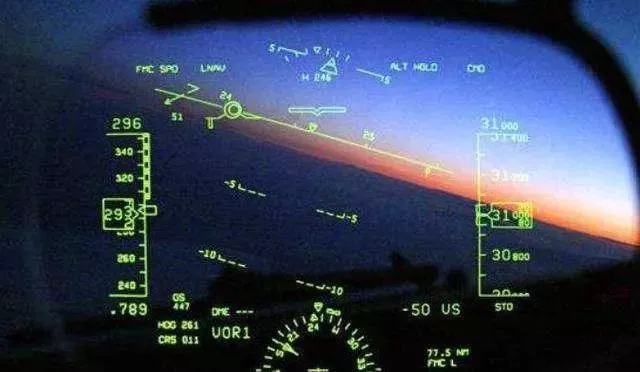
By the 1960s, the Head-Up Display (HUD) was introduced, enabling pilots to see critical flight data without shifting their gaze downward. However, HUDs were confined to the forward field of view and limited in their ability to adapt dynamically to high-speed, multi-axis combat.
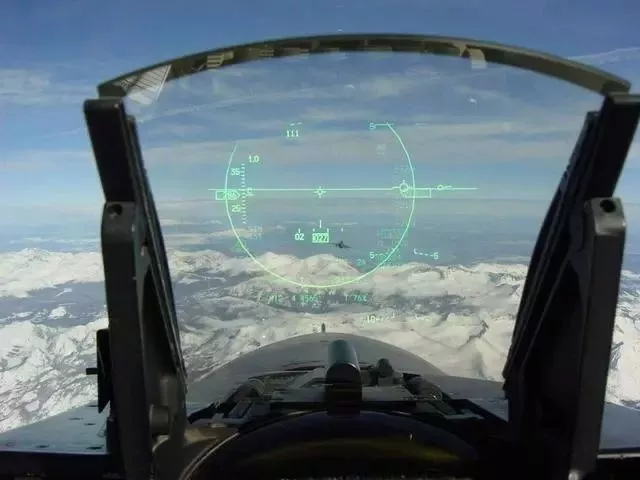
In contrast, HMDS fuses multiple imaging and sensor streams and maps them directly to the pilot’s vision, regardless of head orientation. The system evolved from early Helmet-Mounted Displays developed in the 1970s, which were initially used for off-boresight missile cueing, to the fully immersive and data-rich F-35 HMDS, developed in partnership with Collins Aerospace and Elbit Systems.
Engineering Precision: What Makes the F-35 Helmet Unique
Optical Integration and Projection
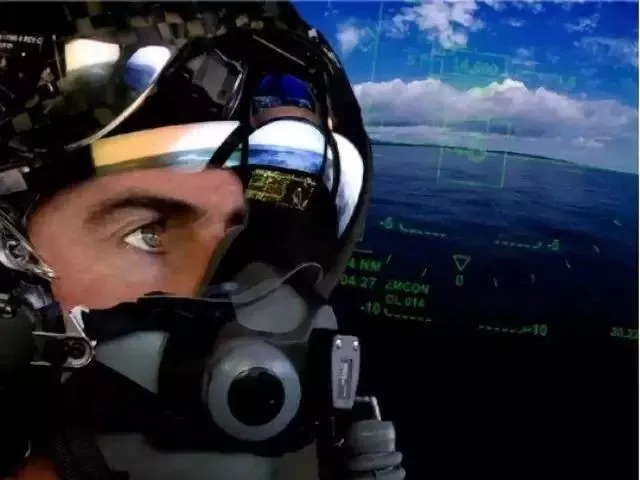
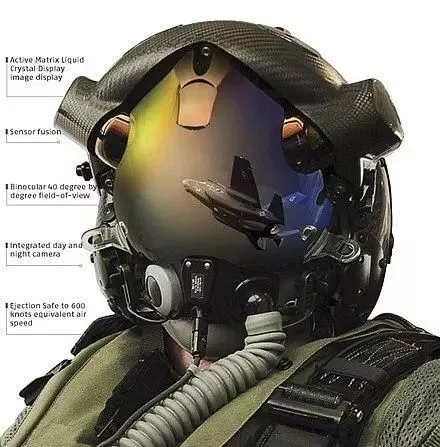
At the core of the F-35 helmet is a dual-eye display system that uses virtual imaging to deliver 360-degree situational awareness. The visor acts as a transparent screen onto which all mission data—including speed, heading, altitude, threat tracking, weapons status, and infrared imagery—is projected in real time.
The helmet’s optical precision ensures that symbols and graphics are pixel-aligned to the pilot’s line of sight, even during violent aerial maneuvers. To achieve this, it utilizes a complex fusion of inertial tracking, magnetic field sensors, and gyroscopic alignment algorithms that constantly recalibrate the display relative to head motion.
Real-Time Night Vision without Goggles
Unlike traditional night vision gear, which adds weight and bulk, the HMDS includes night vision cameras built into the helmet itself. The integrated Gen III night vision system uses infrared video feeds from cameras mounted on the aircraft’s surface—primarily the Distributed Aperture System (DAS)—to present a real-time, zero-latency image directly onto the visor.
The result is unprecedented visibility in zero-light environments, enhancing both safety and tactical decision-making in nocturnal missions.
Carbon Fiber Engineering and Weight Optimization
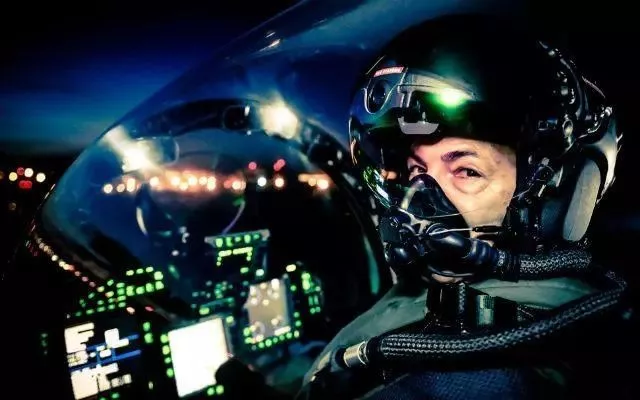
A key design constraint was keeping the total system weight under 2.2 kilograms (4.8 pounds). To resolve this, engineers miniaturized the optical components and employed high-strength carbon fiber composites, offering superior structural integrity at minimal weight.
This ensures that the helmet remains comfortable and balanced even under high-G maneuvers (up to 8G), reducing pilot fatigue during extended sorties.
Customization: Each Helmet is Tailor-Made
No two F-35 helmets are identical. Each unit is custom-built to fit an individual pilot, based on laser-scanned 3D measurements of their head. This customization extends beyond comfort—it guarantees precise alignment of optical elements with the pilot’s pupils, a requirement for achieving perfect visual clarity and tracking fidelity.
The customization process includes:
- Laser scanning to identify skull shape and eye positioning.
- Molding a personalized liner for exact cranial fit.
- Optical alignment testing, ensuring imagery appears fixed in space regardless of head motion.
This level of personalization eliminates display discrepancies that could cause disorientation, eye strain, or even mission failure.
Helmet-Driven Situational Mastery
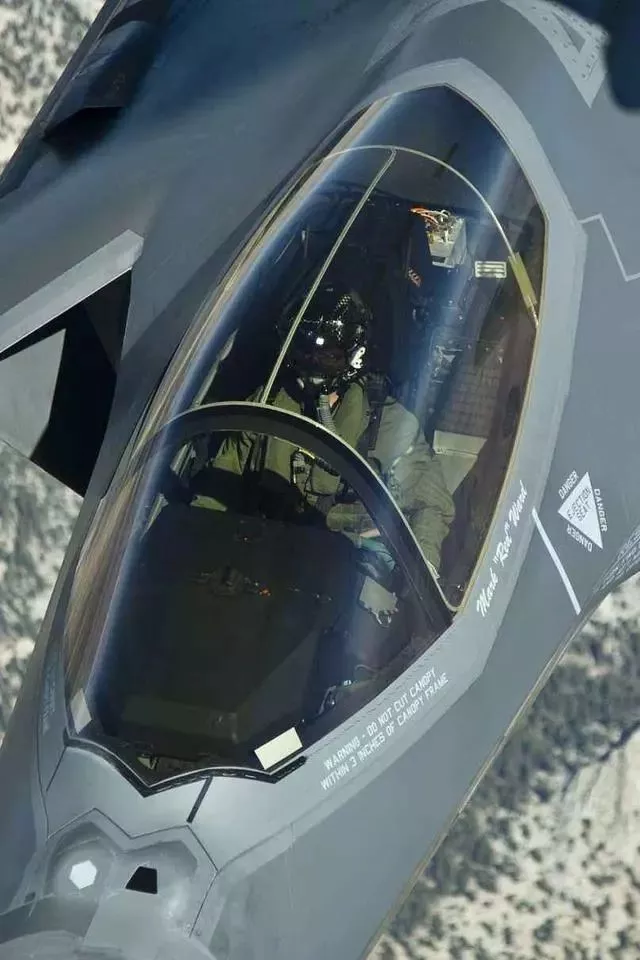
Once a pilot is strapped into the F-35 and the canopy is sealed, the helmet becomes their interface to the battlespace. The aircraft’s six external infrared cameras feed into the helmet, rendering the fuselage “invisible” and giving pilots a god’s-eye view—a full 360-degree image of their surroundings, even below the aircraft.
This capability, often described as “X-ray vision,” allows pilots to see through the floor of the aircraft, aligning targeting symbology on enemies visible only to sensors. The combination of EO/IR imagery and intuitive projection effectively merges man and machine into a single combat entity.
Safety Meets Innovation
Beyond its technological edge, the F-35 helmet meets stringent safety and survivability standards. It is engineered to protect the pilot’s head during:
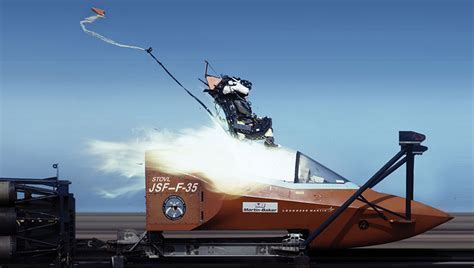
- High-speed ejections (up to 550 knots).
- Ballistic impact scenarios.
- High-G turns and dynamic maneuvering under combat stress.
Safety testing included impact simulations, live ejection seat trials, and wind tunnel stress evaluations. Each helmet must pass rigorous qualification protocols before deployment, ensuring that no compromise is made between functionality and life-preserving durability.
Integration with Mission Systems
The F-35 HMDS is not a standalone device. It is tightly integrated with:
- The Helmet Tracking Unit (HTU), which monitors pilot head motion.
- The Distributed Aperture System (DAS) for real-time visual streaming.
- The Mission Systems Computer, which fuses data from radar, targeting pods, and sensors into coherent display packages.
Through this integration, the pilot can cue weapons systems just by looking at a target. Eye movement and head orientation determine missile seeker alignment, making the targeting process faster, more intuitive, and less dependent on manual controls.
Moreover, the HMDS includes recording capabilities for post-mission debriefing, enabling playback of what the pilot saw during flight—critical for training and mission analysis.
Eliminating Latency: Zero-Delay Projection
A common issue in helmet-mounted displays is latency, where the image lags slightly behind head movement. Even milliseconds of delay can impair spatial awareness or induce nausea. The F-35 helmet eliminates this problem entirely through:
- High-speed image processors.
- Direct-feed digital interface from aircraft sensors.
- Magneto-inertial tracking systems calibrated to sub-millisecond responsiveness.
The result is a zero-latency experience, where data, images, and symbology move perfectly in sync with the pilot’s head, enabling seamless response even in split-second dogfight scenarios.
Final Thoughts: More Than a Helmet
The F-35 helmet is not merely an accessory—it is the central interface of one of the most advanced weapons systems ever constructed. By transforming raw sensor data into actionable visual intelligence, the HMDS empowers pilots with total domain awareness, enabling them to dominate the skies with lethal precision.
With a unit cost exceeding $400,000 USD, the HMDS represents an unprecedented investment in pilot-centered combat systems, a clear statement that in the era of digital warfare, human-machine integration is not a luxury—it is the battlefield standard.
FAQ
What makes the F-35 helmet different from previous fighter pilot helmets?
The F-35 helmet replaces traditional HUD systems by projecting all mission-critical data directly onto the visor. It provides real-time 360-degree imagery, integrated night vision, and target tracking based on head movement, giving pilots complete spatial awareness.
How is each F-35 helmet customized for the pilot?
Each helmet is tailored using 3D laser scanning to map the pilot’s head shape and eye alignment. Custom-molded padding and adjustable optics ensure a perfect fit, critical for display clarity and comfort during high-G maneuvers.
Does the F-35 helmet really allow pilots to see through the aircraft?
Yes. Using the Distributed Aperture System, the helmet projects imagery from external cameras onto the visor, effectively allowing pilots to see beneath and around the aircraft, a capability often described as “see-through” vision.