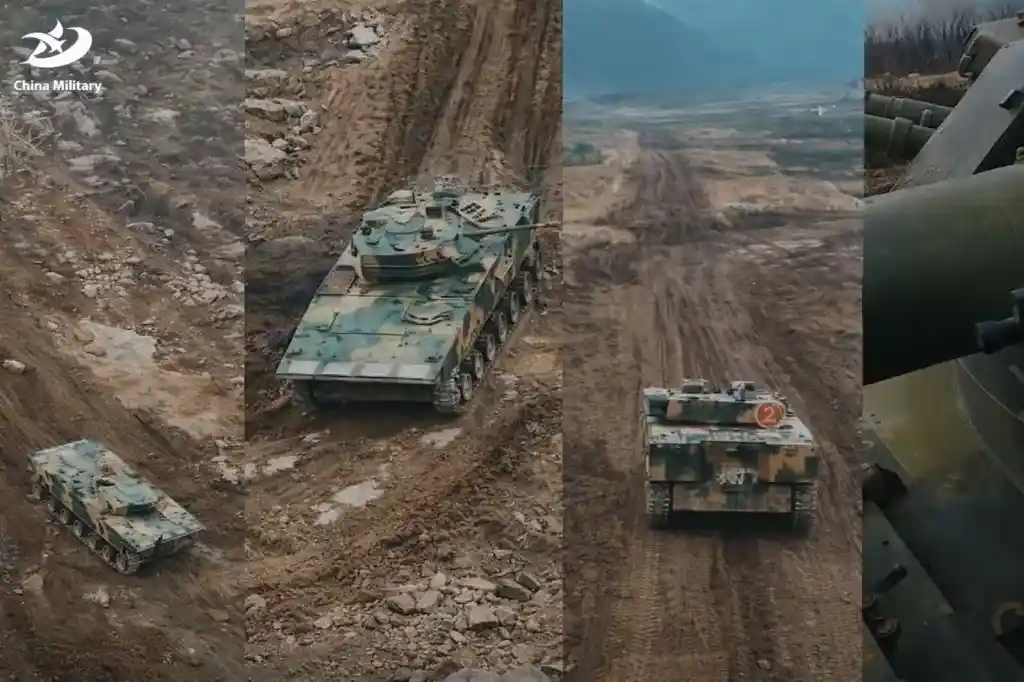
China’s People’s Liberation Army (PLA) has conducted a brigade-level combined-arms assault exercise that underscores a clear operational priority: ensuring mechanized units can maneuver, fight, and survive under persistent aerial threat. The drill integrated ZBD-04A infantry fighting vehicles (IFVs) with HQ-17 short-range surface-to-air missile systems and PGZ-04A self-propelled air-defense guns, forming a mobile protective shield designed to accompany frontline assault elements rather than trail behind them.
In contemporary warfare, armored formations no longer face threats solely from tanks and artillery. They operate under the constant risk of surveillance drones, loitering munitions, attack helicopters, and low-flying cruise missiles. The PLA’s exercise reflects a tactical recognition that air defense must move in lockstep with mechanized spearheads, creating layered protection capable of detecting, tracking, and neutralizing threats without halting offensive momentum.
This drill is significant not merely for the equipment involved, but for the doctrinal emphasis it reveals. By embedding short-range air-defense systems directly into assault formations, the PLA is rehearsing how to maintain tempo in contested electromagnetic and aerial environments. The integration of firepower, mobility, and sensor coverage signals a maturation of China’s brigade-level combined-arms operations.
Mechanized Spearhead: The ZBD-04A Infantry Fighting Vehicle
At the center of the assault formation stands the ZBD-04A, a 24-ton tracked infantry fighting vehicle engineered to operate alongside main battle tanks in high-intensity combat. Designed to transport a three-man crew and a seven-soldier infantry squad, the platform provides both mobility and substantial firepower, enabling mechanized battalions to seize and hold terrain under fire.
The ZBD-04A’s turret configuration reflects China’s emphasis on flexible battlefield response. Its primary armament includes a stabilized 100 mm low-pressure gun, capable of firing high-explosive rounds for infantry suppression and, in certain configurations, launching guided munitions. Complementing this is a 30 mm autocannon, offering high-rate fire against light armor, exposed personnel, and fortified positions. A coaxial machine gun rounds out the system, providing additional suppression capability.
This layered armament allows mechanized infantry units to shift seamlessly between direct engagement and maneuver. During offensive operations, the vehicle can provide suppressive fire while infantry dismount to clear trenches, urban strongpoints, or wooded defensive positions. The stabilization system enables firing on the move, reducing exposure time and complicating enemy targeting cycles.
Protection is equally critical. Open-source assessments indicate that the ZBD-04A’s frontal armor is rated to withstand 30 mm autocannon fire, offering survivability against common battlefield threats. Combined with its tracked mobility, the vehicle can traverse rough terrain, breach obstacles, and maintain formation integrity during rapid thrusts.
HQ-17: Mobile Short-Range Missile Defense for Assault Columns
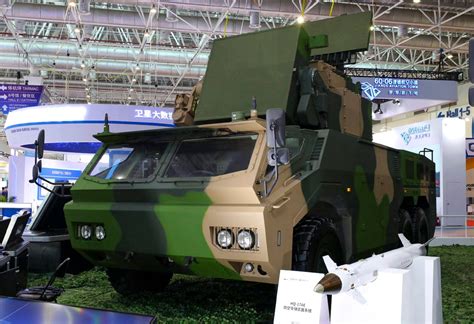
The inclusion of the HQ-17 short-range air-defense system marks a decisive shift from static to maneuver-oriented air protection. Derived conceptually from systems in the Tor family, the HQ-17 is engineered for all-weather operation and designed to protect forward-deployed units from low-altitude aerial threats.
Each launcher vehicle reportedly carries an eight-missile loadout and integrates onboard search and tracking radars. Capable of engaging multiple targets simultaneously, the system provides rapid-response interception against helicopters, unmanned aerial vehicles (UAVs), and certain cruise missile profiles. Engagement ranges, depending on configuration, extend into the short-range category measured in the low tens of kilometers.
For mechanized units advancing across open terrain, the HQ-17 creates a mobile defensive bubble. Rather than relying on rear-area air-defense networks, assault formations maintain organic coverage. This arrangement forces hostile air assets to operate at greater altitude or distance, reducing their effectiveness and limiting their ability to conduct close anti-armor strikes.
The tactical challenge lies in coordination. Air-defense vehicles must avoid overextension while keeping pace with advancing armor. The drill suggests the PLA is refining leapfrogging tactics, in which missile units reposition by bounds to ensure continuous coverage. Radar discipline and electronic counter-countermeasures become essential under complex electromagnetic conditions.
PGZ-04A: Close-In Protection Against Drones and Pop-Up Threats
Missiles alone are insufficient against the growing spectrum of aerial threats, particularly small drones and low-signature targets. The PGZ-04A self-propelled air-defense gun system addresses this gap by providing rapid, high-volume fire at very short ranges.
The system mounts four 25 mm autocannons, each capable of firing between 600 and 800 rounds per minute. With a ready ammunition load of approximately 1,000 rounds and supported by an onboard radar reportedly operating in the S-band, the PGZ-04A offers both detection and engagement capability. Four QW-2 infrared-guided missiles extend its reach beyond pure gun range, adding flexibility against maneuvering helicopters and UAVs.
Gun-based air defense remains particularly valuable in cluttered environments where radar-guided missiles may struggle to discriminate small targets. Against swarming drones or loitering munitions, rapid-fire cannons provide a cost-effective interception method. Infrared missiles complement this by enabling passive engagements, reducing electromagnetic emissions that could reveal unit positions.
The synergy between HQ-17 and PGZ-04A forms a layered air-defense architecture. Missile systems engage targets at greater distances, thinning incoming threats, while gun systems provide the last line of defense. This dual-layer structure enhances survivability during vulnerable phases such as river crossings, urban approaches, and post-breach consolidation.
Operating Under Electromagnetic Pressure
Modern battlefields are saturated with electronic warfare. Jamming, spoofing, and signal interception complicate both air-defense operations and mechanized maneuver. The PLA drill reportedly unfolded under complex electromagnetic conditions, implying training against degraded communications and contested sensor environments.
In such conditions, maintaining coordination between ZBD-04A assault elements and accompanying air-defense units demands robust command-and-control procedures. Engagement authority must be clear to prevent hesitation or fratricide. Sensor fusion—combining radar data, optical tracking, and infrared signatures—becomes critical for target confirmation.
By practicing these dynamics at brigade level, the PLA signals its focus on maintaining operational cohesion even when communications are disrupted. Mechanized battalions that can continue advancing despite electronic interference preserve initiative and impose tempo on adversaries.
Strategic Implications for High-Intensity Conflict
The broader significance of this deployment lies in its reflection of evolving doctrine. China’s modernization efforts increasingly emphasize integrated, joint-capable brigades capable of independent maneuver under contested airspace. Rather than treating air defense as a rear-echelon support function, it is now embedded as a maneuver enabler.
This approach mirrors lessons drawn from recent global conflicts where drone surveillance and precision munitions have reshaped battlefield survivability. Armored formations that lack organic air protection risk rapid attrition. By contrast, units shielded by mobile short-range systems retain the capacity to exploit breakthroughs.
For external defense planners, the integration of ZBD-04A IFVs, HQ-17 missile systems, and PGZ-04A gun platforms illustrates a deliberate attempt to close vulnerability gaps. It demonstrates investment not only in advanced hardware, but in coordinated training that binds sensors, shooters, and maneuver forces into a cohesive operational package.
If institutionalized across multiple brigades, this capability enhances China’s ability to conduct sustained mechanized offensives under aerial threat. Maintaining movement under fire is the essence of modern combined-arms warfare. The side that preserves momentum while denying the enemy air superiority gains decisive advantage.
Sustaining Momentum in Contested Skies
The PLA’s brigade-level drill reveals more than a tactical exercise; it reflects a systematic adaptation to the realities of twenty-first-century warfare. By pairing mechanized assault vehicles with layered short-range air defense, China is rehearsing how to advance through a battlefield saturated with drones, helicopters, and precision-guided weapons.
Survivability now depends on integration. Armor without air defense is exposed. Air defense without mobility becomes irrelevant. The fusion of the ZBD-04A’s offensive power with the protective umbrella of HQ-17 and PGZ-04A systems represents a calculated effort to ensure mechanized formations remain both lethal and resilient.
As air threats continue to proliferate, the effectiveness of such layered, mobile defense structures will shape the outcome of high-intensity conflicts. The recent drill indicates that the PLA is not merely acquiring equipment, but refining the doctrine and coordination required to fight—and continue fighting—under contested skies.