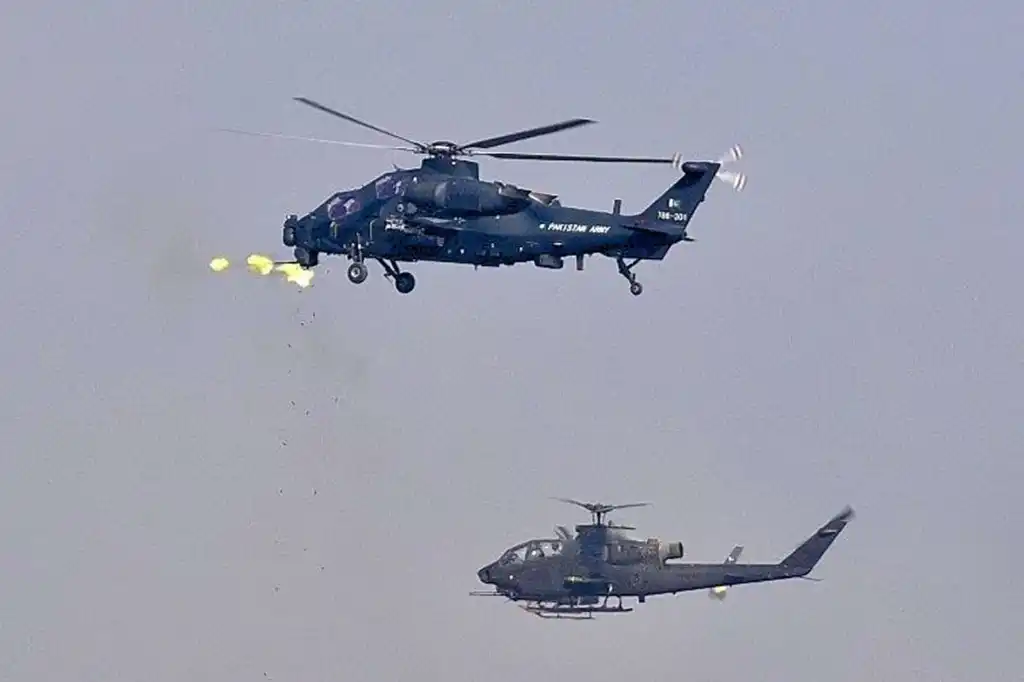
On November 16, 2025, the rugged plains of Tilla Firing Ranges in Jhelum, Punjab, echoed with thunderous firepower as Pakistan staged its Raad ul Fatah combined arms exercise, revealing a potent blend of old and new in its rotary-wing assault fleet. In a high-profile demonstration attended by Jordan’s King Abdullah II, Prime Minister Shehbaz Sharif, and Field Marshal Asim Munir, Pakistan presented a coordinated combat display that integrated Chinese-built Z-10ME-II attack helicopters with legacy U.S.-made AH-1F Cobras, symbolizing a tectonic evolution in its military doctrine.
Strategic Fusion of Divergent Platforms
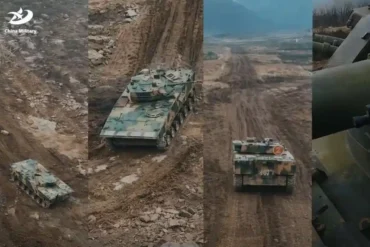
The hallmark of the exercise was the first public operational deployment of the Chinese Z-10ME-II in a live-fire scenario. Alongside the AH-1F Cobra, a veteran of Pakistan’s attack helicopter fleet, the Z-10ME-II operated with seamless coordination in target acquisition and engagement, establishing an integrated air–ground assault capacity. The drill involved synchronized maneuvers supported by multirole fighter aircraft, long-range rocket artillery, tube artillery, mechanized armor units, and both UCAV and FPV drones, showcasing Pakistan’s push toward a high-tempo, multi-domain strike doctrine.
The very presence of these disparate-origin platforms in a unified strike envelope illustrates the Pakistani military’s capability to merge digital Chinese avionics with legacy U.S. analog systems, underscoring deep strides in C4ISR (Command, Control, Communications, Computers, Intelligence, Surveillance and Reconnaissance) integration.
Z-10ME-II: China’s Deadly Dragon Takes Flight
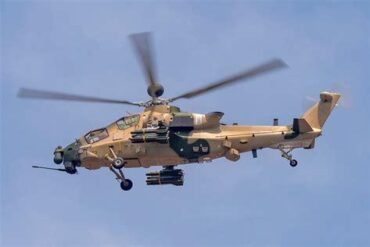
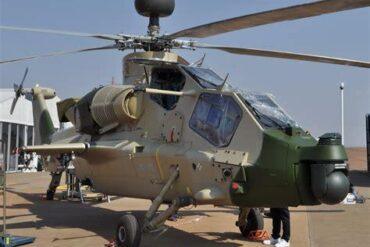
The Z-10ME-II, an export variant of the Changhe Z-10, represents China’s commitment to creating a robust, survivable, and modern attack helicopter. Equipped with WZ-9C turboshaft engines, infrared-suppressing upward-canted exhausts, and ceramic/graphene composite armor, the Z-10ME-II is tailored for high-threat operational environments, such as those near the Line of Control (LoC) and rugged mountainous terrain.
Its advanced defensive suite includes:
- Radar and laser warning receivers
- Ultraviolet missile-approach warning systems
- Directional infrared countermeasures (DIRCM)
On the offensive end, the Z-10ME-II is a beast. Armed with a 23mm chin-mounted cannon, it supports six hardpoints capable of deploying:
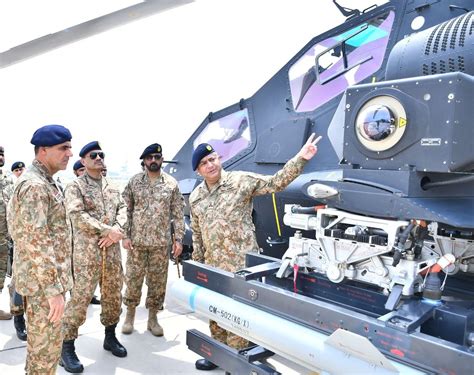
- HJ-10/AKD-10 or CM-502KG anti-tank missiles
- TY-90 short-range air-to-air missiles
- Unguided and guided rocket pods
This platform boasts a maximum takeoff weight of 7.2 tonnes, top speed approaching 300 km/h, and operational ceilings over 6,000 meters, making it an ideal choice for high-altitude close air support and anti-armor missions.
AH-1F Cobra: The Old Warrior Still Roars
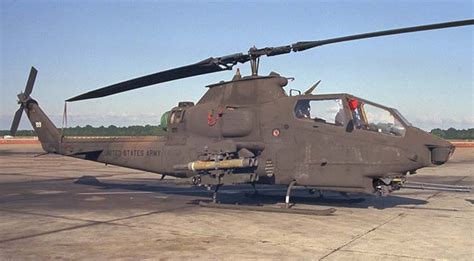
Contrasting its new Chinese counterpart, the AH-1F Cobra, supplied by the U.S. between 1985–1986, remains a formidable asset in the Pakistan Army Aviation Command. Despite being in service for nearly four decades, the AH-1F has undergone upgrades, particularly with thermal imaging systems, ensuring its relevance in border operations and counter-insurgency (COIN) roles.
Armed with a 20 mm M197 cannon and TOW-series anti-tank missiles, the Cobra offers a nimble, narrow-profile attack solution, effective in suppressing insurgent hideouts and offering flanking firepower. It has earned distinction in multiple theaters, from Somalia and Sierra Leone under UN mandates to Pakistan’s Federally Administered Tribal Areas (FATA) during anti-militancy campaigns.
Bridging Technology Ecosystems: Interoperability in Action
The success of Raad ul Fatah lies not just in the platforms, but in Pakistan’s demonstrated ability to forge operational synergy between aircraft with vastly different digital backbones. While the Z-10ME-II operates within a Chinese digital ecosystem, the AH-1F Cobra belongs to an older U.S. analog framework. Integrating these within a cohesive command-and-control network represents a triumph of Pakistani military innovation and adaptation.
In live scenarios, the Z-10ME-II’s electro-optical targeting systems enable it to detect and engage deep-armored targets, while Cobras can engage close-quarters and concealed positions, effectively securing flanks and support zones. This doctrinal pairing maximizes battlefield coverage, while also conserving higher-end assets for more complex missions.
Tilla Ranges: A Geostrategic Theatre of Fire
The choice of the Tilla Firing Ranges is no accident. Positioned close to the northern conflict corridors, including Kashmir and the Siachen region, Tilla has long served as a critical testbed for Pakistan’s strategic arms, including ballistic missiles, drone trials, and air–land integration exercises.
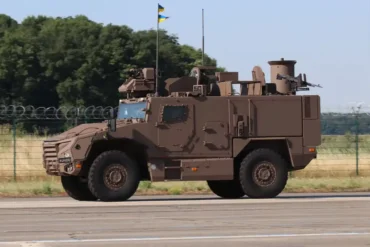
Its use in Raad ul Fatah, before a diplomatic audience including Jordanian royalty, signals both strategic depth and political signaling. King Abdullah II’s presence, given Jordan’s blended military portfolio of Western-origin helicopters and armored vehicles, suggests Islamabad’s intent to showcase capabilities to potential Middle Eastern partners and to strengthen Beijing’s position as a trusted supplier of military platforms.
Procurement Backstory: From Rejection to Integration
Pakistan’s journey to induct the Z-10ME-II was anything but straightforward. In 2015, the country trialed earlier versions of the Z-10 but found their engine performance inadequate. Efforts to purchase U.S. AH-1Z Vipers and Turkish T129 ATAKs were derailed due to export restrictions and engine licensing roadblocks, particularly as U.S.–Pakistan relations cooled.
Faced with a capability gap and the risk of strategic isolation, Pakistan turned decisively to Chinese defense partnerships, culminating in the August 2025 induction of the Z-10ME-II at Multan Garrison. That event, marked by Field Marshal Asim Munir’s inspection of live-fire demos, served as the ceremonial transition point. Raad ul Fatah represents the operational graduation of that induction—from base-level testing to fully integrated battlefield deployment.
Signaling to Rivals and Allies
To New Delhi, the message was pointed: Pakistan is not only maintaining but evolving its deterrence capacity. With India operating Boeing AH-64E Apache Longbows, Pakistan’s move to field a purpose-built, high-altitude attack platform like the Z-10ME-II demonstrates an intent to contest rotary-wing dominance in rugged terrain.
To Beijing, the exercise offers a glowing endorsement of the Z-10ME-II in real-world applications. Pakistan’s role as first export operator makes it a de facto reference customer for AVIC’s global sales pitch. Footage from the exercise—showing Z-10s operating seamlessly in tandem with other platforms—validates Chinese claims of multi-role efficacy and modular architecture.
To Washington, the continued utility of the AH-1F Cobras, despite sanctions and export restrictions, is a stark reminder of both America’s legacy influence and the cost of disengagement. While Pakistan’s acquisition of Chinese platforms highlights shifting strategic alignments, it also shows a pragmatic effort to retain and utilize existing U.S. assets rather than discard them due to political headwinds.
Conclusion: A Doctrine Transformed by Necessity
The Raad ul Fatah exercise, viewed through the lens of operational capability and strategic messaging, encapsulates Pakistan’s evolving military identity—hybrid, interoperable, and regionally assertive. The image of Z-10ME-IIs and AH-1F Cobras in synchronized live-fire, flanked by drones, rocket artillery, and mechanized columns, is more than a visual metaphor. It is a declaration of Pakistan’s new warfighting architecture, where multi-origin assets operate in seamless unison to execute high-speed, high-impact battlefield maneuvers.
In a region fraught with tension, this display underlines a hard truth: Pakistan is preparing not just to deter, but to act decisively, with tools that span continents and doctrines, fused under a single national command.