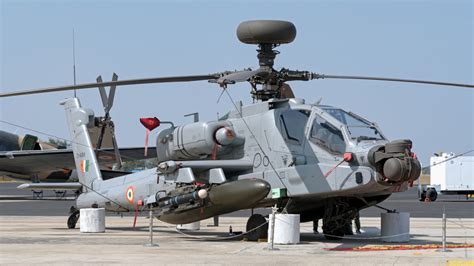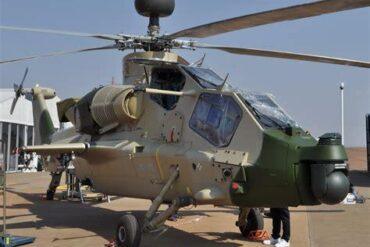
The arrival of cutting-edge attack helicopters in South Asia has sparked a potential new aerial standoff between two nuclear-armed rivals. As India inducts the formidable U.S.-built AH-64E Apache, Pakistan appears to be countering with the newly upgraded Chinese Z-10ME, signaling a dangerous escalation in battlefield capabilities along the contested frontiers.
Tensions between the neighbors remain palpable despite the official pause of Operation Sindoor, India’s campaign against Pakistani-backed insurgents. With both countries steadily modernizing their offensive aerial platforms, a future confrontation is now more likely to include the world’s most sophisticated rotary-wing gunships, raising the stakes of any cross-border engagement.
India Activates Apache Squadron Amid Regional Unrest
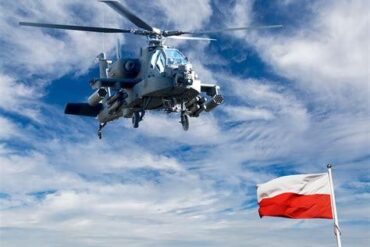
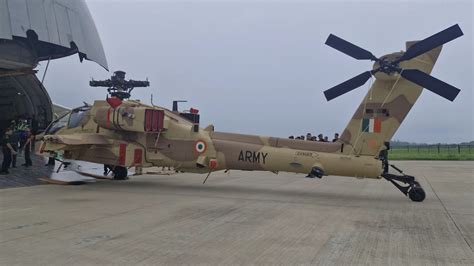
India’s long-awaited delivery of the AH-64E Apache attack helicopters has finally materialized, with three of the six units touching down at Hindon Airbase in July 2025. This delivery comes more than 15 months behind schedule, delaying the full operational capability of the Indian Army’s first Apache squadron, raised in March 2024 at Nagtalao, Jodhpur.
The Apaches are set to deploy along India’s western frontier, directly facing Pakistan’s military positions in a highly volatile region. Indian defense planners have emphasized the need to bolster frontline air assault units with technologically superior platforms capable of striking with precision, operating in all-weather environments, and neutralizing armored threats at stand-off ranges.
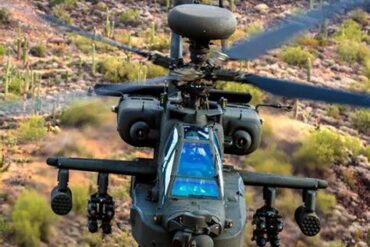
The AH-64E variant, also known as the Apache Guardian, represents the most advanced configuration of the iconic gunship. Key upgrades include:
- Longbow fire control radar and advanced targeting systems
- Hellfire air-to-ground missile and Stinger air-to-air missile compatibility
- Robust networking and data link systems for battlefield integration
- Powerplant upgrade with improved fuel efficiency and flight ceiling
This makes the Apache a lethal, multi-role asset ideal for India’s diverse combat theaters — from the deserts of Rajasthan to the high-altitude frontlines of Ladakh.
Pakistan Eyes Chinese Z-10ME to Replace Aging Cobras
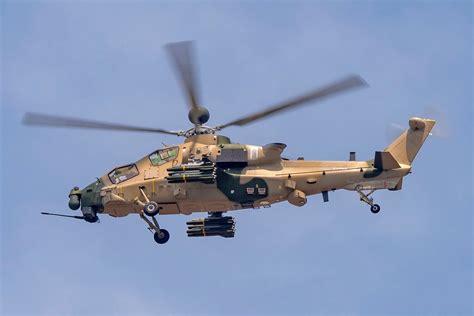
Across the border, Pakistan is reportedly on the verge of formally inducting the Chinese Z-10ME, a heavily upgraded export variant of the Z-10 attack helicopter. This comes after years of frustration with previous procurement attempts — most notably, the unfulfilled AH-1Z Viper deal with the United States and the US-vetoed Turkish T129 ATAK order.
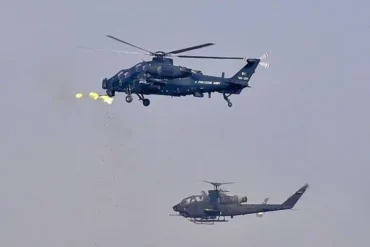
With the Z-10ME, Pakistan hopes to finally begin phasing out its decades-old AH-1F/S Cobras, modernizing its offensive rotary-wing fleet with a gunship designed to challenge both the Apache and Russia’s Mi-28 “Havoc.”
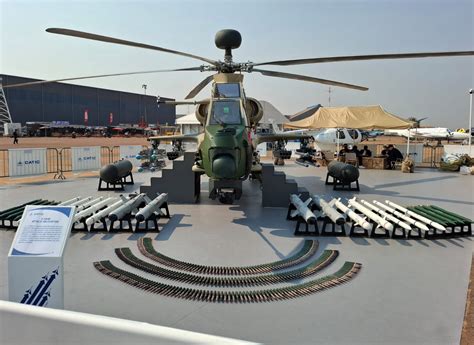
The Z-10ME’s technical capabilities are a significant leap forward in terms of survivability, target acquisition, and lethality:
- WZ-9G turboshaft engine, delivering more thrust than earlier Z-10 versions
- Graphene-based ceramic armor panels, enhancing protection against small arms and shrapnel
- Laser-guided munitions, helmet-mounted sights, and thermal imaging for night operations
- Infrared-reducing exhaust nozzles, minimizing vulnerability to heat-seeking missiles
- Modular weapon system capable of carrying up to 16 anti-tank missiles, multi-barrel rocket pods, and a 23mm rotary cannon
These improvements position the Z-10ME as a credible air assault asset, capable of precision strikes against armored columns, close air support, and reconnaissance in contested airspace. Pakistani military observers claim that some laser-based weapon systems may eventually be fielded on future variants, though such upgrades remain speculative.
Failed Deals and Strategic Shifts: Pakistan’s Search for Firepower
Pakistan’s decision to embrace the Z-10ME follows a series of procurement failures that underscored the country’s growing isolation from Western defense markets.
In 2015, a $952 million U.S. deal approved the sale of 15 AH-1Z Vipers, but the agreement quickly unraveled amid worsening diplomatic ties. Though some helicopters were painted in Pakistani livery and even stored at AMARG in Arizona, none have been delivered.
Subsequent efforts to procure 20 Turkish T129 ATAKs, powered by American-British engines, were also torpedoed by the United States, frustrating Islamabad’s long-term modernization plans.
To fill the interim gap, Pakistan received four Mi-35M attack helicopters from Russia — a heavily upgraded version of the iconic Mi-24 “Hind” gunship. While rugged and reliable, the Mi-35M is viewed as less agile and versatile compared to modern Western or Chinese designs. As a result, Pakistan’s growing reliance on Beijing for advanced platforms has become increasingly evident.
India’s Multi-Layered Helicopter Force
India’s attack helicopter strategy is not solely reliant on the Apache. The country has concurrently developed and inducted the indigenous HAL Light Combat Helicopter (LCH) ‘Prachand’, designed specifically for high-altitude warfare. The LCH features stealth profiling, narrow fuselage, and an ability to operate at elevations exceeding 6,000 meters, making it ideal for the Himalayan region.
The Indian Air Force and Army now operate a layered rotary capability:
- AH-64E Apache for deep strike and anti-armor missions
- HAL LCH Prachand for high-altitude engagements
- Rudra Armed ALH for mobility-based light strike missions
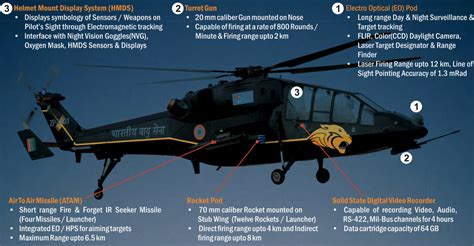
This integrated approach ensures flexibility and redundancy across diverse terrain, giving India a strategic edge in both low-altitude urban operations and high-mountain warfare.
Tactical Implications for Future Conflicts
With Apache and Z-10ME platforms entering the operational environment, the nature of future conflicts in the Indian subcontinent will shift significantly. Unlike the asymmetric skirmishes of the past, both sides now possess the firepower for rapid escalation.
The Apache brings advanced network-centric warfare capabilities, acting as a flying sensor hub capable of designating targets for artillery, drones, and fixed-wing assets. Its robust survivability, combined with over-the-horizon targeting, allows Indian forces to engage with minimal exposure.
On the other hand, the Z-10ME’s cost-effective engineering and domestic supply chain make it a reliable workhorse for Pakistan. While it may lag behind the Apache in avionics and sensor fusion, its stealthier profile and optimized design for export give it a lower radar and thermal signature — potentially complicating Indian detection.
Importantly, both helicopters offer limited anti-air capability, suggesting that air superiority and UAV-based ISR (intelligence, surveillance, and reconnaissance) assets will play a critical role in tipping the balance.
Regional and Strategic Ramifications
Beyond the battlefield, these acquisitions are part of a broader strategic realignment. India’s Apache purchase reinforces its deepening defense ties with the United States, enhancing interoperability with U.S. and allied systems. This fits squarely within the strategic logic of the Quad partnership, countering China’s influence in the Indo-Pacific.
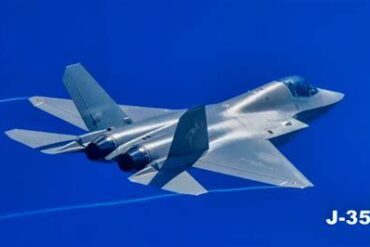
Conversely, Pakistan’s Z-10ME deal further cements Islamabad’s defense interdependence with Beijing. This extends beyond helicopters — Pakistan is also a major recipient of JF-17 fighters, Chinese air defense systems, and emerging UAV platforms. The pattern reflects a clear pivot toward Chinese military-industrial support, especially after Western doors have largely closed.
The induction of attack helicopters by both sides — each backed by rival global superpowers — marks a new dimension in the geopolitical contest, transforming a regional arms race into a proxy for global influence competition.
The Road Ahead: Escalation or Deterrence?
Whether these weapon systems serve as a deterrent or a catalyst for escalation remains uncertain. The overlapping induction timelines and strategic deployments suggest that neither side is seeking de-escalation — rather, they are preparing for the next round.
In an environment where missile salvos can be launched within minutes, the ability to conduct precision close air support, destroy enemy armor columns, and neutralize forward observation posts gives enormous leverage to rotary-wing platforms. As both India and Pakistan field modernized attack helicopters, the margin for miscalculation narrows dangerously.
The subcontinent is now entering a phase where high-speed decision cycles, networked warfare, and advanced rotary-wing combat will dominate tactical doctrines. The Apache and Z-10ME may not just be tools of deterrence — they could very well become the opening salvos in a battle neither side can afford to fight, yet both continue to prepare for.