China has officially acknowledged the first combat success of its J-10CE multirole fighter jet, marking a pivotal moment in the global military aviation landscape and signaling a new phase in Beijing’s defense export credibility. The confirmation, issued by China’s State Administration of Science, Technology and Industry for National Defense in January 2026, represents the first time the Chinese government has publicly validated combat results linked to an exported Chinese fighter aircraft. Although the statement avoided naming adversaries or operational specifics, its timing and context closely align with air combat engagements during the May 2025 India–Pakistan conflict, where Pakistan Air Force J-10CEs were actively deployed in air defense and interception missions.
This acknowledgment carries weight far beyond a single engagement. For decades, Chinese combat aircraft were often evaluated primarily through exercises, simulations, and marketing claims. The J-10CE’s reported battlefield performance introduces combat-proven status into discussions of Chinese aerospace technology, reshaping perceptions among potential buyers and strategic analysts alike. It also places the aircraft directly into conversations historically dominated by Western and Russian fighters with extensive combat pedigrees.
The India–Pakistan clash of 2025 unfolded during a period of heightened regional tension, characterized by rapid escalation, intense aerial patrols, and long-range stand-off engagements. Both sides sought to demonstrate air superiority without crossing into full-scale war, resulting in engagements that emphasized sensor reach, missile range, and networked command systems rather than traditional dogfighting. Within this environment, the J-10CE emerged as a frontline asset for Pakistan, tasked with protecting airspace and countering Indian Air Force patrols operating near contested borders.
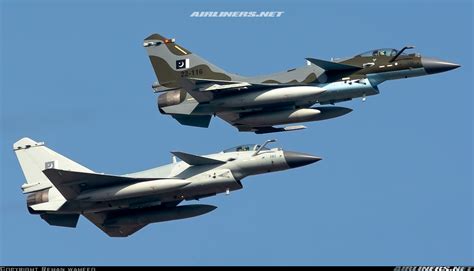
China’s confirmation does not provide tactical detail, but it aligns with earlier Pakistani statements claiming successful engagements against Indian aircraft during the May 2025 episode. The acknowledgment effectively validates that the J-10CE was employed under real combat conditions and achieved outcomes deemed successful by its manufacturer and state overseers. For Beijing, this represents a strategic communication milestone, carefully calibrated to enhance credibility while avoiding escalation or diplomatic fallout.
Evolution of the J-10 Program and the Rise of the J-10CE
The Chengdu J-10 program originated as China’s answer to the need for a modern, indigenous fighter capable of replacing aging second-generation aircraft and reducing dependence on foreign designs. Conceived in the late Cold War period and entering service in the mid-2000s, the original J-10 introduced a delta-canard aerodynamic layout, digital fly-by-wire controls, and multirole capability that signaled a leap forward for the People’s Liberation Army Air Force.
Subsequent iterations reflected steady refinement. The J-10B introduced improved intake geometry, enhanced avionics, and better electronic warfare provisions. The J-10C, which entered service in the mid-2010s, marked a more substantial transformation with the integration of an active electronically scanned array radar, modernized datalinks, and a reworked electronic countermeasure suite. These upgrades positioned the aircraft firmly within the 4.5-generation fighter category, optimized for networked warfare and long-range missile employment.
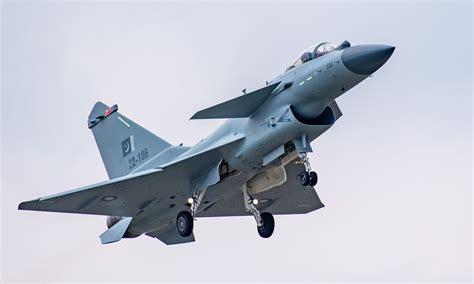
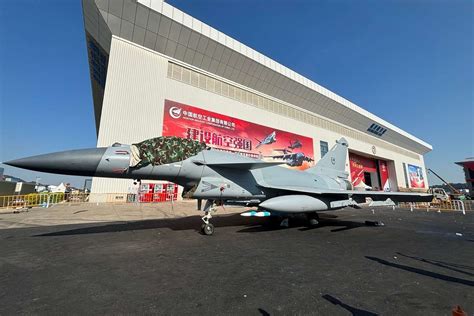
The J-10CE emerged as an export-oriented derivative of the J-10C, retaining core performance while offering configuration flexibility for foreign customers. Marketed internationally from 2019, it was presented as a cost-effective alternative to Western fighters, combining advanced sensors, modern cockpit design, and compatibility with contemporary Chinese munitions. Pakistan became the launch customer, integrating the aircraft into frontline service beginning in 2022.
Technical Capabilities That Defined the Engagement
At the heart of the J-10CE’s combat relevance is its balanced blend of performance, sensors, and weapons integration. The aircraft is powered by the WS-10B turbofan engine, delivering thrust in the 135–145 kilonewton range with afterburner. This powerplant supports a thrust-to-weight ratio slightly above 1.0 in air-to-air configurations, enabling strong climb performance and sustained maneuverability at altitude.
The J-10CE’s aerodynamic design, combining a delta wing with close-coupled canards, provides high agility while maintaining stability at high angles of attack. Maximum speed is assessed at approximately Mach 1.8, with a service ceiling exceeding 18,000 meters. Its combat radius surpasses 1,000 kilometers depending on mission profile, while ferry range extends beyond 4,500 kilometers with external fuel tanks.
Equally significant is the aircraft’s AESA radar, credited with multi-target tracking, robust resistance to electronic countermeasures, and extended detection ranges in beyond-visual-range scenarios. When paired with secure datalinks, radar warning receivers, and missile approach warning systems, the J-10CE operates as part of a networked combat ecosystem rather than as a standalone platform.
Weapons Integration and the Role of Long-Range Missiles
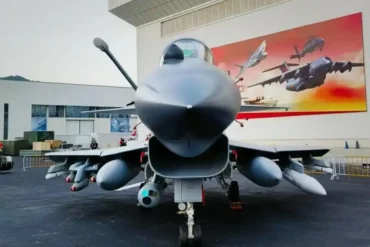
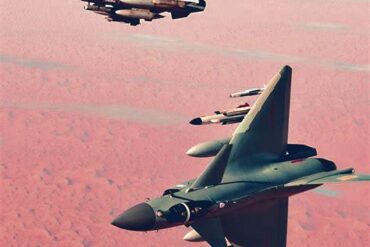
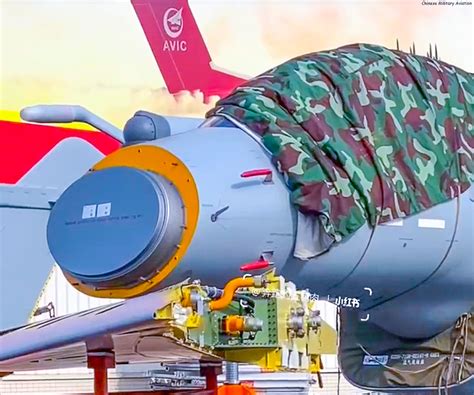
The J-10CE can carry nearly 6,000 kilograms of external payload across 11 hardpoints, allowing flexible mission configurations that include air-to-air missiles, precision-guided air-to-surface weapons, electronic warfare pods, and external fuel tanks. Its export configuration has been showcased with staggered dual missile pylons, enabling carriage of multiple beyond-visual-range missiles while retaining short-range infrared weapons for close engagements.
During the 2025 conflict, the aircraft’s combat success is widely associated with the PL-15E beyond-visual-range air-to-air missile, the export variant of China’s PL-15. The missile is generally linked to engagement ranges between 150 and 200 kilometers, depending on launch conditions and targeting support. Featuring an active radar seeker and mid-course datalink guidance, the PL-15E exemplifies the shift toward long-range, sensor-driven air combat, where detection and coordination often decide outcomes before visual contact is made.
Although China’s official statement did not name specific weapons, Pakistani accounts consistently highlighted PL-15-series missiles as central to their air defense strategy. The emphasis on missile reach and cooperative targeting underscores how the J-10CE was employed not as a dogfighter, but as a long-range interceptor within an integrated air defense network.
The May 2025 Air Engagements and Competing Claims
The combat episode referenced by China occurred during a brief but intense escalation between Pakistan and India in May 2025. Both air forces conducted patrols and interceptions near contested airspace, with engagements reportedly taking place without aircraft crossing national borders. Pakistan claimed that its fighters, including J-10CEs, successfully engaged Indian aircraft attempting to approach sensitive areas.
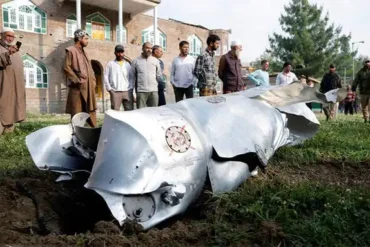
Pakistani statements asserted the destruction of up to five Indian aircraft, including multiple Rafale fighters, a Su-30MKI, and a MiG-29, with some versions also mentioning a Heron medium-altitude long-endurance drone. Lower estimates circulating internationally suggested one or two losses, while India denied losing any aircraft and countered with its own claims of successful strikes against Pakistani assets. None of these assertions were independently verified in full.
China’s acknowledgment deliberately avoided entering this debate. By confirming only that the J-10CE achieved combat results, Beijing sidestepped contested narratives while still endorsing the aircraft’s operational effectiveness. This careful phrasing reflects a strategic balance between promoting defense exports and maintaining diplomatic caution.
Strategic Implications for China’s Defense Exports
The confirmation of combat success has implications that extend well beyond South Asia. In the global arms market, combat-proven status carries symbolic and practical value, influencing procurement decisions and shaping perceptions of reliability. For the J-10CE, this acknowledgment shifts the aircraft from theoretical capability to demonstrated use, a transition that many competing platforms have leveraged to great effect.
For air forces seeking alternatives to Western or Russian fighters, particularly those constrained by budget, delivery timelines, or political considerations, the J-10CE now presents a more compelling case. Its combination of modern sensors, long-range missile integration, and relatively lower acquisition costs positions it as a viable option for countries prioritizing air defense and regional deterrence.
At the same time, the absence of detailed data, independent verification, and transparent loss figures ensures that debate will continue. Analysts will scrutinize the engagement, missile employment, and command-and-control dynamics to assess how much of the outcome can be attributed to the aircraft itself versus broader system integration.
A Milestone in Modern Air Combat Narratives
China’s confirmation of the J-10CE’s first combat success represents a symbolic milestone in the evolution of its aerospace industry. It signals confidence in domestically developed technology and a willingness to publicly associate export platforms with real-world outcomes. For Pakistan, it reinforces claims of effective air defense and highlights the role of modern sensors and long-range missiles in contemporary conflicts.
More broadly, the episode illustrates how modern air combat has shifted away from visual dogfights toward engagements defined by information dominance, sensor fusion, and missile reach. In this environment, the J-10CE’s reported performance offers a case study in how emerging aerospace powers are reshaping established hierarchies.
As discussions continue and more data gradually emerges, the J-10CE’s combat debut will remain a reference point in assessments of global fighter capabilities. Whether it leads to expanded export success or remains a singular milestone, the acknowledgment itself has already altered the conversation, placing China’s fighter industry firmly within the realm of operationally validated air power.