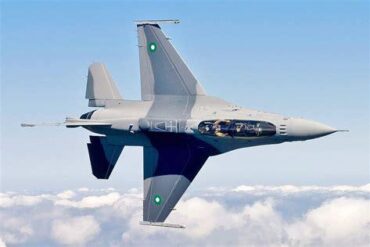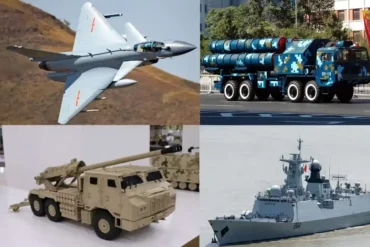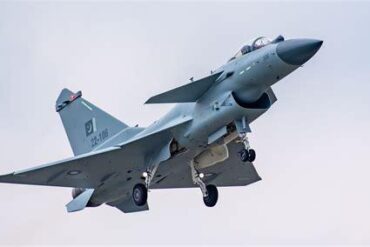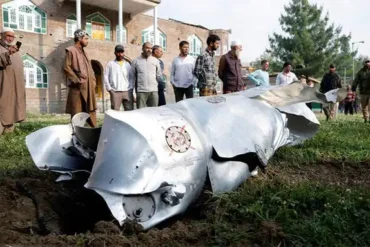
Tensions between India and Pakistan have once again spilled into the skies, forcing international airlines to swiftly cancel flights and reroute air corridors to ensure the safety of passengers and crew. As geopolitical friction intensifies along the India-Pakistan border, aviation networks across Asia, the Middle East, and even North America are witnessing dramatic disruptions.
The escalating military engagement — which includes missile strikes, artillery fire, and retaliatory air assaults — has forced both nations into high alert. As a consequence, the aerospace safety protocols invoked by global carriers reflect the gravity of the conflict’s reach beyond the battlefield.
Escalation in Kashmir Sparks Airspace Chaos
The trigger for this aviation emergency emerged following India’s missile strikes into Pakistani territory, in response to a devastating civilian attack at a well-known tourist destination in Indian-administered Kashmir. The Indian government directly linked the attack to militants operating from Pakistan-controlled Kashmir, igniting a swift and fiery response. Pakistan, in turn, retaliated by targeting Indian border towns with artillery and short-range missiles, raising regional alert levels and provoking immediate international concern.
In light of the military activity, India’s Directorate General of Civil Aviation (DGCA) ordered the closure of 27 airports, mostly in the western and northwestern sectors of the country. This directive has deeply impacted Air India, IndiGo, SpiceJet, and other regional operators, who were forced to ground dozens of flights, including key routes from Amritsar, Chandigarh, Jammu, and Jamnagar.
Major U.S. Carriers React Swiftly
American carriers were among the first to make decisive operational adjustments. On Wednesday, American Airlines canceled its non-stop Delhi–New York flight, redirecting its aircraft out of Delhi with only its flight crew onboard. This precaution was replicated by United Airlines, which canceled its Newark–Delhi service the same day. Although both airlines have since resumed their scheduled operations, the short-term cancellations underscore the fragility of aviation logistics in the face of rapidly evolving military crises.

European and Asian Airlines Navigate Around Hostility
The impact of the conflict has rippled far beyond the Indian subcontinent. Major carriers from Europe and Asia are actively modifying flight paths and suspending operations:
- Air France, KLM, and Singapore Airlines have declared a complete cessation of flights through Pakistani airspace.
- Lufthansa has opted to maintain its Delhi–Frankfurt service, but is now rerouting aircraft over the Arabian Sea, effectively bypassing the India-Pakistan border.
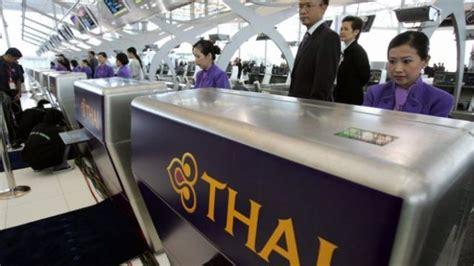
- Airlines from East and Southeast Asia — including Batik Air (Indonesia), China Airlines (Taiwan), Korean Air, Malaysia Airlines, Thai Airways, and Vietnam Airlines — have also suspended or rerouted flights across the region.
These changes represent a complex logistical recalibration, with airlines forced to extend flight durations, increase fuel loads, and reallocate aircraft and crew resources to accommodate the lengthier, less direct routing.

The Cost of Avoidance: Fuel, Time, and Complexity
Avoiding a hostile region like Kashmir does not come without significant operational costs. Airlines are diverting southward over the Persian Gulf, the United Arab Emirates, and Oman, dramatically altering their traditional flight profiles. These detours often add over 90 minutes to flight time, increasing fuel burn and impacting the delicate timing of international hub-and-spoke networks.
More critically, airlines must balance passenger safety with logistical feasibility. In congested airspaces like those over the Gulf, controllers are now managing an unprecedented volume of redirected traffic, raising concerns over potential bottlenecks and communication overload.
Grounded in Conflict: Domestic Indian Aviation Struggles
The bulk of domestic disruption is being felt within India itself. Airlines like SpiceJet and IndiGo have had to cancel a multitude of domestic services, particularly in northern regions close to the Line of Control (LoC). Air India, the country’s flagship carrier, announced an operational halt to Amritsar, Chandigarh, Jammu, and Jamnagar, cities near high-conflict zones.
In these areas, civilian movement has slowed to a crawl. Regional airports remain shuttered, and travelers find themselves stranded, rebooking tickets at inflated prices or relying on limited overland transport. The aviation chaos mirrors the ground-level uncertainty engulfing the region.
International Agencies Respond with Caution
The U.S. State Department quickly issued a “Do Not Travel” advisory for Indian-administered Kashmir, citing both terrorism and civil unrest as active threats. Other countries, including Canada, the United Kingdom, and Australia, have either followed suit or updated their travel advisories to reflect the increased risk.
Aviation authorities are also coordinating. The International Civil Aviation Organization (ICAO) has advised operators to exercise extreme caution, emphasizing the importance of real-time information sharing between carriers, ATC networks, and regional safety bodies.
Geopolitical Airspace: A Volatile Chessboard
The Indian subcontinent sits atop a geopolitical fulcrum. Bordering China, Pakistan, Iran, Afghanistan, and Central Asia, the region is riddled with diplomatic fault lines that turn airspace into a high-stakes chessboard. The airspace over Pakistan and northern India is especially crucial for east–west travel — particularly between Europe and Southeast Asia.
Any closure or restriction in this corridor impacts cargo routes, corporate travel, tourism, and global logistics. The current crisis has not only diverted traffic but also illuminated the vulnerabilities of hyper-connected aviation networks in times of geopolitical volatility.
Resumption and Risk Assessment Moving Forward
While several airlines have resumed their flights after brief cancellations, the situation remains fragile and under continuous review. FlightAware data shows aircraft actively avoiding Pakistan, redirecting far to the south and east, and adapting daily to the shifting nature of regional hostilities.
Airlines will continue to rely on detailed risk assessments, intelligence reports, and diplomatic briefings to guide route planning. The balance between commercial viability and passenger security remains razor-thin.
Conclusion: A Region in Turmoil, an Industry on Alert
The skirmishes between India and Pakistan in May 2025 serve as a stark reminder of how military escalations can paralyze civilian infrastructure, particularly aviation. What begins as a ground-level conflict can quickly spiral into a global challenge, rerouting thousands of lives — and billions in aircraft assets — across alternate paths.
We are witnessing not just a regional dispute, but a live case study in aviation resilience, geopolitical risk management, and global network fragility. As tensions simmer and diplomacy flutters between warning and warfare, airlines remain grounded not in airports, but in the harsh reality that the skies are no longer neutral.