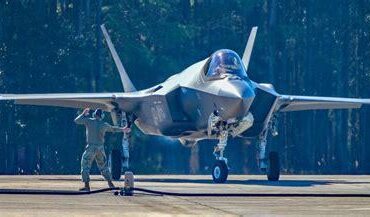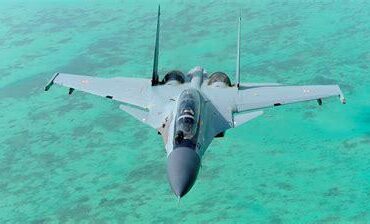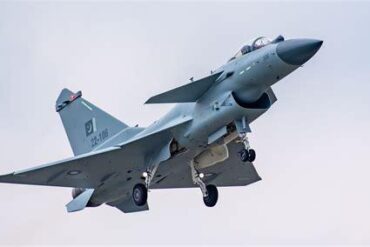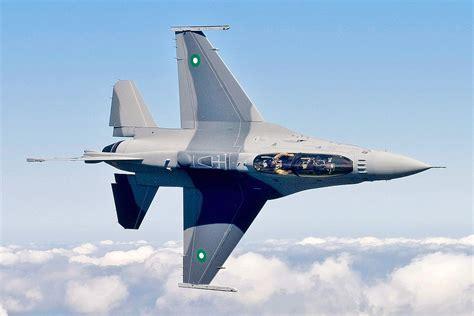
Following the recent India-Pakistan military standoff, investors had anticipated heightened market volatility in defense stocks, particularly those tied to combat assets deployed during the conflict. Yet, the share price of Lockheed Martin Corporation, the manufacturer of the F-16 Fighting Falcon, has remained remarkably stagnant. Despite its fighter jets being center stage in Pakistan’s air response during the four-day-long conflict dubbed Operation Sindoor, the U.S. defense contractor has generated virtually no returns in the past month.
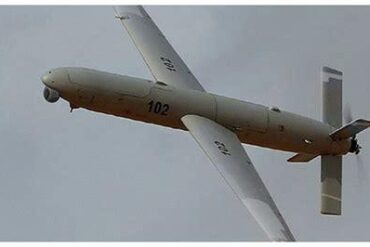
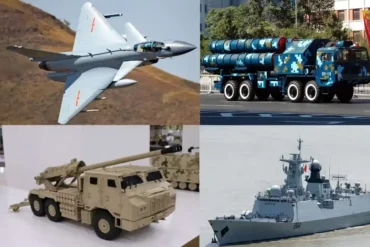
The confrontation began after India launched precision strikes on May 7, targeting terrorist camps in Pakistan-occupied Kashmir as a direct retaliation to the deadly Pahalgam terror attack on April 22, which killed 26 civilians. Pakistan responded with aerial deployments that included the American-made F-16s, China’s J-10 fighters, various armed drones, and missile systems. However, all incursions were reportedly repelled by India’s advanced air defense capabilities, a narrative that appears to have had profound implications for both geopolitical perception and investor sentiment.
Lockheed Martin’s Shares Flat Despite Escalating Tensions
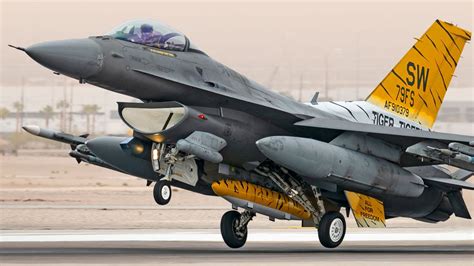
Lockheed Martin (NYSE: LMT) closed May with an incremental gain of just 0.97%, settling at $482.38, a tepid performance compared to the 6.95% rally it posted in April after six consecutive months of losses. Market analysts cite strong selling pressure on May 12, immediately following the peak of the conflict, as the primary reason behind this lackluster performance. Notably, even into early June, shares have been rangebound, slipping 0.46% in the initial sessions, defying expectations of a defense-driven rally.
The muted reaction stems not from a lack of media exposure—the F-16 featured heavily in news coverage—but from investor skepticism about its performance and implications for Lockheed Martin’s future order book. Pakistan’s use of the F-16 under conditions reportedly meant for non-combat purposes may have raised eyebrows in Washington, and the fact that none of these jets succeeded in breaching Indian defenses is being viewed by the market as a reputational blow.
Operational Implications and Order Book Risks
According to Avinash Gorakshkar, Head of Research at Profitmart Securities, the apparent failure of F-16s and J-10s to make any strategic dent may influence upcoming defense procurement cycles. “Even though the U.S. supplied F-16s to Pakistan for non-war purposes, their deployment during Operation Sindoor could backfire both diplomatically and commercially,” he noted. If regional clients perceive a lack of battlefield effectiveness, Lockheed Martin could see dampened demand, especially from nations pursuing air superiority against advanced defense systems.
Furthermore, the impact is not isolated to American defense exports. Chinese defense contractor AVIC Chengdu Aircraft, which produces the J-10, has also seen a sharp retreat. Its shares plunged 20% from their May 12 peak, reflecting a broader market sentiment that performance visibility matters more than deployment headlines.
Technical Analysis: Accumulation With a Bullish Tilt
Despite this muted price action, technical indicators hint at a bullish potential. Ganesh Dongre, Senior Manager of Technical Research at Anand Rathi, highlights that Lockheed Martin shares are consolidating within a $440 to $510 range. This “accumulation phase,” as he terms it, is building a base for a possible breakout.
“The structure is forming a classic double-bottom pattern, often seen as a precursor to bullish reversals,” said Dongre. Supporting this is a bottoming MACD (Moving Average Convergence Divergence) on the weekly chart, indicating waning bearish momentum. This shift could precede an upward rally toward the $543–$575 range, should the stock decisively close above $510, a level aligning with historical resistance and Fibonacci extension levels.
Broader Market Perception and the Defense Investment Cycle
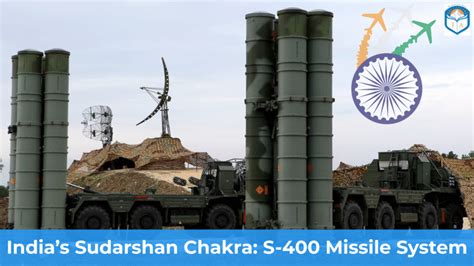
The Indian military’s successful neutralization of airborne threats during Operation Sindoor has shifted global perception. Traditionally, a conflict involving U.S.-made defense platforms would imply strengthened demand and investor confidence in military contractors. But the opposite has occurred, revealing that modern investors evaluate combat performance more critically than symbolic deployment.
Lockheed Martin’s stagnation could also reflect longer-term structural realities. With U.S. defense budgets under increased scrutiny and new geopolitical dynamics emerging—particularly the Indo-Pacific strategic realignment—the relevance of legacy platforms like the F-16 is being reexamined. Unless the aircraft proves adaptability in modern warfare contexts, it risks being perceived as outpaced by contemporary threats and systems.
Geopolitical Optics and Strategic Fallout
The diplomatic repercussions of Pakistan using F-16s in offensive roles could further complicate U.S. foreign military sales agreements. Historically, F-16 sales to Pakistan have come with strict usage caveats, often tied to counterterrorism operations. Allegations that the jets were used in offensive strikes may trigger policy reassessments in Washington, possibly leading to stricter enforcement or halts in future sales, affecting Lockheed Martin’s standing in key South Asian markets.
Moreover, India’s indigenous defense production ambitions, buoyed by the success of Operation Sindoor, may reduce future dependence on foreign suppliers. As Prime Minister Modi continues to push ‘Make in India’ in defense, the appeal of U.S. systems like the F-16 could erode further, especially as DRDO and HAL ramp up next-generation platforms like the Tejas Mk2 and AMCA.
Investor Caution Amid Geostrategic Uncertainty
From a capital markets lens, the lack of movement in Lockheed Martin shares speaks to investor caution amid geopolitical noise. Despite the media’s coverage of the conflict and the firm’s prominent brand association with aerial warfare, traders are discounting the long-term strategic value of the F-16, especially if it cannot deliver decisive results against evolving defense technologies.
This is also reflected in analyst notes predicting subdued performance until clear procurement signals emerge. As institutional buyers wait for the dust to settle, retail investors are left holding a stock that has underperformed despite its frontline involvement in the highest-profile South Asian military flare-up in years.
Outlook: Waiting for a Catalyst
What lies ahead for Lockheed Martin’s stock will depend on both technical and geopolitical triggers. A confirmed weekly close above the $510 mark could spark a momentum-driven rally, targeting the $543 to $575 band. But barring that breakout, shares may continue their sideways drift, particularly if concerns over the effectiveness and legality of recent deployments persist.
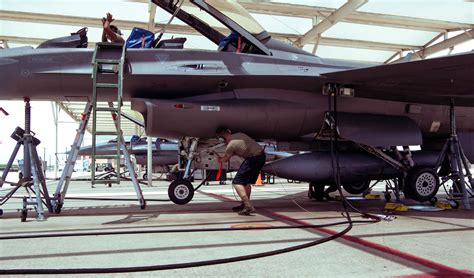
In the meantime, defense investors are turning more analytical, demanding battlefield validation rather than symbolic appearances. The India-Pakistan conflict, far from being a bullish catalyst for defense equities, has become a litmus test for modern combat readiness—and Lockheed Martin’s F-16, for now, finds itself on the defensive not only in the skies but also on Wall Street.