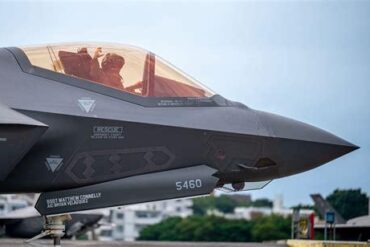
Lockheed Martin has made it clear during the 2025 Dubai Airshow that it will not be increasing F-35 Lightning II production, despite intense global demand and strategic pressure. The decision underscores a calculated approach aimed at safeguarding the integrity of the aircraft’s sprawling global supply chain.
Rising Demand Amid Controlled Production
The F-35 has become the most sought-after fifth-generation stealth fighter in the world, with over 1,200 aircraft already delivered and operational across 20 allied nations. The United States alone intends to purchase nearly 2,500 units, with 19 other countries integrating the jet into their air forces. Yet despite this hunger for expansion, Lockheed Martin currently maintains a production rate of approximately 13 jets per month, amounting to fewer than 160 aircraft annually.
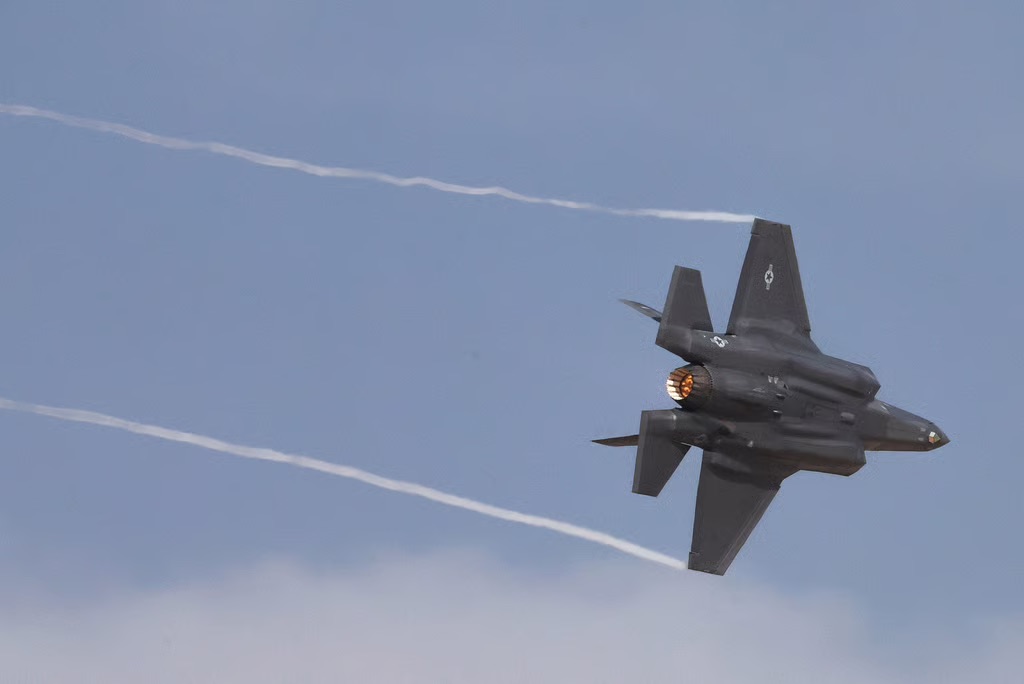
Speaking to the press at Dubai Airshow 2025, Steve Sheehy, Vice President of Aeronautics Strategy & Business Development at Lockheed Martin, confirmed that the company could, in theory, scale up production. However, doing so would jeopardize the stability of a global supply chain still recovering from the lingering disruptions of the COVID-19 pandemic. “The center fuselage is not a bottleneck any longer,” Sheehy emphasized. “It’s not just a single issue. We want to keep our suppliers at a steady rate.”
Fort Worth: The Epicenter of Assembly
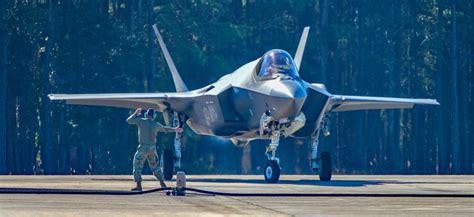
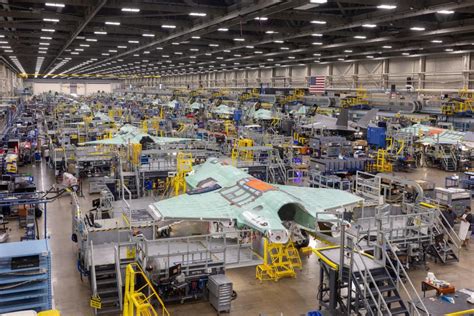
The heart of the F-35 production effort remains the legendary Fort Worth facility in Texas, known as the “Bomber Plant” since its days producing WWII-era B-24 Liberators. The massive mile-long plant is where Lockheed Martin completes final assembly and checkout operations. It is here that components shipped in from dozens of countries — including fuselage, tail, wing assemblies, and engines — converge into fully operational fifth-generation fighters.
The complex orchestration of part deliveries, engineering precision, and defense oversight leaves little room for sudden scaling. While production inefficiencies have largely been resolved, Lockheed Martin is opting for operational consistency over rapid acceleration.
A Unified Platform With Global Implications
The F-35 program is not just a procurement success story; it is a geopolitical and technological triumph. By creating a multi-role stealth fighter platform that serves the U.S. Air Force, Navy, Marines, and numerous allied forces under a single architecture, Lockheed Martin has enabled substantial cost savings and interoperability benefits.
This unified structure has made the F-35 the largest defense acquisition project in U.S. military history, with over 3,000 units expected to be built. Despite the cost and complexity, the program’s structure strengthens international defense cooperation and reduces logistical burdens, especially in theaters requiring multi-nation coordination.
International Assembly Hubs and Partnerships
Outside of the United States, key international partners contribute to F-35 production through specialized Final Assembly and Checkout (FACO) sites:
- Cameri, Italy: Managed by Leonardo Aerospace, this facility assembles F-35A and F-35B variants for Italy and the Netherlands.
- Nagoya, Japan: Run by Mitsubishi Heavy Industries, this plant is focused solely on building F-35As for the Japan Air Self-Defense Force.
Additional collaborations are being considered to extend the reach and resilience of the program’s supply chain. The U.S. Air Force is reportedly evaluating suppliers such as Rheinmetall in Germany to further diversify production inputs. However, strategic choices about expansion also come with political and diplomatic sensitivities.
Uncertainty Around Future Customers and Quantities
Though the F-35 remains a cornerstone of allied air power, not every potential buyer is locked in. Saudi Arabia is under consideration to become the 20th operator, a move that would have profound implications but remains politically delicate. Meanwhile, countries such as Canada and Switzerland are rumored to be reevaluating or possibly downsizing their procurement plans.
This mix of demand, uncertainty, and constrained production capacity creates a balancing act for Lockheed Martin. Even as calls grow louder for a production increase — especially from the U.S. Air Force, which is lobbying to boost its own yearly acquisition to 100 jets — the funding and infrastructure needed for such a move are not guaranteed.
Strategic Patience Over Expansion Pressure
In today’s high-stakes geopolitical climate, it might seem counterintuitive for a defense contractor to resist ramping up output of a flagship fighter. Yet Lockheed Martin’s measured strategy reflects a deeper commitment to long-term program sustainability, supplier health, and fleet readiness over short-term headline numbers.
With over 1,200 aircraft already operational and a clear roadmap to surpass 3,000 units, the F-35 program appears to be in a strong position — even if expansion is currently on pause. For now, the message from Lockheed Martin is clear: deliberate consistency beats disruptive acceleration.