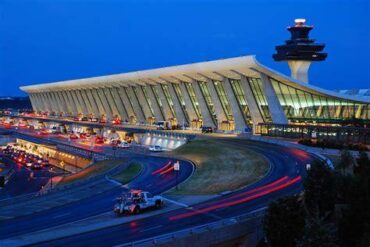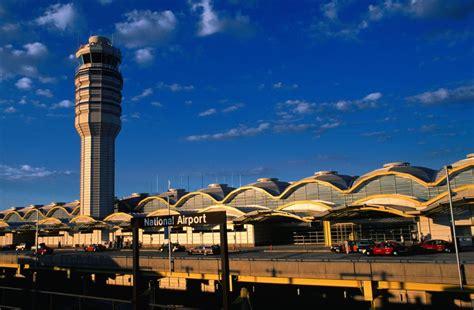
Washington, D.C., one of the most politically and symbolically significant cities in the United States, hosts three major airports: Washington Dulles International (IAD), Baltimore/Washington International Thurgood Marshall (BWI), and Ronald Reagan Washington National Airport (DCA). Among them, DCA is unique—not only in its location but in its heavily restricted operations. So why does United Airlines, which has its East Coast hub at Dulles, persist in maintaining flights into and out of the tightly regulated Reagan National Airport? The answer is far from simple, grounded in a web of federal policy, strategic positioning, competitive necessity, and historical precedent.
The Strategic Appeal of DCA’s Prime Location
Ronald Reagan Washington National Airport sits just across the Potomac River from downtown D.C. Unlike Dulles, which is located nearly 30 miles away in suburban Virginia, DCA offers travelers unbeatable convenience when it comes to accessing the capital’s core. For business travelers, lobbyists, and federal workers, proximity matters. The airport’s centrality makes it an indispensable gateway for high-priority routes.
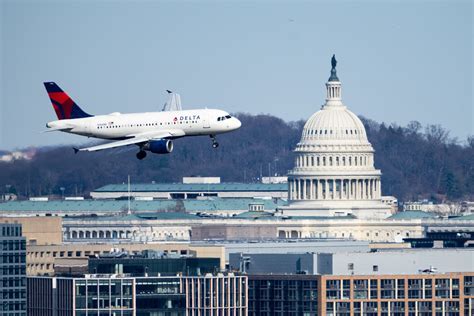
Despite the Department of Transportation’s restrictions—known as the “Perimeter Rule”, which limits most flights to destinations within 1,250 miles—airlines continue to covet even a sliver of presence at DCA. The airport operates under intense federal scrutiny, with slots—specific takeoff and landing rights—strictly regulated by the FAA. These slot restrictions have created a fiercely competitive market, where airlines are hesitant to give up even a single gate.
A Federal Legacy: How United Got Its Slots at DCA
United Airlines’ continued presence at DCA is not an anomaly—it’s the result of a long-standing arrangement tied to legacy air rights and policy decisions dating back decades. When airline deregulation was formalized in the 1970s and 1980s, major carriers like United were granted slot allocations based on their historical service. These slots, in effect, became part of the airline’s capital—a limited, transferrable asset that retains immense value over time.
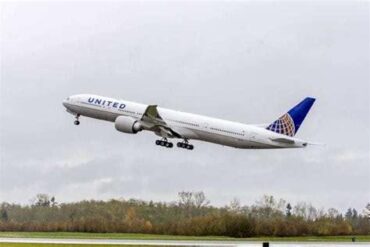
United’s operations at DCA have traditionally focused on shuttle-style service to high-traffic business hubs. Cities like Chicago O’Hare, Newark, and Houston form the backbone of its network at Reagan National, reflecting both demand and strategic business logic. Even though Dulles serves as its primary hub for international and domestic transfers, DCA allows United to retain a symbolic and practical foothold in the power center of U.S. governance.
Why Not Just Consolidate at Dulles?
At first glance, the argument for consolidation might seem sound. United Airlines dominates at Dulles (IAD), which provides ample runway capacity, less congestion, and expansive facilities. However, business air travel doesn’t function on pure logistics. It functions on time sensitivity, convenience, and market share visibility.
Travelers flying into Washington for congressional meetings, court dates, or federal hearings want to land as close as possible to Capitol Hill. A 45-minute Uber ride from Dulles simply doesn’t compare to a 10-minute Metro ride from DCA. By maintaining even a limited schedule at Reagan National, United remains in the conversation for premium business travelers—many of whom are loyal to status benefits and route familiarity.
Moreover, a complete retreat from DCA would be a strategic error. Ceding all slots to competitors like American Airlines, which currently dominates the airport, would skew market dynamics permanently. Once relinquished, DCA slots are exceedingly hard to regain. United’s strategy reflects long-term brand positioning, not just immediate profit margins.
Political and Regulatory Factors at Play
Reagan National is an airport unlike any other in America. Its close proximity to federal buildings places it under special security and legislative constraints, many of which are directly influenced by Congressional input. Over the years, lawmakers have intervened in DCA slot allocations to add or preserve service to underserved or politically important destinations.
This has led to the occasional allocation of what are known as “beyond-perimeter” exemptions, which allow flights to cities outside the standard 1,250-mile limit. These highly coveted exemptions are often awarded through political lobbying or legislative fiat, and United has managed to secure and retain several over the years.
What this means in practice is that United’s presence at DCA is as much about maintaining a seat at the federal aviation policy table as it is about actual passenger loads. These flights ensure that United remains part of the broader dialogue about U.S. aviation regulation and infrastructure investment.
Operational Challenges of Serving DCA
Flying into and out of DCA isn’t easy. The airport’s location amid restricted airspace and its shorter runways pose unique operational hurdles. Pilots must execute the River Visual Approach, a tightly curved flight path that follows the Potomac River—a maneuver that requires both skill and favorable weather conditions.
Aircraft options are similarly constrained. Long-haul widebody jets are unsuitable for DCA’s runways and security protocols. This forces United to rely on a fleet of narrow-body aircraft and regional jets, limiting passenger capacity and onboard amenities.
Yet despite these limitations, load factors remain strong. Routes like DCA to Chicago O’Hare consistently fill seats, proving that demand exists even for suboptimal flying conditions. In fact, the challenging nature of the airport itself becomes a competitive moat, filtering out low-cost carriers and preserving the prestige of legacy brands like United.
The Competitive Landscape at Reagan National
American Airlines is the clear leader at DCA, operating more than 50% of all flights. For United, this poses a strategic conundrum: how to remain competitive in a fortress dominated by a rival? The answer lies in precision and focus.
United doesn’t try to replicate American’s vast DCA network. Instead, it zeroes in on routes that serve high-yield clientele, concentrating its efforts on sectors with a business travel edge. These include:
- DCA to Chicago O’Hare (ORD)
- DCA to Newark (EWR)
- DCA to Houston Intercontinental (IAH)
These connections allow United to plug into its hub network while serving the most politically connected city in the country. Additionally, these routes are generally timed for maximum convenience, with early morning departures and late evening returns.
Brand Equity and Political Optics
Another subtle but potent reason United maintains its DCA presence is brand optics. Flying into Reagan National signals that the airline is a national player with access to elite travelers. It reinforces the image of United as a cornerstone of U.S. aviation—a company intertwined with the federal apparatus.
The airline also benefits from Washington visibility in media and political circles. Whether it’s ferrying senators back to their home states or enabling last-minute trips for cabinet officials, United’s flights to DCA ensure it remains a visible and valued partner in federal mobility.
And let’s not forget the lobbying aspect. United’s ongoing engagement with policymakers on issues such as aviation emissions standards, pilot training rules, and airport infrastructure funding is made far more credible by its direct service to the capital. Presence translates to access, and access translates to influence.
The Future of United at Reagan National
United’s continued operations at DCA are unlikely to expand dramatically. Slot constraints and infrastructural limitations mean that the airport will remain a tightly wound coil of elite, restricted access. But that’s exactly what makes it valuable.
In the years ahead, United may lobby for more perimeter exemptions or enhanced slot swaps, particularly if travel demand patterns shift due to geopolitical or economic changes. However, the core objective will remain the same: preserve visibility, serve key markets, and maintain influence.
There is no better symbol of United’s strategic foresight than its measured but firm footprint at Reagan National. In a market dictated as much by symbolism as by spreadsheets, flying to DCA is about much more than moving passengers—it’s about securing a permanent place in America’s political and economic engine room.