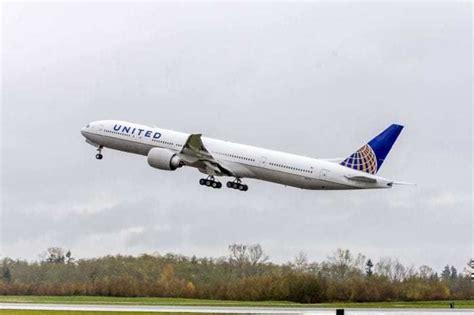
United Airlines is executing a significant shift in its domestic network strategy, reducing widebody operations across the United States by a striking 26% year-over-year. For an airline long known for deploying twin-aisle aircraft on high-demand domestic trunk routes, the move signals more than a seasonal adjustment—it reflects a deeper structural change driven by fleet realities, engine supply constraints, and long-term operational priorities.
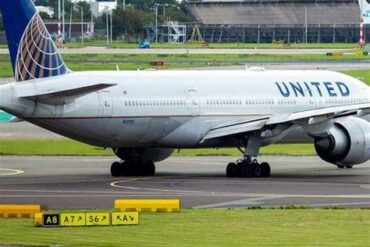
For decades, United has leaned on widebody aircraft to move large volumes of passengers between major hubs such as Chicago O’Hare, Denver, and San Francisco. These aircraft, particularly the Boeing 777-200, offered unmatched capacity and premium cabin comfort on busy routes and transcontinental services. But as 2026 unfolds, that strategy is rapidly evolving, and the data reveals a decisive pivot away from domestic widebody flying.
A Sharp Contraction in Domestic Widebody Capacity
The scale of United’s reduction becomes clear when examining schedule data for the peak summer quarter. Compared to the same period last year, the airline is operating nearly 1,400 fewer domestic widebody flights—a 26% decline that reshapes the landscape of U.S. air travel.
This contraction is not evenly distributed across the fleet. While aircraft such as the Boeing 787 Dreamliner and 777-300ER remain largely committed to international routes, the burden of domestic operations has historically fallen on the Boeing 777-200. That reliance is now unraveling.
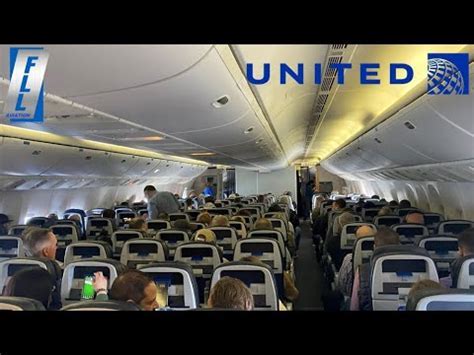
The numbers tell a compelling story. The 777-200 alone accounts for the overwhelming majority of the reduction, with a steep 36% drop in flights. In contrast, other widebody types show only marginal changes, reinforcing the idea that this is less about overall demand and more about the limitations of a specific aircraft sub-fleet.
United’s domestic widebody network was never about variety—it was about scale. And as that scale diminishes, so too does the airline’s ability to deploy high-capacity aircraft on short- and medium-haul routes.
The Aging 777-200 Fleet Takes Center Stage
At the heart of this shift lies a fleet that is, quite simply, getting old. United’s Boeing 777-200 aircraft have an average age approaching 27 years, with some frames now well into their fourth decade of service. While age alone does not ground an aircraft, it does introduce mounting maintenance challenges—and in this case, a critical bottleneck tied to engine availability.
Unlike newer widebodies, these aircraft are powered by Pratt & Whitney PW4000 engines, a once-popular powerplant that has become increasingly rare in today’s global fleet. Only a small fraction of Boeing 777 aircraft worldwide use this engine variant, leaving United with limited options for sourcing spare parts and replacement engines.
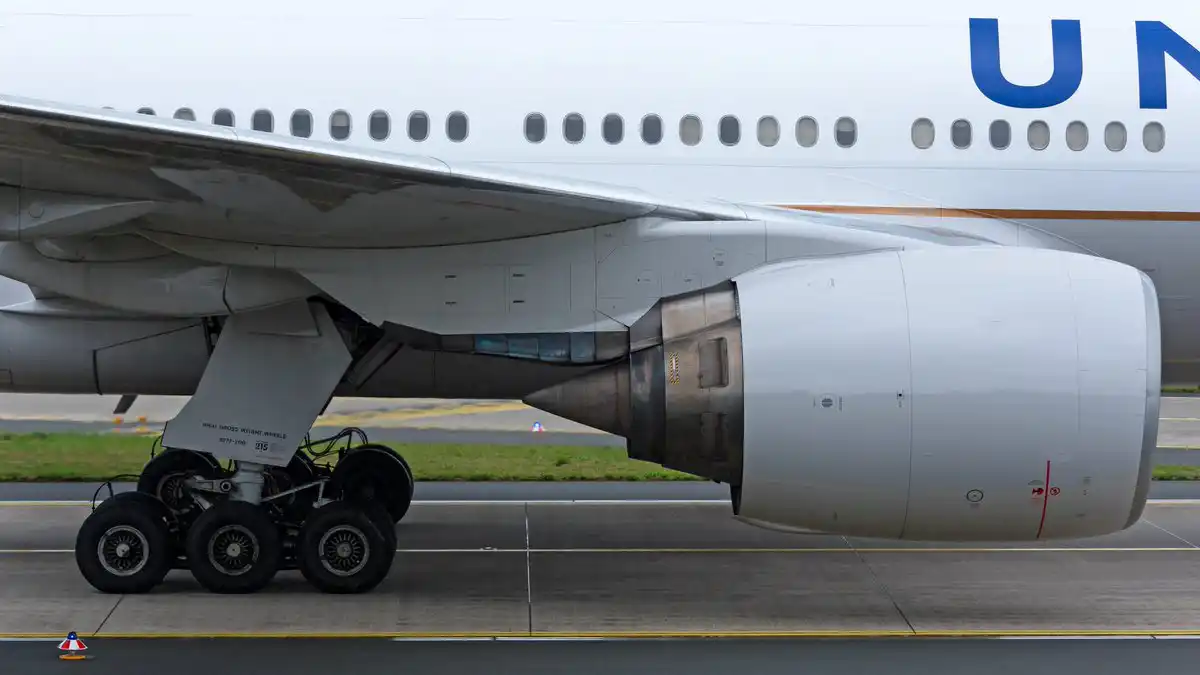
This scarcity is not theoretical—it is operationally decisive. With fewer suppliers, dwindling inventories, and minimal third-party support, maintaining the PW4000-powered fleet has become a logistical challenge. The result is a growing number of grounded aircraft, not due to immediate retirement decisions, but because keeping them airworthy has become impractical.
Aircraft Storage and Strategic Cannibalization
Faced with these constraints, United has taken the pragmatic step of parking a significant portion of its 777-200 fleet. At Victorville Airport in Southern California, a well-known aircraft storage facility, multiple United widebodies now sit idle under the desert sun.
Of the 23 high-density 777-200 aircraft configured for domestic service, nearly half have already been removed from active duty. Officially, these aircraft are classified as “stored,” leaving the door open for a potential return. In reality, the outlook is far less optimistic.
The more likely scenario is that these aircraft will serve as parts donors, sustaining the remaining fleet for as long as possible. This practice, known as cannibalization, is a common—if unglamorous—solution in aviation, allowing airlines to extract maximum value from aging assets while bridging the gap to newer deliveries.
And those replacements are on the horizon. United continues to take delivery of Boeing 787 Dreamliners, which offer superior fuel efficiency, lower maintenance costs, and greater operational flexibility. But until those aircraft arrive in sufficient numbers, the airline must carefully manage a shrinking pool of usable widebodies.
Key Domestic Routes Feel the Impact
For passengers, the consequences of this fleet shift are tangible. Several high-profile domestic routes are experiencing a sharp reduction—or complete elimination—of widebody service.
Among the most affected are connections from San Francisco and Denver, two of United’s most important hubs. Routes such as San Francisco to Chicago and San Francisco to Denver, once staples of widebody deployment, are losing hundreds of flights and, in some cases, all twin-aisle service altogether.
Hawaii routes are also undergoing a notable transformation. The popular San Francisco to Honolulu corridor, which previously supported multiple daily widebody flights, is being scaled back to a single 777-200 rotation. Other Hawaiian destinations, including Kahului and Kona, are seeing widebody aircraft disappear entirely.
Even where widebodies remain, their presence is becoming the exception rather than the rule. The era of frequent domestic widebody travel—once a hallmark of United’s network—is quietly fading.
Narrowbodies Step In to Fill the Gap
Despite the reduction in widebody flights, United is not shrinking overall capacity. Instead, it is recalibrating how that capacity is delivered. Narrowbody aircraft such as the Boeing 737 MAX 9, Airbus A321neo, and Boeing 757-300 are stepping in to replace the larger jets.
This shift reflects a broader industry trend toward higher-frequency service with smaller aircraft. By increasing the number of flights while reducing aircraft size, airlines can maintain—or even grow—seat capacity while improving scheduling flexibility and operational efficiency.
For example, a route losing widebody service may see more frequent departures using narrowbody aircraft, resulting in a net increase in available seats. From a network planning perspective, it is a smart trade-off.
From a passenger experience standpoint, however, the transition is more nuanced. Widebodies offer features that narrowbodies struggle to replicate, including larger cabins, smoother rides, and premium amenities such as lie-flat business class seats on transcontinental routes. Their absence will be felt most acutely on overnight flights and long domestic sectors.
Fuel Costs and Operational Economics Play a Supporting Role
While engine availability is the primary driver behind United’s decision, rising fuel costs add another layer of complexity. Widebody aircraft, particularly older models like the 777-200, are less fuel-efficient than their modern counterparts. In an environment of elevated fuel prices, operating these jets on domestic routes becomes increasingly difficult to justify.
This economic reality reinforces the shift toward newer, more efficient aircraft. The Boeing 787, for instance, consumes significantly less fuel per seat while offering comparable range and improved passenger comfort. As more of these aircraft enter the fleet, they will gradually replace older widebodies on both domestic and international routes.
The Beginning of the End for Domestic Widebodies
Taken together, these developments point to a clear conclusion: United Airlines is entering the final chapter of its domestic widebody era. The combination of aging aircraft, limited engine support, and evolving economic conditions is accelerating a transition that has been years in the making.
The Boeing 777-200, once the backbone of United’s domestic high-capacity network, is steadily receding from view. In its place, a new generation of aircraft—and a new operational philosophy—is taking hold.
For travelers, the skies may look the same, but the experience is changing. The wide aisles, spacious cabins, and long-haul comfort of domestic widebody flights are becoming rarer, replaced by a more efficient, frequency-driven model.
And while that model makes undeniable sense from a business perspective, it marks the end of a distinctive chapter in U.S. aviation—one where crossing the country often felt just a little bit like crossing an ocean.