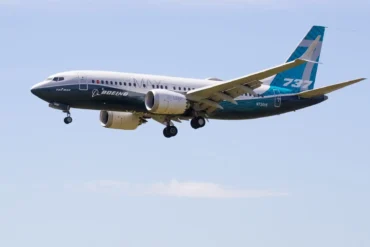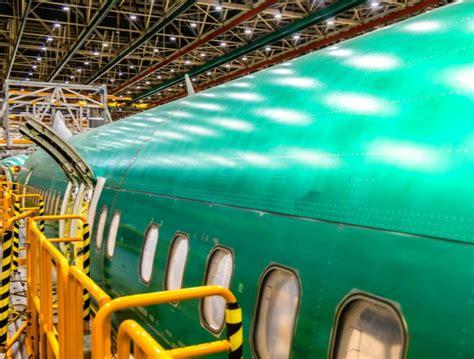
The Federal Aviation Administration (FAA) has reaffirmed its decision to cap Boeing’s monthly production of the 737 MAX at 38 aircraft, a ceiling imposed after a troubling safety incident in early 2024. This move, made in the interest of public safety and manufacturing integrity, sends a clear message: Boeing’s production growth will remain on hold until deep-rooted quality assurance issues are addressed.
FAA’s Production Cap: A Measure Born of Crisis
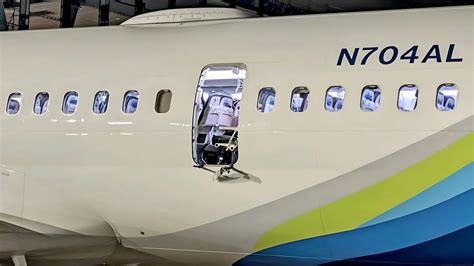
The decision to enforce a production limit did not arise in isolation. In January 2024, an Alaska Airlines 737 MAX 9 experienced a terrifying in-flight incident when a door plug component detached mid-air. The event, while not fatal, reignited widespread concerns about the aircraft’s safety — concerns that had already been simmering since the tragic 2018 and 2019 crashes that claimed 346 lives and led to a global grounding of the entire 737 MAX fleet.
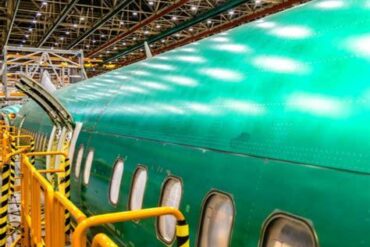
In response to the Alaska Airlines scare, the FAA initiated a sweeping audit of Boeing’s production lines and its key supplier, Spirit AeroSystems, based in Wichita, Kansas. The results were damning. In March 2024, inspectors found multiple non-compliance violations, ranging from incomplete quality checks to poor documentation protocols. These findings prompted the FAA to restrict Boeing’s production output, effectively stalling its ambitions to ramp up manufacturing.
FAA Administrator Mike Whitaker has reiterated that the cap will remain in place until Boeing demonstrates sustained improvement. Speaking in May 2025, Whitaker clarified that Boeing had not yet met the necessary benchmarks to consider lifting the cap. Instead, weekly FAA reviews continue to scrutinize Boeing’s internal KPIs — especially those tied to safety and quality controls.
Boeing’s Troubled Path to Compliance
Facing intensified regulatory pressure, Boeing responded by introducing a comprehensive action plan in May 2024. This roadmap centered around three pillars: enhanced employee training, rigorous defect elimination protocols, and fostering a safety-first culture. Despite these measures, the path to redemption has proven anything but smooth.
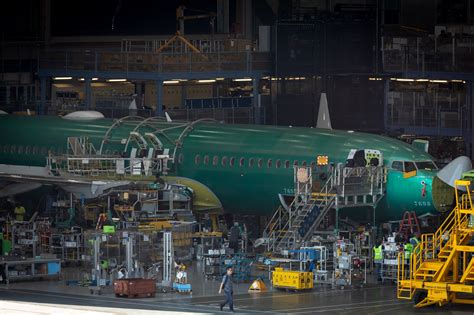
By May 2025, Boeing managed to hit the 38-jet-per-month target for the first time since the pandemic-disrupted year of 2020 — a symbolic achievement, albeit within the imposed limit. However, external shocks have repeatedly disrupted progress. A 53-day labor strike in 2024 brought production lines to a standstill, while lingering supply chain snarls and logistical bottlenecks have further stymied output.
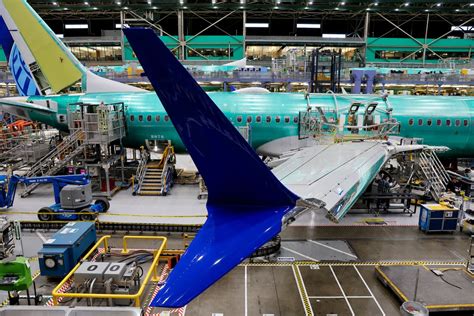
One persistent issue Boeing has grappled with is the phenomenon known as “traveled work” — the process of passing incomplete tasks from one production stage to the next. In April 2024, this practice contributed to production plummeting to single-digit output levels, severely impacting delivery timelines and escalating backlogs.
Strategic Rebuild: Boeing’s Recovery Blueprint
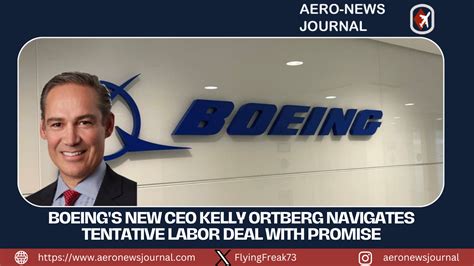
Under the leadership of CEO Kelly Ortberg, Boeing has taken a deliberately cautious stance. Ortberg, who took the helm amid a cloud of regulatory scrutiny, has prioritized quality over quantity. His public remarks have consistently stressed that rebuilding Boeing’s credibility takes precedence over rapid market reentry.
The company has set ambitious internal targets to increase monthly production to 42 jets by mid-2025 and 47 by the end of the year, but each of these milestones is contingent on FAA approval. Any lapse in quality assurance could derail these plans. Ortberg has also committed to dismantling the company’s “shadow factory” — a secondary facility where flawed aircraft undergo rework — by mid-2025. Eliminating this stopgap is central to Boeing’s broader plan to return to streamlined, first-pass manufacturing excellence.
As of April 2025, Boeing had delivered 133 737 MAX aircraft, but the company still faces a backlog of nearly 100 undelivered planes, many of which await post-production rectification. This underscores both the scale of Boeing’s current challenges and the logistical tightrope it must walk to maintain profitability without compromising safety.
FAA Oversight: A New Era of Stringent Supervision
The FAA’s approach to Boeing represents a broader philosophical shift. No longer content with reactive enforcement, the agency has adopted a proactive auditing regimen. Teams are now embedded within Boeing’s facilities, conducting real-time compliance checks, interviewing floor-level technicians, and even considering the implementation of independent third-party reviews.
FAA Administrator Whitaker has described Boeing’s road to recovery as a long-term process. During a recent Senate hearing, he stressed that “a return to normal production rates is not just a matter of time — it’s a matter of trust.” Trust that, for many within the regulatory community and public alike, remains severely eroded.
FAA has demanded not only adherence to existing protocols but also structural reforms to Boeing’s corporate culture. This includes greater whistleblower protections, mandatory incident reporting enhancements, and independent oversight mechanisms to ensure continuous improvement.
Industry Implications: The Ripple Effects
The 737 MAX remains Boeing’s most commercially vital product, accounting for the bulk of its commercial aircraft backlog. Any restriction on its output has direct consequences for global carriers, many of whom are depending on timely deliveries to fulfill fleet expansion and replacement plans.
Airlines such as Southwest, United, Ryanair, and Alaska Airlines — all major customers of the 737 MAX — have had to revise route schedules, delay launches, and adjust growth projections due to delivery delays. Financial analysts predict that Boeing’s prolonged production bottleneck could shift up to $15 billion in forecasted revenue across fiscal quarters.
Meanwhile, Airbus, Boeing’s primary competitor, continues to ramp up its production of the A320neo family, threatening to widen the market gap. For Boeing, regaining competitive equilibrium depends on not just regulatory approval, but also public perception.
The Road Ahead: From Cap to Confidence
Looking forward, Boeing’s production ambitions hinge on a delicate dance between regulatory compliance and operational competence. Even with internal reforms gaining traction, any future misstep — whether mechanical, procedural, or cultural — could lead to further sanctions.
To its credit, Boeing has made visible progress in restoring a safety-centric ethos. However, meeting the FAA’s weekly benchmarks is only one facet of recovery. The market’s confidence, shaped by airline executives, passengers, investors, and policymakers, is the true barometer of success.
For now, the 38-aircraft ceiling remains a symbolic and practical boundary — not merely a cap on output but a cap on Boeing’s credibility. Until that ceiling is lifted, Boeing’s journey from controversy to compliance remains unfinished, measured not in jets delivered, but in trust rebuilt.