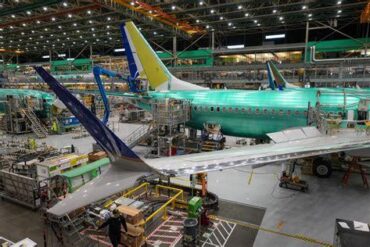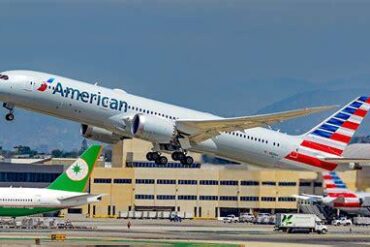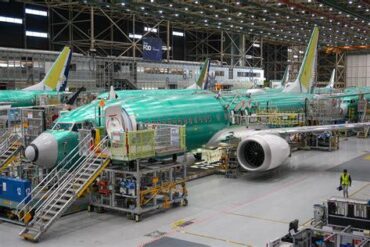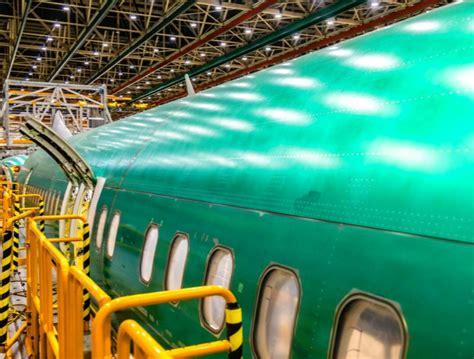
After nearly two years of regulatory limits following a harrowing midair incident, the Federal Aviation Administration (FAA) has granted Boeing permission to raise production of its troubled yet commercially vital 737 Max aircraft line. This marks a significant step forward for the aerospace giant, though the approval comes shadowed by years of controversy, tragedies, and lingering public skepticism.
FAA Relaxes Production Cap Following 2024 Incident Review
The FAA’s decision to allow Boeing to increase 737 Max output to 42 planes per month—up from the previous cap of 38—comes after extensive inspections of the manufacturer’s production facilities. The move follows a safety-critical event in January 2024, when a door plug on an Alaska Airlines 737 Max 9 detached mid-flight shortly after takeoff from Portland, Oregon. Although the aircraft landed safely and no injuries occurred, the incident thrust Boeing back into the spotlight for manufacturing oversights. Investigations by the National Transportation Safety Board (NTSB) revealed that critical bolts had not been reinstalled during final assembly—an oversight that reignited concerns over Boeing’s internal quality controls.
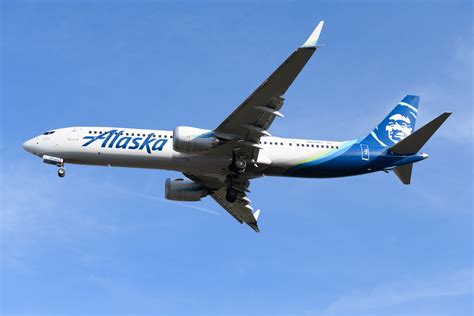
Despite the FAA’s go-ahead, officials clarified that heightened federal oversight will continue. “FAA safety inspectors conducted extensive reviews of Boeing’s production lines to ensure that this small production rate increase will be done safely,” the agency emphasized.
Boeing’s Turnaround Strategy Hinges on Production Ramp-Up
For Boeing, increasing 737 Max production is not just a matter of operational recovery—it is central to its financial survival. The company has not posted a full-year profit since 2018, reeling from a chain of compounding disruptions: the 737 Max global grounding following two fatal crashes, the COVID-19 pandemic, supply chain breakdowns, and a major labor strike.
CEO Kelly Ortberg, who took the helm in 2024 with a mandate to stabilize the company, outlined a methodical growth trajectory. “We’ll go from 42 and then we’ll go up another five, and we’ll go up another five,” Ortberg stated during a Morgan Stanley investor conference. His vision targets a production cadence of 47 aircraft per month, aligning output with supplier capacity and long-term demand.
Boeing also expressed gratitude to its partners and the FAA: “We appreciate the work by our team, our suppliers and the FAA to ensure we are prepared to increase production with safety and quality at the forefront.”
FAA Signals Shift in Oversight Philosophy
This production increase reflects not only operational progress at Boeing but also a softening stance from the FAA. The agency had previously stripped Boeing of the authority to self-certify many aspects of aircraft delivery. However, in September 2025, it announced that Boeing would regain limited self-certification privileges—a move interpreted by many as a sign of restored institutional confidence.
Still, the FAA has made clear that trust is not absolute. The agency continues to stress its ongoing presence on production floors and remains cautious in public statements, underscoring that oversight will remain stringent, especially during the early phases of Boeing’s production ramp-up.
Public Trust Remains Fragile
Despite institutional signs of confidence, public perception of the 737 Max remains deeply fractured. The aircraft model has become infamous due to two catastrophic crashes in 2018 (Lion Air) and 2019 (Ethiopian Airlines) that claimed a total of 346 lives. These events led to a global grounding of the 737 Max for nearly two years, during which time Boeing faced lawsuits, federal scrutiny, and the dismissal of several top executives.
While the company and regulators have implemented extensive design and training overhauls since then, passenger skepticism lingers. Online travel platforms now allow users to filter out 737 Max flights, and some customers actively avoid the aircraft despite airline reassurances. The plane’s tainted legacy has been a persistent obstacle for Boeing’s brand rehabilitation efforts.
Notably, Airbus’s A320neo family—the Max’s primary competitor—has overtaken the 737 Max in total sales, a clear signal of shifting airline preferences and public sentiment. However, industry analysts point out that Boeing still commands significant backlog strength, with over 6,000 aircraft on order, representing more than $620 billion in revenue. Much of this inventory was sold well before the Max’s crises, giving Boeing a cushion of demand even as it fights to restore confidence.
Airlines Weigh Risk Against Operational Necessity
While a subset of travelers remains wary, airlines continue to place substantial bets on the 737 Max. For many carriers, the aircraft’s fuel efficiency, seating capacity, and operational economics are too compelling to ignore. Furthermore, many fleets already contain dozens of Max aircraft, making a shift to an alternative model both financially and logistically complex.
Critics argue that this creates a troubling dynamic where “money over safety” prevails, while defenders suggest that engineering changes and regulatory vigilance have made the 737 Max safer than ever before. The FAA’s methodical return-to-service protocol and international oversight from agencies like EASA and Transport Canada lend credence to the latter perspective.
Yet, controversy reignites each time Boeing stumbles. The door plug incident this year reminded the public and regulators alike that manufacturing flaws—not just software issues—remain a threat. For Boeing to truly regain public trust, it must demonstrate sustained excellence across design, production, and communication.
Production Efficiency vs. Quality Control: The Balancing Act
One of the ongoing challenges for Boeing lies in balancing production speed with quality assurance. The faster the company builds, the more it must rely on complex supply chains, human factors, and automated systems to maintain standards. Any lapse—whether in component quality, oversight, or process documentation—can have catastrophic outcomes.
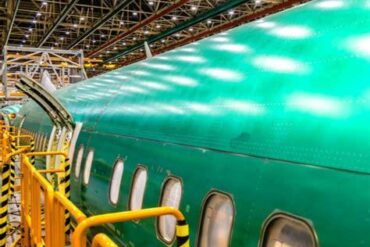
Boeing has stated that it will work closely with suppliers to synchronize the production ramp-up, ensuring that each link in the chain is capable, trained, and compliant with stringent protocols. This includes retraining staff, investing in automated inspection systems, and enhancing traceability and documentation procedures.
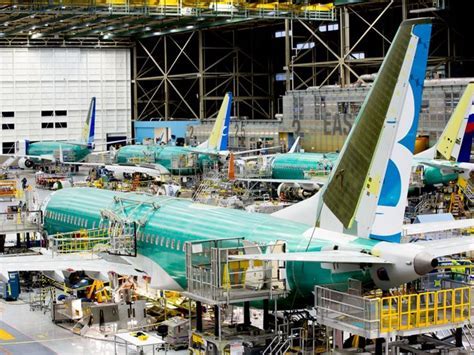
The company’s internal transformation includes increased use of digital twins, lean manufacturing, and real-time monitoring across factory operations. These strategies are intended not only to boost productivity but to flag anomalies before they translate into defects or flight risks.
Political and Economic Underpinnings
There is also a political dimension to the FAA’s recent move. During the previous crises, Boeing was deemed “too big to fail,” with former President Donald Trump supporting bailouts and defense contracts to sustain the aerospace and defense sectors. Given Boeing’s enormous footprint in U.S. exports and defense, any severe downturn would ripple across the national economy.
Critics now suggest that the FAA’s latest approval could be politically influenced, especially given the ongoing government funding instability. Skeptics point out that the FAA itself has faced budget constraints, staffing shortfalls, and policy turnover—raising concerns about the robustness of its current oversight.
Still, for supporters, the move reflects a data-driven, recovery-oriented posture aimed at revitalizing American aviation manufacturing. Boeing’s workforce, spread across key U.S. regions, represents not only economic output but thousands of jobs tied to high-tech skills and advanced engineering.
Looking Forward: Boeing’s Next Test
As Boeing moves forward with its production ramp-up, it will face a series of high-stakes tests—both literal and symbolic. These include:
- Demonstrating flawless delivery of each aircraft, with zero tolerance for oversight lapses.
- Rebuilding traveler confidence through transparency and airline partnership.
- Maintaining regulatory compliance not only domestically but with international aviation bodies.
- Keeping supplier networks stable amid ongoing global disruptions.
Ultimately, Boeing’s capacity to reclaim its leadership status in the commercial aerospace sector depends not just on numbers, but on trust, safety, and performance. The FAA’s decision to permit increased production is a green light—but not a blank check.