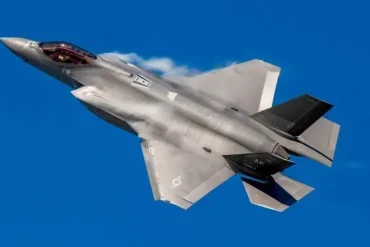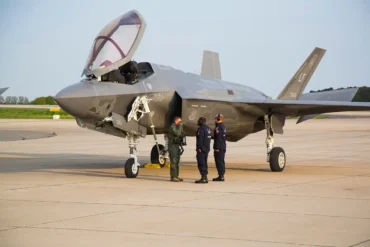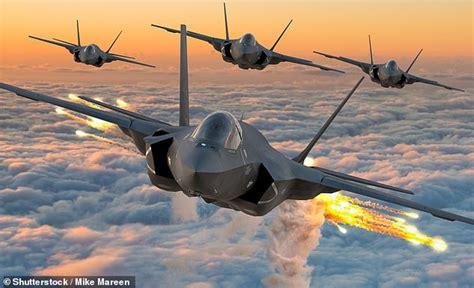
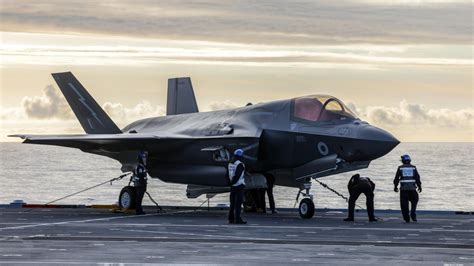
Germany’s decision to expand its F-35 fleet by ordering 15 additional units, bringing the total to 50, reflects a striking shift in defense priorities amid escalating regional threats and long-term strategic tensions. The announcement follows months of controversy over the alleged existence of a “kill switch” in the F-35 Lightning II, a claim made earlier by several European nations, including Germany itself. Though the allegation was strongly refuted by Lockheed Martin and remains unproven, the German Ministry of Defense now appears more focused on bolstering the Luftwaffe’s operational readiness in light of Russian military activity.
A Strategic Turn: From Critic to Consumer
The apparent contradiction in Germany’s stance—criticizing the F-35 earlier in the year, then seeking more of the same jets—can be explained by the intensifying geopolitical pressure on Berlin. Chancellor Friedrich Merz, navigating both domestic defense expectations and broader NATO commitments, appears to have prioritized immediate capability over idealistic reservations. This move reflects not just a procurement decision, but a recalibration of national defense policy.
At the heart of this shift lies Russia. The ongoing conflict in Ukraine, Moscow’s increasingly aggressive posturing, and NATO’s call for greater European contributions to collective defense have pushed Berlin toward rapid modernization. Germany’s legacy Tornado fleet, aging and increasingly obsolete, lacks the stealth and multirole performance demanded in today’s contested airspaces.
The F-35, for all its political baggage, remains unmatched in versatility, survivability, and combat intelligence. With stealth characteristics, superior electronic warfare capabilities, and the ability to integrate seamlessly with NATO’s operational architecture, it presents a solution that European alternatives—like the yet-to-be-fielded FCAS—simply cannot match in the near term.
The ‘Kill Switch’ Debate: Lingering Doubts
Earlier this year, German, Swiss, and French officials expressed alarm over the possibility that the U.S. could disable sensitive systems on the F-35 remotely—a scenario known as the “kill switch.” Such a capability, if it exists, would allow Washington to assert indirect control over foreign-operated jets, challenging the sovereignty of allied nations.
Lockheed Martin dismissed the allegations as unfounded conspiracy, and no evidence has been presented publicly. Still, the very persistence of the claim, particularly among countries advocating for European strategic autonomy, shows a deep-seated mistrust that continues to shadow the program.
Tornado Replacement and NATO’s Nuclear Sharing Doctrine
Germany’s order of additional F-35s is not merely symbolic—it has tactical and strategic implications. The aircraft will replace the Tornado fleet’s nuclear delivery role under NATO’s nuclear sharing arrangements. Germany is one of five NATO members that host U.S. nuclear weapons on its soil and has pledged to maintain delivery capabilities as part of the alliance’s deterrence posture.
The F-35A’s compatibility with the B61-12 nuclear bomb, enhanced targeting sensors, and stealth approach make it ideal for this mission. It fulfills Germany’s obligations while simultaneously boosting its ability to conduct precision conventional strikes, suppress enemy air defenses, and collect real-time battlefield intelligence.
Europe’s Sixth-Gen Ambition: Will FCAS Survive?
The elephant in the room is Europe’s Future Combat Air System (FCAS), a joint project between Germany, France, and Spain, envisioned to deliver a sixth-generation fighter by 2040. FCAS is intended to be the centerpiece of Europe’s independent defense capability, with Dassault and Airbus as lead manufacturers. However, the program has suffered repeated delays due to industrial disputes, particularly over intellectual property and workshare.
By doubling down on the F-35, Germany risks diverting financial and political capital away from FCAS, possibly weakening the European initiative. French officials have expressed concern over Berlin’s commitment, especially given the growing reliance on American defense tech.
Nonetheless, Chancellor Merz insists that the F-35 is a “bridging solution,” filling a critical operational gap until FCAS becomes viable. His administration argues that Germany can remain invested in both—ensuring short-term readiness while developing long-term autonomy.
Technical Superiority: What Makes the F-35 Irresistible
The F-35’s appeal lies in its leap-ahead technology. As a fifth-generation fighter, it incorporates stealth geometry, internal weapons bays, and radar-absorbing coatings that allow it to operate undetected in hostile environments. The AN/APG-81 AESA radar, paired with the Distributed Aperture System (DAS) and Electro-Optical Targeting System (EOTS), gives pilots full situational awareness and long-range targeting ability.
This data is processed through the jet’s fusion engine, providing an integrated battlespace picture and the ability to relay it to allied assets in real time. The result: a force multiplier that enhances not only its own lethality but the effectiveness of entire NATO squadrons.
The Variants: One Design, Multiple Roles
The F-35 platform includes three primary variants, tailored for different operating environments:
- F-35A: Conventional takeoff and landing. Operated by air forces including Germany, Poland, and Australia.
- F-35B: Short takeoff/vertical landing. Designed for expeditionary use, including by the UK and U.S. Marines.
- F-35C: Carrier-based, with reinforced gear and larger wings for naval aviation.
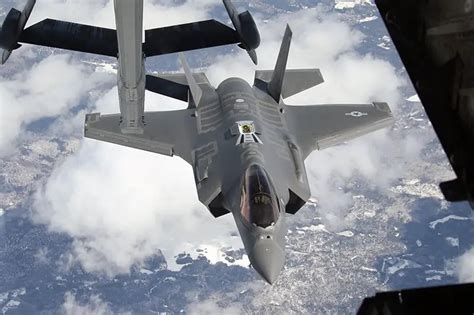
Germany will operate the F-35A variant, which includes a 25mm internal cannon, nuclear capability, and advanced multirole flexibility.
Future-Proofing: The Block 4 Upgrade Path
Germany’s jets will benefit from the upcoming Block 4 software and hardware upgrades, significantly expanding mission profiles. These include:
- Enhanced radar performance (APG-85)
- Integration of new weapons (SDB II, SiAW, B61-12)
- Advanced electronic warfare features
- Improved pilot interface and cockpit display
These upgrades ensure the F-35 remains combat-relevant for decades, capable of adapting to future conflict environments that include drone swarms, anti-access/area denial zones, and cyber-electronic warfare.
Industrial Footprint and Logistical Support
Though criticized for its cost, the F-35 program is underpinned by a robust industrial base, including maintenance hubs and logistics centers across Europe. Germany, by expanding its order, is likely to gain greater influence within the program’s European framework, potentially securing domestic maintenance contracts and supply chain roles.
Lockheed Martin’s next-generation support system, ODIN (Operational Data Integrated Network), replaces the flawed ALIS platform, offering real-time diagnostics and predictive maintenance to maximize fleet availability. While challenges remain, the logistical ecosystem surrounding the F-35 is more mature and scalable than that of any rival system.
Political Ramifications: European Autonomy vs. Transatlantic Dependence
The F-35 order deepens Germany’s strategic alignment with the United States, reinforcing NATO’s integrated force posture. However, it also risks reigniting debates over European dependency on U.S. defense technology—a long-standing concern in Paris and Brussels.
French President Emmanuel Macron has called for a “more sovereign Europe,” capable of projecting force and securing its interests independently. The FCAS project was born of that vision, and Berlin’s commitment is seen as crucial. Continued collaboration, including diplomatic coordination at the July 2025 Merz-Macron summit, will be essential in preventing a fracture in Europe’s defense vision.
Conclusion: A Calculated Gamble or Strategic Necessity?
Germany’s expanded F-35 order is more than a procurement headline—it is a strategic inflection point. Faced with an increasingly volatile security environment, Berlin has chosen immediate capability over idealism, embracing the controversial yet proven F-35 platform despite its earlier skepticism.
Whether this gamble will pay off hinges on two outcomes: the F-35’s sustained performance and Germany’s ability to simultaneously nurture FCAS. For now, Berlin is betting that stealth, speed, and interoperability are worth the price—and the political tension.
In doing so, Germany signals that defense readiness and alliance credibility cannot wait for perfect solutions. They require action, even when the tools come wrapped in contradiction.