In the shadows of American nuclear history lies a largely forgotten catastrophe that rivals—if not surpasses—the likes of Three Mile Island in scale and consequence. The Santa Susana Field Laboratory (SSFL) meltdown of 1959, just miles from Los Angeles, remains shrouded in decades of secrecy, bureaucratic neglect, and environmental ambiguity. This event, though obscured from the public eye for 20 years, arguably marks the worst nuclear disaster in U.S. history, releasing radiation up to 300 times greater than the more widely known Three Mile Island incident.
A Reactor Meltdown Hidden in Plain Sight
In the heat of a California summer, July 13, 1959, technicians at SSFL’s Area IV noticed alarming temperature spikes in the Sodium Reactor Experiment. Desperate to prevent catastrophe, they initiated emergency procedures: slamming control rods into the core and venting radioactive gas into the environment. Despite these measures, they unknowingly presided over a partial core meltdown, one that the world wouldn’t learn about until decades later.
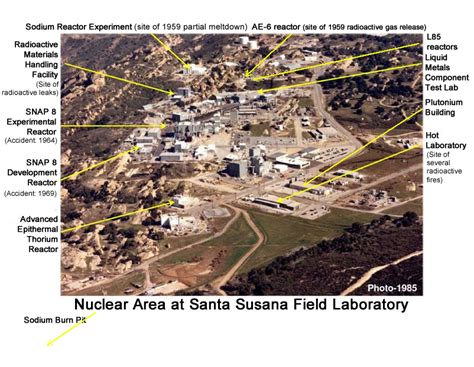
What made this disaster particularly insidious was the absence of modern containment protocols. Instead of being safely trapped within layers of shielding, radioactive byproducts such as iodine-131 and cesium-137 were filtered through a basic ventilation system and dispersed into the open air. Scientists estimate that between 130 and 13,000 curies of iodine-131 and 260 to 2,600 curies of cesium-137 were released. For context, Three Mile Island emitted only 17 curies of iodine-131.
The magnitude of this spread was—and remains—uncertain. This ambiguity underscores one of the enduring themes of the Santa Susana disaster: opacity in the face of public safety.
Silence, Secrecy, and Cover-Ups
Shockingly, the meltdown was kept secret until 1979, when UCLA student Michael Rose uncovered internal Atomic Energy Commission documents detailing the event and its attempted cover-up. By then, the SSFL had become a recurring source of radiological and chemical contamination. Over the ensuing decades, additional accidents occurred across the facility’s 10 reactors.
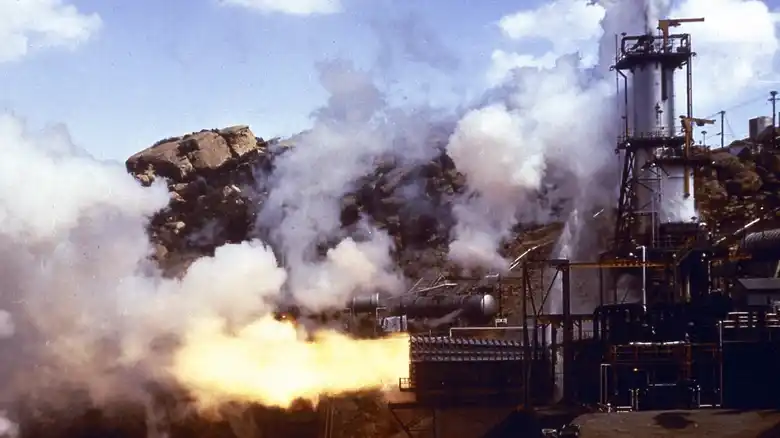
The site’s so-called “hot lab”—used to dismantle radioactive fuel and components—contributed further contamination, as did the illegal burning of tainted materials in open-air pits. This radioactive and chemical stew soaked into the soil and groundwater, carried by wind, runoff, and wildfires into nearby communities. With thousands of rocket tests also occurring on-site, the SSFL became a cauldron of unregulated toxic discharge.
Conflicting Science, Lingering Doubts
A growing body of research has tried—and failed—to deliver a consensus on the health risks to nearby residents and workers. A 1997 UCLA study found that employees at the facility had significantly elevated cancer rates. Yet in 2005, a Boeing-funded report contradicted those findings, claiming no significant health impacts.
However, a 2007 University of Michigan study found a 60% increase in certain cancers within a two-mile radius of the site. By 2014, researchers at USC’s Keck School of Medicine again cast doubt, reporting no conclusive evidence linking the site to public health degradation. This tug-of-war reflects a larger issue: when corporate-funded studies clash with independent research, public trust becomes the collateral damage.
Cleanup Promises and Delays
In the face of mounting pressure, California’s EPA negotiated cleanup agreements with NASA and the Department of Energy to restore the site by 2017. Boeing, which owns the majority of the SSFL, notably refused to sign on, and the deadline came and went without measurable progress.
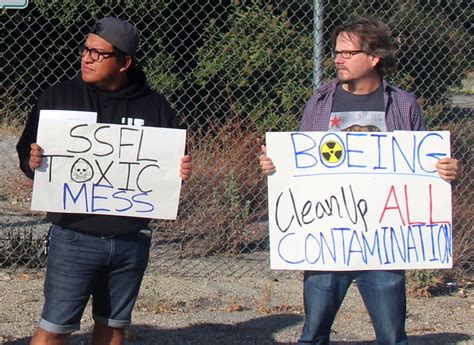
The situation took a dire turn in 2018, when the Woolsey Fire—originating on SSFL property—burned over 100,000 acres, reactivating long-buried contaminants and spreading radioactive ash across nine miles of surrounding communities. The fire intensified public outrage and prompted scrutiny of California’s Department of Toxic Substances Control (DTSC), long criticized for its lax enforcement and close ties with corporate stakeholders.
Nature Reserve or Nuclear Red Herring?
In a controversial twist, Boeing and other SSFL stakeholders have proposed transforming the polluted site into a nature reserve. While on the surface, this seems like a green-forward initiative, critics argue it’s a legal loophole—nature reserves require significantly lower decontamination standards. By reframing the land’s use, Boeing could effectively sidestep extensive cleanup obligations while painting itself as an environmental steward.
Environmental activists and local watchdogs contend that this maneuver would permanently entomb dangerous levels of radioactive and chemical waste beneath a thin veneer of greenery, leaving surrounding communities vulnerable.
A Flicker of Accountability Emerges
After years of delay, 2022 brought a shift. CalEPA imposed stricter contamination thresholds on Boeing. Then, in December 2025, the Los Angeles Water Board moved to fine Boeing nearly $600,000 for illegal stormwater runoff tainted with toxic waste. This came shortly after Boeing’s failed lawsuit challenging the new standards, signaling a potential shift in accountability.
Whether these measures will lead to a full-scale cleanup remains uncertain. The transformation of SSFL into a nature reserve still looms large, and the burden of proof continues to fall upon a public long kept in the dark.
The Broader Nuclear Reckoning
The Santa Susana meltdown is not merely a localized environmental horror—it is a cautionary tale for the future of nuclear energy in the United States. As policymakers consider next-generation nuclear technologies to combat climate change, the SSFL story warns against romanticizing atomic power without robust safety protocols, community engagement, and unwavering transparency.
This is a story that involves clandestine Cold War research, corporate denial, governmental evasion, and decades-long community trauma. It has inspired documentaries like In the Dark of the Valley and remains a rallying cry for those demanding not just cleanup, but truth and accountability.
The true cost of the Santa Susana disaster has yet to be calculated. Its radioactive legacy seeps not just through soil and air, but through trust, governance, and the moral obligations we owe to future generations.