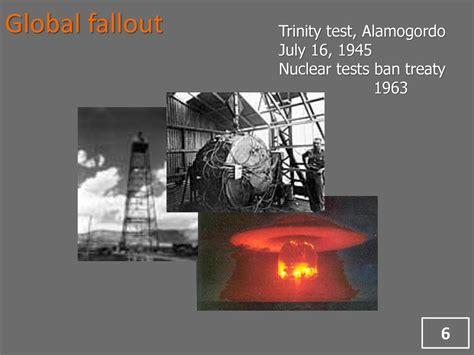
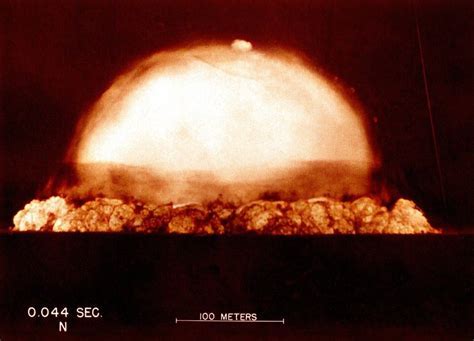
In the arid expanse of the New Mexico desert on July 16, 1945, the United States detonated the world’s first nuclear bomb. Known as Trinity, this historic test marked the culmination of the Manhattan Project, a secret wartime initiative led by physicist J. Robert Oppenheimer and General Leslie Groves. What began as a theoretical exercise in splitting the atom became a concrete and catastrophic reality, capable of devastating entire cities within seconds. Just weeks after Trinity, the world witnessed the terrifying power of nuclear weapons when bombs were dropped on Hiroshima and Nagasaki, ending World War II but unleashing a new era of military strategy: the age of the atom.
Following the war, the United States pivoted from wartime use to scientific and military experimentation. From 1946 to 1992, the U.S. conducted a staggering 1,054 nuclear tests, each designed to push the boundaries of physics, explore the feasibility of new delivery systems, and assert geopolitical dominance during the Cold War.
The Early Era: Atmospheric and Surface Testing
The initial phase of nuclear testing occurred above ground, with bombs suspended from towers, dropped from aircraft, and even tied to balloons. These tests were highly visible, both to domestic audiences and foreign adversaries, and often designed to intimidate as much as inform.
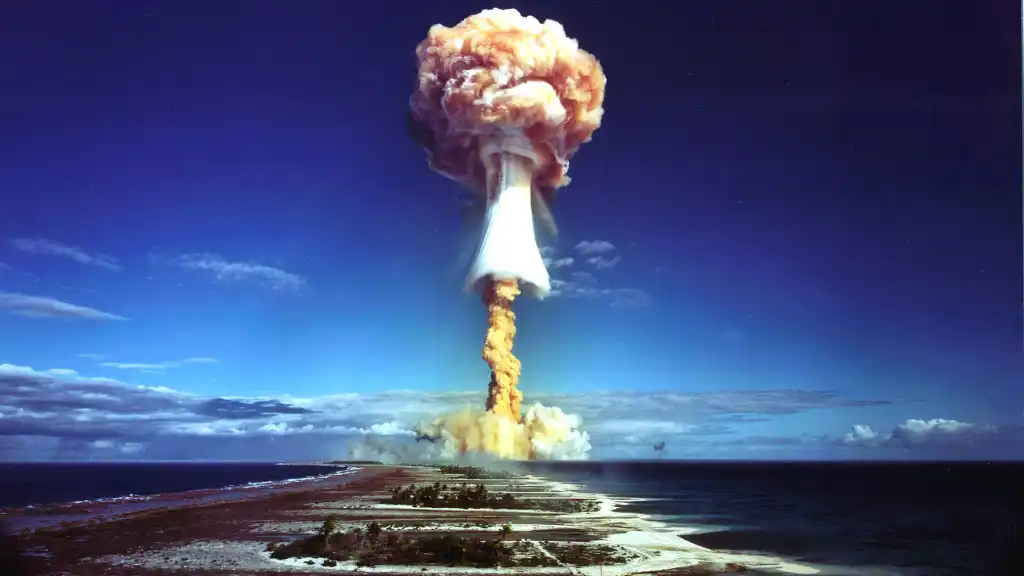
Many early tests were conducted in the Pacific Ocean and American Southwest, particularly in Nevada. The Nevada Test Site, located just 65 miles from Las Vegas, became the most bombed place on Earth, witnessing over 900 nuclear detonations. Some tests were so massive they could be seen and felt across state lines, rattling windows and nerves alike.
Starfish Prime and the Quest for the Unknown
The U.S. nuclear program wasn’t confined to land. Scientists explored how nuclear detonations behaved in different environments, including underwater and even in space. One of the most infamous of these was Starfish Prime, conducted on July 9, 1962, 250 miles above the Pacific Ocean. This explosion, equivalent to 1.4 megatons of TNT, lit up the sky and disabled satellites, confirming the electromagnetic pulse (EMP) threat of nuclear weapons.
This test also demonstrated just how far the consequences of nuclear testing could extend—beyond Earth’s atmosphere and deep into our technology infrastructure. The fallout wasn’t just radioactive; it was electronic, as Starfish Prime disrupted communications and electronics thousands of miles away.
Transition to Underground Testing
By the early 1960s, the danger of radioactive fallout became impossible to ignore. Tests conducted in the atmosphere were releasing massive amounts of radiation, which the winds carried across the globe. Public concern reached a fever pitch, fueled by the visible effects of fallout—rising cancer rates, contaminated water sources, and radioactive milk.
In response, the U.S. signed the Limited Test Ban Treaty (LTBT) in 1963 with the Soviet Union, prohibiting nuclear tests in the atmosphere, outer space, and underwater. From that point onward, all U.S. nuclear tests occurred underground, effectively concealing the explosions from public view while attempting to limit radioactive contamination.
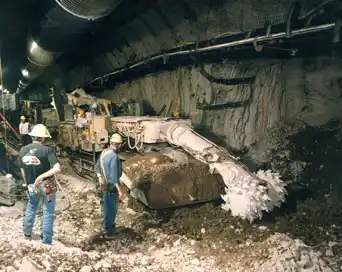
Sites like Nevada, New Mexico, Colorado, Alaska, and even Mississippi became hubs of underground nuclear experimentation. These tests involved burying bombs deep beneath the earth’s surface and triggering controlled explosions to study shockwaves, structural effects, and yield.
The Hidden Fallout: Why Nuclear Testing Became Too Dangerous
Even underground tests could not fully contain the devastating consequences of nuclear explosions. Though they reduced atmospheric fallout, radioactive particles still escaped through fissures in the earth or through intentional venting. These particles included cesium-137, iodine-131, and strontium-90 — all of which have long half-lives and the capacity to cause genetic damage.
The path these particles took was insidious. Carried by wind and water, they traveled vast distances. Fallout entered the food chain: it landed in the soil, was absorbed by grass, eaten by cows, and eventually concentrated in dairy products consumed by people across the nation. Milk contamination, especially, became a major health concern, as radioactive iodine accumulated in human thyroid glands, particularly in children.
Scientific studies soon confirmed the grim reality. Bone marrow, organs, and tissues could retain radioactive isotopes for decades, increasing the risk of cancers such as leukemia and thyroid cancer. Researchers linked thousands of cancer cases directly to nuclear testing. By the late 1980s, the U.S. government had begun compensating individuals exposed to fallout through programs like the Radiation Exposure Compensation Act (RECA).
Escalation, Tensions, and the Cold War Arms Race
While fallout posed a major health risk, the political ramifications of continued nuclear testing were equally dangerous. Every test was a show of force — a reminder to adversaries that the U.S. could strike with devastating power. This posture escalated tensions, particularly with the Soviet Union, which conducted its own nuclear tests in response.
The arms race became a race toward mutually assured destruction (MAD). With each new warhead, both sides pushed the limits of destructiveness. The development of hydrogen bombs, exponentially more powerful than the atomic bomb, introduced the possibility of annihilating entire nations within minutes.
By the late 1980s, this brinkmanship had become unsustainable. Public sentiment turned sharply against nuclear weapons, aided by the rise of peace movements, global protests, and haunting images of Hiroshima survivors. The moral, environmental, and existential costs became too high.
The End of Testing: Moratorium and Treaties
With the Cold War winding down, President George H.W. Bush initiated a moratorium on nuclear testing in 1992. It was the beginning of a new era—one where deterrence relied not on new tests but on the vast existing arsenal and computer simulations. In 1996, President Bill Clinton further advanced this vision by signing the Comprehensive Test Ban Treaty (CTBT), committing the U.S. to permanently cease all nuclear explosions.
Though the CTBT has not yet been ratified by the U.S. Senate, the U.S. has adhered to its principles for over three decades. Advances in supercomputing and simulation technology have allowed weapons scientists to maintain and verify the nuclear stockpile’s effectiveness without conducting new detonations.
The Lingering Legacy and Resurfacing Threat
Despite the cessation of testing, the legacy of nuclear tests remains with us. Radioactive isotopes from Cold War-era tests are still detectable in soil, water, and even human bodies. The environmental scars left by testing sites — especially in the Pacific Islands and the American Southwest — are stark reminders of the human and ecological toll.
In recent years, geopolitical tensions have reignited the conversation around nuclear weapons. Nations like Russia and North Korea have resumed or threatened nuclear testing, and the U.S. has signaled a renewed interest in modernizing its arsenal. In 2025, following nuclear-powered missile tests by Russia, former President Donald Trump made headlines by calling for renewed nuclear testing, sparking global concern and fierce debate.
These developments underscore a troubling reality: while the world may have turned away from testing for now, the specter of nuclear conflict remains.
Conclusion: The Line We Dare Not Cross Again
The history of U.S. nuclear testing is both a tale of technological triumph and moral reckoning. From the awe-inspiring flash of Trinity to the deep reverberations of underground tests, each explosion brought with it scientific insights and existential dread. While the bombs remain in silos and submarines, ready for use, the decision to halt nuclear testing stands as one of the most consequential acts of restraint in modern history.
The radioactive legacy of those tests lingers—not just in the Earth’s crust, but in the stories of the people affected, the landscapes scarred, and the global psyche shaped by the fear of total annihilation. We tested the limits of destruction. And in doing so, we discovered that some boundaries are better left uncrossed.