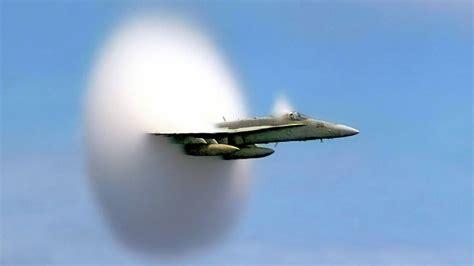
The world of military aviation has entered an era dominated by stealth, advanced sensors, artificial intelligence, and networked warfare. However, raw speed remains one of the most valuable advantages a fighter aircraft can possess. The ability to rapidly intercept threats, cover enormous distances, and reposition forces within minutes continues to shape the design philosophy of some of the most powerful aircraft in service today.
While many modern fighters prioritize stealth and electronic warfare over maximum velocity, several legendary aircraft from the Cold War era continue to hold impressive speed records. These aircraft were designed during a period when defeating enemy bombers and securing air superiority required extreme performance. Decades later, jets such as the MiG-31 Foxhound, F-15 Eagle, and Su-27 Flanker remain operational because their extraordinary speed still provides strategic value.
Determining the fastest fighter jets currently in service requires more than simply looking at historical specifications. Some aircraft capable of reaching incredible speeds have been retired, while others remain active only with limited operators. The following ranking focuses on aircraft that are confirmed to remain operational today and compares their maximum speeds, mission roles, and continued relevance in modern air forces.
Why Fighter Jet Speed Still Matters in Modern Warfare
Maximum speed is not the only measurement of a fighter aircraft’s effectiveness, but it continues to influence military strategy. A fast aircraft can respond quickly to emerging threats, intercept enemy aircraft before they reach critical targets, and patrol larger areas with fewer resources.
During the Cold War, speed was considered essential because air forces prepared for potential encounters with strategic bombers, reconnaissance aircraft, and missile platforms. Aircraft such as the MiG-25 and MiG-31 were created specifically to chase high-altitude, high-speed targets. Western fighters such as the F-15 were developed with similar priorities, combining speed with maneuverability and weapons capability.
Today, the role of speed has evolved. Stealth fighters like the Lockheed Martin F-22 Raptor rely on avoiding detection, but they still benefit from high-speed performance. Supersonic capability allows aircraft to quickly move between combat zones, maintain operational flexibility, and create tactical advantages during complex missions.
The fastest aircraft in service are therefore not simply racing machines. They represent different approaches to air combat, from specialized interception to air superiority and multirole operations.
5. Lockheed Martin F-22 Raptor — Mach 2.25
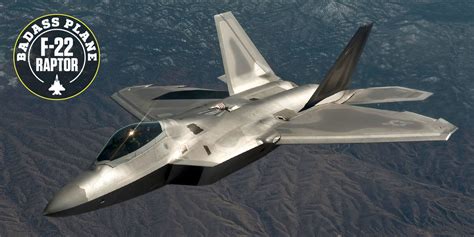
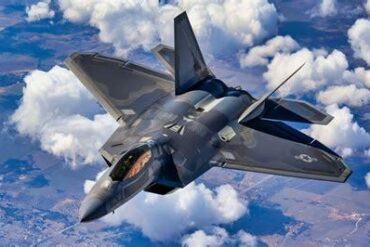
The F-22 Raptor is one of the most advanced fighter aircraft ever developed and remains the fastest operational stealth fighter in the world. Built by Lockheed Martin for the United States Air Force, the aircraft can achieve a maximum speed of approximately Mach 2.25, allowing it to combine stealth technology with impressive high-speed performance.
The F-22 entered service in 2005 and was designed primarily as an air superiority fighter capable of defeating advanced enemy aircraft. Unlike earlier fighters that relied heavily on speed and maneuverability, the Raptor introduced a new generation of combat capability through stealth, sensor fusion, and advanced avionics.
Its twin Pratt & Whitney F119 engines provide enormous thrust, enabling the aircraft to achieve supercruise capability. This means the F-22 can maintain supersonic speeds without using afterburners, reducing fuel consumption and extending mission endurance compared with traditional fighters that require additional engine power to exceed Mach 1.
Although production ended in 2012, the F-22 continues to receive upgrades that improve radar systems, communications, and weapons integration. The United States Air Force maintains the aircraft as a critical component of its air dominance strategy.
The F-22 demonstrates that speed remains important even in the stealth era. While it may not be the fastest fighter overall, its combination of Mach 2-class performance, low observability, and advanced sensors makes it one of the most capable aircraft flying today.
4. Mikoyan MiG-29 Fulcrum — Mach 2.3
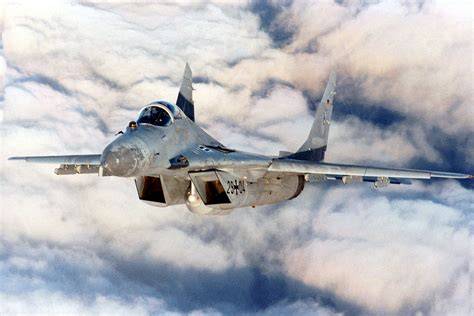
The MiG-29 Fulcrum represents one of the most successful Soviet fighter designs ever created. Developed by Mikoyan and Gurevich, the aircraft entered service in the early 1980s as a direct response to Western fighters such as the F-16 Fighting Falcon and F-15 Eagle.
With a maximum speed of approximately Mach 2.3, the MiG-29 remains one of the fastest widely operated fighters in the world. Its impressive acceleration, high maneuverability, and powerful engines allowed it to become a major component of Soviet and later Russian-aligned air forces.
The aircraft was designed as a lightweight frontline fighter capable of operating close to the battlefield. Unlike larger interceptors, the MiG-29 combined speed with agility, making it effective in close-range aerial combat.
Over the decades, numerous countries have upgraded their MiG-29 fleets with improved radar systems, modern avionics, and advanced weapons. Operators including India, Poland, Algeria, and Ukraine have continued to use upgraded versions of the aircraft.
Ukraine has relied heavily on its MiG-29 fleet, particularly because the aircraft remains capable of conducting air defense missions against modern threats. Poland has also operated upgraded MiG-29s as part of NATO’s eastern defense structure.
Although newer fighters have surpassed it in technology, the MiG-29’s continued global presence proves that a well-designed aircraft can remain relevant long after its original introduction. Its Mach 2.3 capability still provides valuable performance for air forces operating under different strategic conditions.
3. Sukhoi Su-27 Flanker and Mikoyan MiG-23 Flogger — Mach 2.35
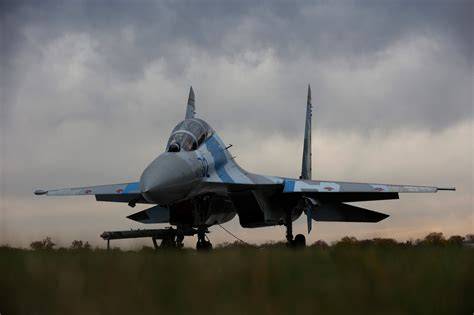
The third position belongs to two aircraft with the same approximate maximum speed: the Sukhoi Su-27 Flanker and the Mikoyan MiG-23 Flogger. Although they come from completely different generations, both aircraft can reach around Mach 2.35.
The Su-27 Flanker is one of Russia’s most recognizable fighter aircraft. Developed during the Cold War to challenge the American F-15 Eagle, it entered service in 1985 and became the foundation for a large family of advanced Russian fighters.
The aircraft was designed around three major strengths: speed, range, and maneuverability. Its aerodynamic design allows it to maintain excellent performance at high speeds while still providing impressive agility during aerial combat.
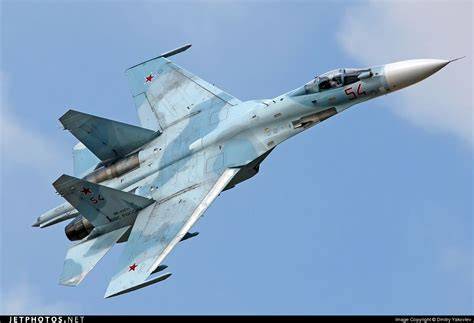
With a range exceeding 3,500 kilometers, the Su-27 was built for long-distance patrol missions across enormous territories. This capability remains especially important for countries with large airspace requirements, including Russia.
Modern versions of the Flanker family continue to serve around the world. Russia operates upgraded variants, while China developed its own derivatives, including the J-11 series. Other operators include Vietnam, Kazakhstan, Ukraine, and Ethiopia.
Sharing this position is the older MiG-23 Flogger, a variable-sweep-wing fighter introduced in 1970. The aircraft was one of the first fighters to combine high-speed interception capability with adaptable wing geometry.
The MiG-23 is no longer widely used, but some examples remain technically active. North Korea is considered its primary remaining operator, while other former operators have largely retired or grounded their fleets.
The aircraft’s continued presence highlights how difficult it can be to completely remove high-performance military platforms from service. Even designs more than five decades old can retain strategic value when speed remains their primary advantage.
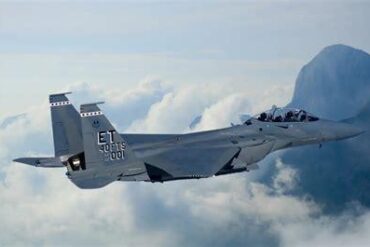
2. McDonnell Douglas F-15 Eagle — Mach 2.5
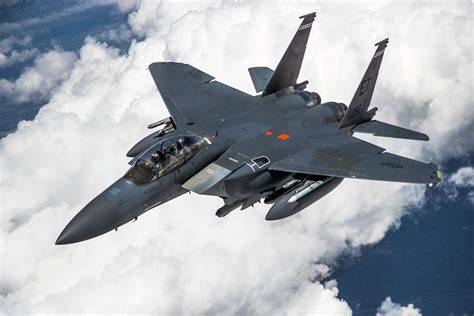
The F-15 Eagle remains one of the most successful fighter aircraft in aviation history. Developed by McDonnell Douglas and entering service with the United States Air Force in 1976, the aircraft can reach speeds of approximately Mach 2.5, making it one of the fastest Western fighters ever built.
The F-15 was created during the Cold War with a clear mission: achieve air superiority. Its powerful engines, large radar system, and excellent aerodynamic design allowed it to dominate air combat for decades.
Unlike many aging aircraft, the F-15 has remained relevant through continuous modernization. The latest variant, the F-15EX Eagle II, features advanced radar technology, improved electronic warfare systems, and increased weapons capacity.
The United States continues to operate hundreds of F-15 aircraft, while international operators include Japan, Israel, Saudi Arabia, South Korea, Singapore, and Qatar. This global presence demonstrates the aircraft’s adaptability across different military requirements.
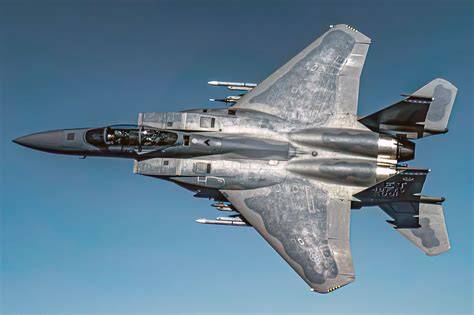
The F-15’s speed has played an important role in real-world missions. Its ability to rapidly respond to airborne threats has made it valuable for interception, patrol, and combat operations.
Nearly five decades after entering service, the F-15 remains a symbol of engineering durability. Few aircraft have combined speed, reliability, and upgrade potential as successfully as the Eagle.
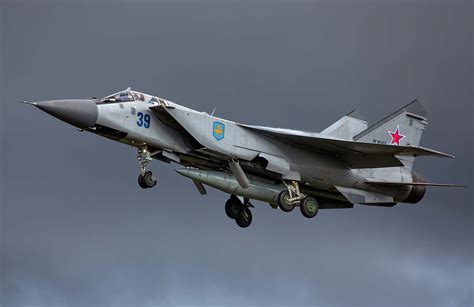
1. Mikoyan MiG-31 Foxhound — Mach 2.83
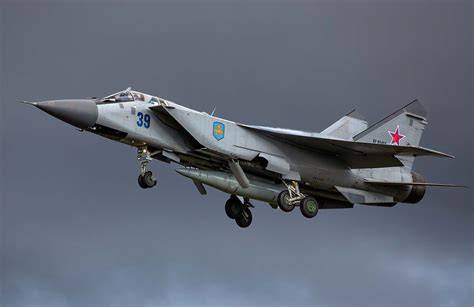
The title of the fastest fighter jet currently in service belongs to the Mikoyan MiG-31 Foxhound. Capable of reaching approximately Mach 2.83, the aircraft remains unmatched among operational fighters today.
Introduced in 1981 as a successor to the MiG-25 Foxbat, the MiG-31 was designed for one specific purpose: high-speed interception. It was created to defend enormous areas of Soviet airspace against strategic bombers, reconnaissance aircraft, and cruise missiles.
The aircraft’s extraordinary speed allows it to cover vast distances quickly, making it particularly valuable for defending Russia’s remote Arctic regions. Its powerful radar system and long-range missiles allow it to detect and engage targets far beyond the range of many traditional fighters.
Speed is only one part of the MiG-31’s capability. The aircraft can carry advanced weapons, including the Kinzhal hypersonic missile system, giving it a unique combination of velocity, range, and striking power.
Russia remains the only current operator of the MiG-31 after Kazakhstan retired its aircraft. Despite its age, the Foxhound continues to receive upgrades that extend its operational life.
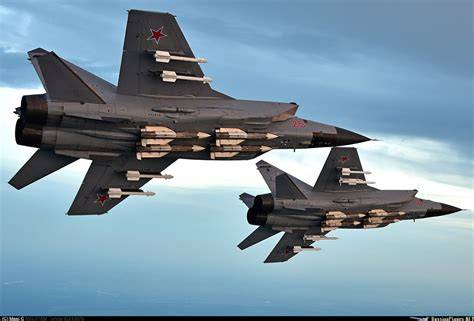
The MiG-31 represents a different philosophy from modern stealth fighters. Instead of avoiding detection, it relies on speed, powerful sensors, and long-range weapons to control enormous sections of airspace.
The Future of Fighter Jet Speed
The fastest fighter jets in service today reveal an interesting trend in military aviation. While modern aircraft increasingly focus on stealth, artificial intelligence, and electronic warfare, speed has not disappeared as a critical advantage.
Aircraft like the F-22 demonstrate how speed can complement stealth, while the MiG-31 shows that extreme velocity still has strategic importance. The F-15 proves that a well-designed platform can remain competitive through decades of modernization.
Future sixth-generation fighters may not necessarily chase higher maximum speeds. Instead, they are expected to combine efficient propulsion, advanced sensors, unmanned teaming, and improved survivability. However, the legacy of today’s fastest fighters will continue to influence aircraft design for generations.
From the Mach 2.83 MiG-31 to the Mach 2.25 F-22, these aircraft represent some of the greatest achievements in aerospace engineering. Their continued service proves that even in a rapidly changing battlefield environment, speed still matters.