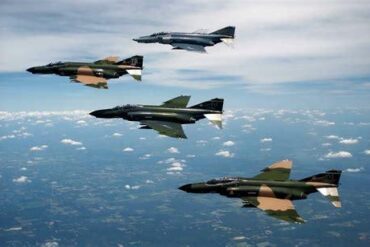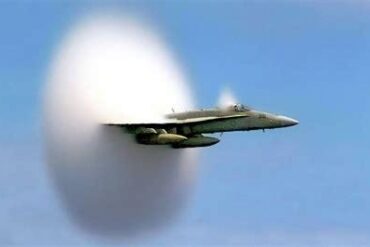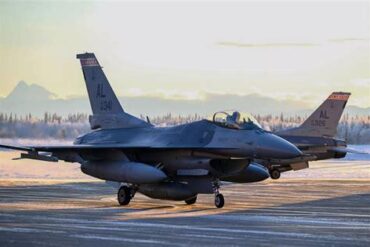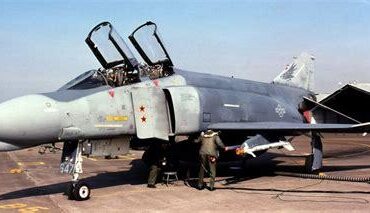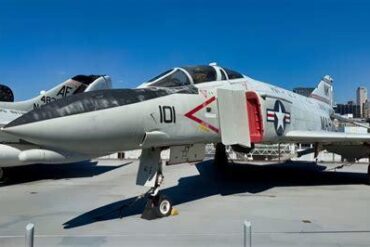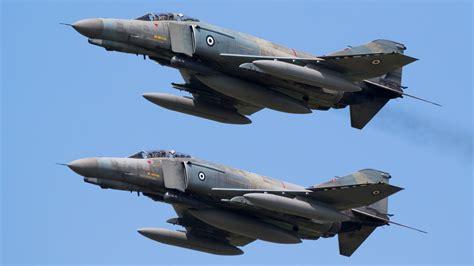
The McDonnell Douglas F-4 Phantom II is a legendary aircraft whose influence has rippled across the decades, shaping modern aerial warfare and redefining multirole fighter capabilities. Born during the height of the Cold War, the Phantom was forged in the fires of Vietnam and continued to roar into the 21st century. Yet now, it stands on the precipice of extinction. As of early 2026, only a handful of airworthy F-4 Phantom IIs remain across the globe, confined to three national air forces and a rare private owner. The once-mighty supersonic behemoth is fading, but its legend endures.
The Final Count: How Many F-4 Fighter Jets Are Left?
Currently, it is estimated that 128 F-4 Phantoms remain globally in various states of operability. Of these, only about a third remain airworthy, with fewer still actively serving frontline roles. Following the Republic of Korea Air Force’s (ROKAF) retirement of its fleet in 2024, the global operational presence of the F-4 has now contracted to Turkey, Greece, and Iran.
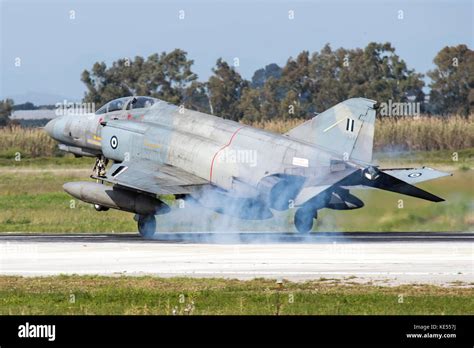
Turkey: The F-4 Terminators Of 111 Filo
The Turkish Air Force (TuAF) maintains the most modernized and arguably most capable Phantom fleet still in operation today. Warpower estimates place the count at 48 active F-4Es, all serving with the elite 111 Filo “Panterler” at Eskişehir Air Base. These jets, dubbed “2020 Terminators,” are the result of a $632 million modernization effort undertaken in collaboration with Israel Aerospace Industries (IAI) in the late 1990s.
These heavily modified F-4Es feature:
- Elta EL/M-2032 multimode fire control radar
- Wide-angle Head-Up Displays (HUDs)
- Hands-On Throttle-and-Stick (HOTAS) controls
- Modern mission computers and digital avionics
Remarkably, 20 kilometers of internal wiring were replaced, shedding 750 kilograms of airframe weight and extending structural life to 6,000 flight hours. Operational roles now include precision strike, SEAD (Suppression of Enemy Air Defenses), and standoff missile engagements using a combination of AGM-142 Popeye, SOM cruise missiles, and HGK-guided bombs.
Turkey’s forced exit from the F-35 program in 2019 further entrenched reliance on the F-4. However, these aircraft are only expected to remain in service until the introduction of the indigenous KAAN (TF-X) stealth fighter and F-16 Block 70 units, likely in the early 2030s.
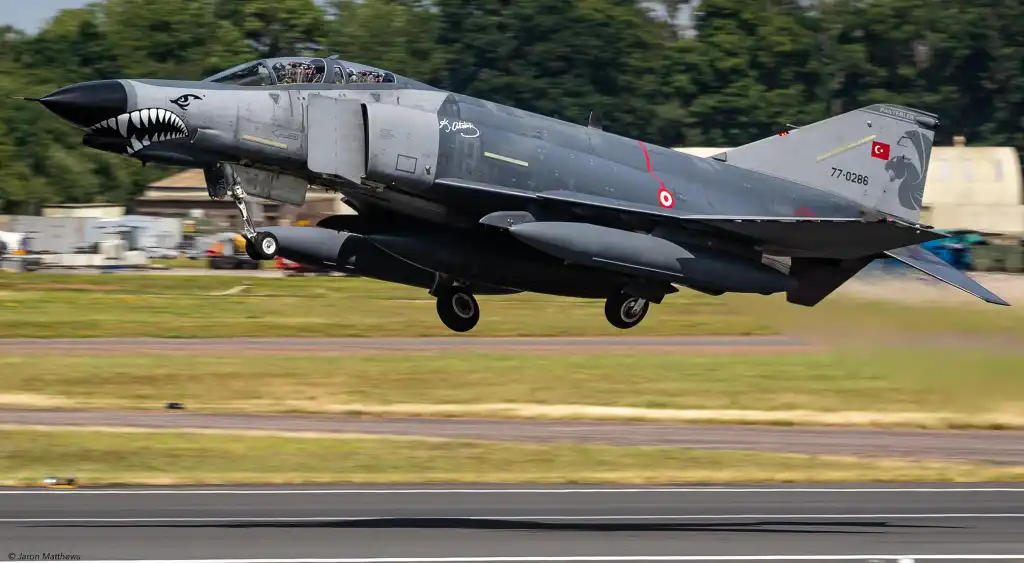
Greece: The Aegean Ghosts Near Their End
The Hellenic Air Force (HAF) continues to fly approximately 33 F-4E Phantom II aircraft, primarily assigned to 338 Squadron “Aris” at Andravida Air Base. The endurance of these aircraft is credited to the Peace Icarus 2000 (PI 2000) modernization initiative, implemented with German firm DASA in the late 1990s.
This upgrade brought these Phantoms into the 21st century with:
- Raytheon APG-65 radar systems
- Color MFDs (multi-function displays)
- Advanced HUDs and HOTAS control systems
- Compatibility with AIM-120 AMRAAM and GBU-16 Paveway II bombs
Known colloquially as “Aegean Ghosts” due to their distinctive low-visibility camouflage, the Greek Phantoms are expected to be retired shortly. Their roles are gradually being assumed by newly delivered Dassault Rafales and incoming F-35 Lightning IIs, forming the backbone of Greece’s future air combat fleet.
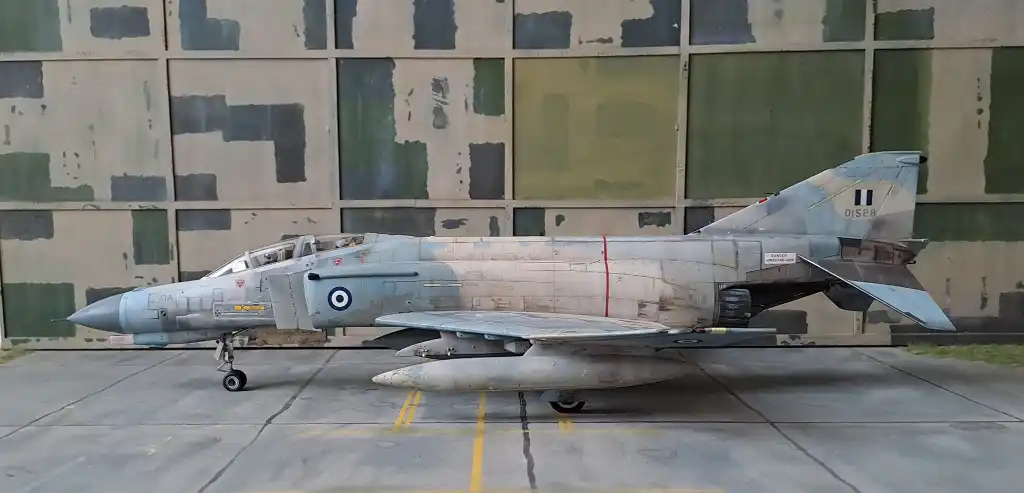
Iran: The Last Phantom Stronghold
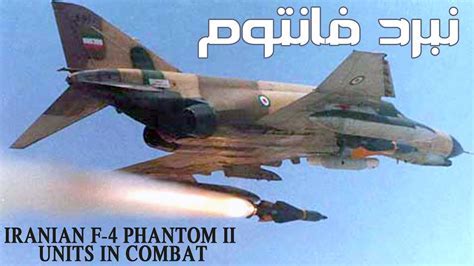
Surprisingly, the country with the largest remaining Phantom fleet is Iran, which reportedly maintains around 63 F-4s. However, many of these airframes are non-operational or heavily cannibalized to keep others flight-ready. These aircraft are relics from the Shah’s era, with many acquired before the 1979 Islamic Revolution.
Cut off from Western maintenance and upgrades, the Islamic Republic of Iran Air Force (IRIAF) has turned to domestic, Chinese, and Russian systems to extend the jets’ service life. Modifications include:
- Foreign-sourced or homemade radars
- Digital HUDs and FLIR pods
- Helmet-Mounted Sighting Systems (HMS)
Iran’s Phantoms have recently been used in ground attack and reconnaissance missions, including sorties against ISIS targets. But their age and poor sustainment indicate their combat effectiveness is increasingly symbolic. Recent diplomatic overtures to China point to an eventual shift toward Chinese 4.5-gen aircraft, ending Iran’s dependency on the long-serving Phantom.
The Phantom’s Civilian Survivor
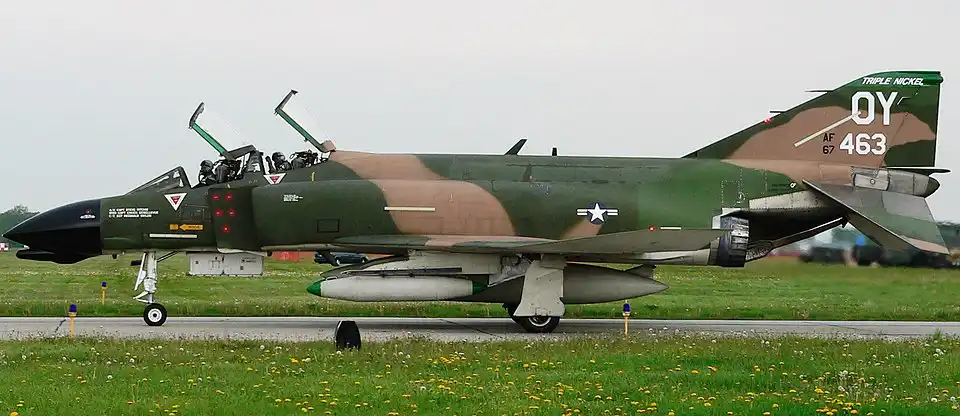
Outside military hands, there is a single airworthy privately owned F-4 Phantom: the F-4D Phantom II (BuNo 145310, reg. N749CF) operated by the Collings Foundation / American Heritage Museum. This aircraft represents a unique piece of flying history, though it has seen limited flight time in recent years due to high operating costs. Its reappearance on the airshow circuit in 2026, through a rumored partnership with Fighterjets Inc., may be imminent.
Additionally, a second F4H-1F Phantom is undergoing restoration, with unconfirmed reports suggesting it could soon become the world’s second privately airworthy Phantom.
Phantom Legacy: By The Numbers
Between 1958 and 1981, 5,195 F-4 Phantoms were produced, making it the most mass-produced supersonic jet fighter in U.S. history. Of these, over 1,370 were F-4E variants, prized for their internal gun and leading-edge slats, which made them formidable dogfighters.
The Phantom became the only aircraft flown by both the US Navy Blue Angels and USAF Thunderbirds. It excelled as an interceptor, fighter-bomber, reconnaissance platform, and even a Wild Weasel SEAD platform. Despite being retired from active U.S. military duty in 1997, QF-4 drones remained operational until 2016.
F-4E Phantom II specifications:
- Combat Speed: 1,245 knots (with drop tanks)
- Cruise Speed: 504 knots average
- Range: 1,401 nautical miles (ferry configuration)
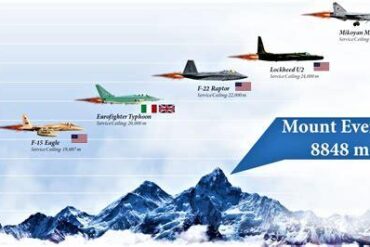
- Service Ceiling: 58,750 ft
A Fighter With Nine Lives
Few aircraft have been as versatile and enduring as the F-4 Phantom II. It symbolized the technological zenith of its time and fought in nearly every major conflict from Vietnam to the Gulf War. Even now, the Phantom clings to relevance in scattered corners of the globe—its silhouette still striking awe as it once did at Mach 2 over hostile territory.
Yet the clock is ticking. In Greece and Turkey, Fifth-generation replacements are arriving. Iran’s fleet, patchworked and unsupported, faces inevitable obsolescence. The final chapter is being written slowly, with each retirement ceremony and museum dedication cementing its legacy.
Even when the last airworthy Phantom lands for good, its spirit will endure—not only in airshows or hangars but in every multirole fighter jet that traces its lineage back to this cold, grey beast of steel and fire.