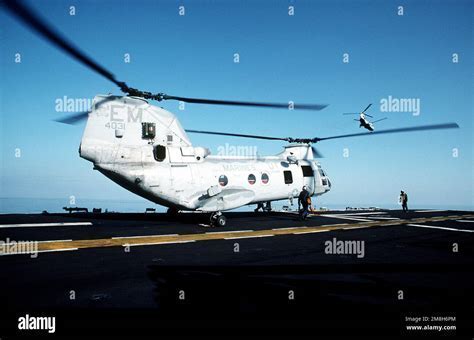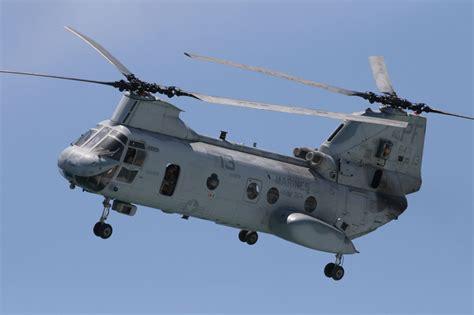
For over half a century, the CH-46 Sea Knight helicopter served as one of the most dependable tandem-rotor aircraft in military aviation. Developed by Boeing Vertol and introduced in 1964, this medium-lift helicopter carved out a significant legacy within the U.S. Marine Corps, providing critical troop and cargo transport across battlefields from Vietnam to Afghanistan. While officially retired from military service in the United States, the CH-46 remains active elsewhere in the world—and even in civilian roles.
Origins and Legacy of the CH-46 Sea Knight
Commissioned as a vertical troop transport solution, the CH-46 was designed to bridge ship-to-shore movement and provide rapid-response capability in hostile environments. The Sea Knight could operate from aircraft carriers, amphibious assault ships, and rough landing zones, offering the kind of tactical flexibility that proved indispensable across numerous global conflicts.
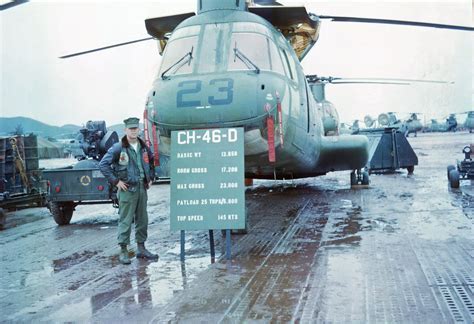
Its reputation was solidified during the Vietnam War, where it flew alongside the UH-1 Iroquois and CH-53 Sea Stallion, delivering Marines deep into combat zones and evacuating the wounded. The aircraft’s twin rotors, mounted fore and aft, gave it excellent lift capability, allowing for operations in tight, mountainous terrains or heavily forested areas.
How Many People Can the CH-46 Sea Knight Carry?
The CH-46’s primary strength lies in its versatility. Throughout its operational lifespan, the helicopter was adapted for multiple mission profiles, each affecting its internal capacity.
In general configuration, the Sea Knight can carry:
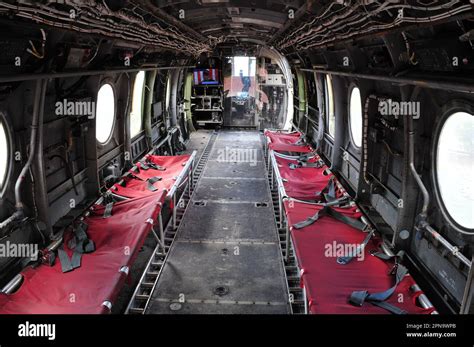
- Up to 25 fully equipped combat troops
- 6,000 pounds of internal or external cargo
- 15 litters with 2 medical attendants for medevac missions
- 22 ambulatory casualties with 2 corpsmen in case of medical evacuations
The crew typically consisted of four to five personnel—two pilots, one crew chief, and either a mechanic or two aerial gunners during combat sorties. This made the CH-46 not only a transport vehicle but a platform capable of defending itself and others during contested insertions and extractions.
The U.S. Military Retirement and the Rise of the V-22 Osprey
After 51 years of service, the U.S. Marine Corps officially retired the CH-46 on August 1, 2015. Its successor, the V-22 Osprey, offered greater speed, range, and payload capacity thanks to its revolutionary tilt-rotor technology. However, for all its advanced systems, the Osprey has yet to replicate the same battlefield familiarity and rugged reliability as the CH-46.
The final U.S. Navy and State Department CH-46s saw service in Afghanistan during the 2010s. When American forces withdrew, these helicopters were rendered inoperable and abandoned, effectively ensuring they wouldn’t be reused locally. Still, the story of the CH-46 didn’t end there.
Where Are CH-46s Now? The Role of the 309th AMARG
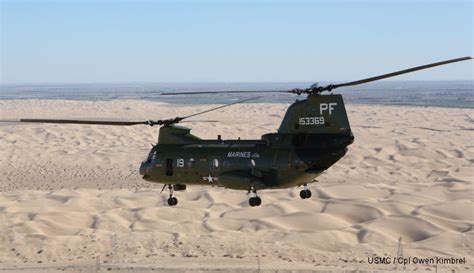
Although retired from active U.S. service, many CH-46 helicopters have not been scrapped. Instead, they are stored with the 309th Aerospace Maintenance and Regeneration Group (AMARG) in Tucson, Arizona. Known more widely as the “Airplane Boneyard,” AMARG serves as the final resting place—and potential rebirth point—for thousands of military aircraft.
Dozens of Sea Knights rest there in various stages of preservation. While some serve as parts donors, others may be reconditioned and sold to foreign allies. This strategic stockpile ensures that, although no longer flying for the U.S., the CH-46 could still find new life elsewhere.
Still Flying: Civilian and Foreign Use of the Sea Knight
One of the most fascinating aspects of the CH-46’s story is that it continues to fly in civilian and international roles. In the United States, Sky Aviation operates the Sea Knight to fight wildfires, thanks to its large carrying capacity and ability to hover precisely.
Foreign governments have also embraced the CH-46, either through direct acquisition or through licensed production. The Japanese Self-Defense Forces flew a locally produced variant known as the Kawasaki KV-107, which closely mirrors the CH-46 in both form and function.
Other nations and regions that have operated or still use CH-46 helicopters include:
- Argentina, which has shown interest in acquiring surplus models.
- Sweden, which flew CH-46s until recently.
- Australia, New Zealand, and Papua New Guinea, all of which operated variants or similar tandem-rotor platforms.
Variants and Evolution of the CH-46
Over its production lifespan, several different models of the Sea Knight were developed to meet evolving battlefield requirements. The final production model was the CH-46F, delivered in 1971 and representing the 524th unit manufactured. Each new variant incorporated enhancements in avionics, lift capacity, survivability, and internal layout.
Some of the major configurations included:
- CH-46A – Original U.S. Marine Corps model
- CH-46D – Improved engines and increased payload capacity
- CH-46E – Enhanced avionics and airframe life extensions
- CH-46F – Final variant with improved systems and reliability
These upgrades allowed the CH-46 to stay relevant across five decades of service. Its adaptability made it effective in diverse environments—from jungles to deserts, from disaster zones to active war fronts.
Combat History and Operational Footprint
The CH-46 saw action in nearly every major U.S. military conflict post-1964. Its service record reads like a timeline of modern American warfare:
- Vietnam War – Extensive troop and supply transport under fire.
- Operation Urgent Fury (Grenada, 1983) – Airlifted U.S. Marines and rescued downed AH-1 Cobra crew.
- Operation Desert Storm (1990-1991) – Carried troops and gear in the Gulf War.
- Operation Iraqi Freedom and Enduring Freedom – Used for quick insertion and MEDEVAC missions in Iraq and Afghanistan.
Despite its resilience and overall reliability, the Sea Knight did suffer losses over the years, particularly during the intense flying demands of Vietnam and Afghanistan. Still, its reputation for mechanical toughness and load stability made it a favorite among pilots and ground commanders alike.
Will the CH-46 Fly Again in Combat?
While the U.S. military has no current plans to reintroduce the Sea Knight, interest from foreign militaries and commercial operators suggests it may yet see operational use in other contexts. Some countries may purchase stored CH-46s from the U.S. government, refurbish them, and put them back in the air.
The CH-46 also fills a valuable niche in civilian heavy-lift operations, especially where new aircraft are cost-prohibitive. Firefighting, medical evacuation, and humanitarian missions in rugged terrain all benefit from the CH-46’s configuration.
Its reputation, low-speed maneuverability, and simplicity of repair make it an attractive platform for nations and agencies that need heavy utility helicopters but lack the infrastructure or budget for modern equivalents.
Conclusion: A Legacy Still in Motion
The CH-46 Sea Knight has carved out a place in the annals of military aviation not just because of its distinctive design or its 51 years of service, but because of its continued presence in the skies today. Although replaced in U.S. military service, its tandem-rotor silhouette remains familiar to those in firefighting, humanitarian work, and international defense.
Its ability to carry up to 25 fully loaded troops, perform medevac missions, or haul significant cargo loads has ensured that this helicopter remains a trusted workhorse even in semi-retirement. Whether stored in Arizona or flying over forest fires in California, the CH-46 Sea Knight refuses to fade into obscurity—an enduring symbol of resilience, utility, and engineering excellence.