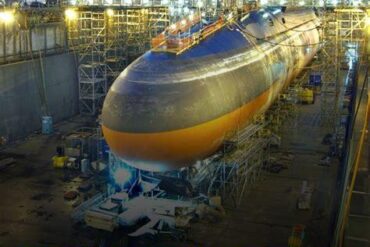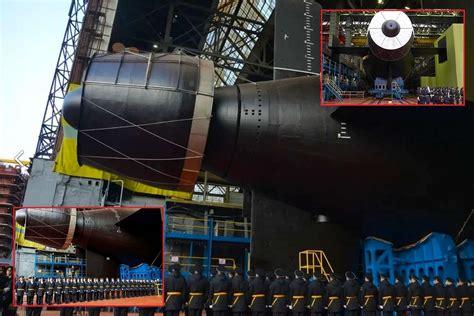
In 2026, Russia’s Khabarovsk nuclear-powered submarine is expected to begin its first sea trials following the completion of outfitting work at the Sevmash shipyard in Severodvinsk. This highly anticipated launch marks a significant milestone for Russia’s naval capabilities, especially in its quest to deploy the formidable Poseidon nuclear-powered unmanned underwater vehicle. The Khabarovsk, officially designated as Project 09851, will serve as the dedicated carrier for the Poseidon system, a cutting-edge nuclear torpedo with the potential to reshape strategic naval warfare.
Khabarovsk’s Design and Purpose: A Strategic Shift in Submarine Capabilities
The Khabarovsk is a revolutionary submarine in Russia’s fleet, designed specifically to carry and deploy the Poseidon nuclear-powered torpedo. Unlike conventional nuclear submarines built for patrol missions or ballistic missile launches, the Khabarovsk’s primary mission is to carry and launch Poseidon, which is also known by its project name, Status-6. This focus on deploying autonomous underwater vehicles is a shift in Russia’s approach to submarine warfare, emphasizing large payloads over traditional missile systems.
The Khabarovsk submarine, which was ceremonially launched on November 1, 2025, and lowered into water by the end of that month, represents the culmination of a series of advanced Russian submarine designs. The hull, derived from the Borei and Borei-A classes, omits the typical ballistic missile compartment, which is replaced with a configuration better suited to carrying large, specialized payloads. This unique configuration gives the Khabarovsk its distinctive appearance and sets it apart from its predecessors in both size and purpose. It is smaller than the Borei-class SSBNs but retains the operational endurance and propulsion technology that makes Russian nuclear submarines formidable on the world stage.
The Khabarovsk is designed to support long-term, specialized missions. With an estimated length of 113 meters (though some assessments suggest a range of 135 to 140 meters) and a displacement of approximately 10,000 tonnes, it provides the necessary capacity to house advanced systems such as the Poseidon torpedoes and various mission-specific equipment. The Khabarovsk’s propulsion system, powered by a nuclear reactor, ensures unlimited range and speed, making it highly capable in both strategic and tactical operations.
Poseidon: The Heart of Khabarovsk’s Mission
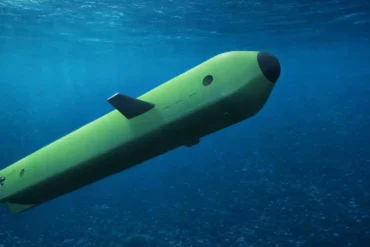
At the core of the Khabarovsk’s design is its role as the carrier of the Poseidon. The Poseidon is not just another torpedo; it is a nuclear-powered unmanned underwater vehicle (UUV) capable of operating at depths up to 1,000 meters and speeds ranging between 60 to 70 knots. This remarkable torpedo is significantly larger than conventional models, measuring between 16 to 24 meters in length and weighing around 100 tonnes. Designed to carry a nuclear warhead with a yield of up to 2 megatons, the Poseidon is intended to cause massive destruction when detonated underwater near coastal areas, naval bases, or large surface vessels.
Due to its massive size and unique operational needs, the Poseidon cannot be launched from standard submarines. This requirement led to the development of the Khabarovsk, which has been specially designed to carry and launch this high-performance weapon. Once operational, the Khabarovsk will be the only submarine specifically built for Poseidon’s deployment, making it a vital component of Russia’s strategic deterrence.
While the Poseidon system has not yet been declared fully operational, its potential impact on naval strategy is immense. Russia’s ability to deploy Poseidon-equipped submarines could alter the balance of power in underwater warfare, making it a key element of future conflict scenarios.
Advanced Features and Performance Capabilities of the Khabarovsk
The Khabarovsk is a marvel of modern naval engineering, with a series of advanced features that enhance its mobility, stealth, and combat effectiveness. The propulsion system is based on a pressurized-water reactor (likely the KTP-6-185SP), which generates approximately 200 MW of power, transmitted through a turbine to a waterjet propulsor. This configuration allows the submarine to achieve speeds of 30 to 32 knots underwater. The Khabarovsk is also capable of diving to depths of up to 500 meters, placing it among the most capable nuclear submarines in terms of speed and operational depth.
The submarine’s design includes a specialized stern configuration, derived from the Borei class, featuring large vertical stabilizers and a modified cruciform control surface arrangement. This innovative design provides improved hydrodynamic stability, ensuring the Khabarovsk can operate at high speeds and depths with greater control. The use of a waterjet propulsor instead of traditional propellers significantly reduces cavitation noise, enhancing the submarine’s stealth during operations.
The Khabarovsk’s life-support systems are designed to sustain a crew of around 100 personnel during long deployments, which can last from 90 to 120 days. This extended mission duration is essential for supporting the submarine’s specialized role in Poseidon deployment, as well as performing other strategic missions in deep-water environments. The submarine’s ability to stay submerged for long periods without re-surfacing gives it a unique advantage over more conventional submarines, enhancing its survivability and operational flexibility.
Security and Protection Systems on Board
In addition to its primary mission of carrying Poseidon, the Khabarovsk is equipped with a range of conventional defense systems. These include 6 to 8 torpedo tubes (533 mm caliber), compatible with various torpedo models such as the USET-80, Fizik-2, and Futlyar. It is also capable of launching Kalibr missiles and deploying naval mines. These weapons provide the Khabarovsk with a diverse array of offensive capabilities, allowing it to defend itself during transit and patrol operations.
For point-defense, the submarine may be equipped with air defense systems like the Igla and Verba, designed to protect it from aerial threats when surfaced or operating in confined environments. These systems further enhance the Khabarovsk’s ability to perform in a variety of operational conditions, making it a versatile asset for the Russian Navy.
The Khabarovsk’s Role in the Pacific Fleet
Once the Khabarovsk completes its sea trials and acceptance testing, it is expected to join the Russian Pacific Fleet. It is likely that the submarine will form part of a new division based in Kamchatka, an area of strategic importance to Russia’s military posture in the Pacific region. The addition of the Khabarovsk to the Pacific Fleet will enhance Russia’s capabilities in underwater warfare and strategic deterrence, particularly against potential adversaries in the Asia-Pacific region.
The Khabarovsk’s potential to carry Poseidon torpedoes could drastically change the dynamics of naval power in the region. As the submarine is designed to serve not only as a platform for Poseidon but also as a highly capable attack submarine, its presence in the Pacific Fleet will be a potent symbol of Russia’s commitment to modernizing its naval forces and extending its strategic reach.
Looking Ahead: The Future of Khabarovsk and the Poseidon Program
The Khabarovsk is just the first of what could be several specialized submarines in the Project 09851 program. Discussions within Russia suggest that up to three or four such submarines could eventually be built, with follow-on units expected to include a submarine named Orenburg, slated to begin construction in late 2025. These submarines will likely continue to evolve alongside Russia’s broader strategic needs, with the Khabarovsk setting the standard for future Poseidon carriers.
With its unique design and specialized mission, the Khabarovsk represents a significant leap forward in Russia’s nuclear submarine capabilities. As sea trials approach, all eyes will be on this cutting-edge vessel, which could redefine the future of underwater warfare for years to come.