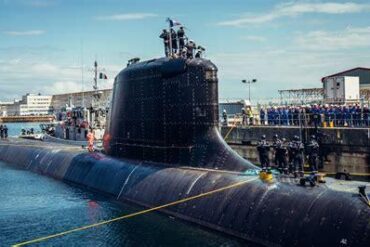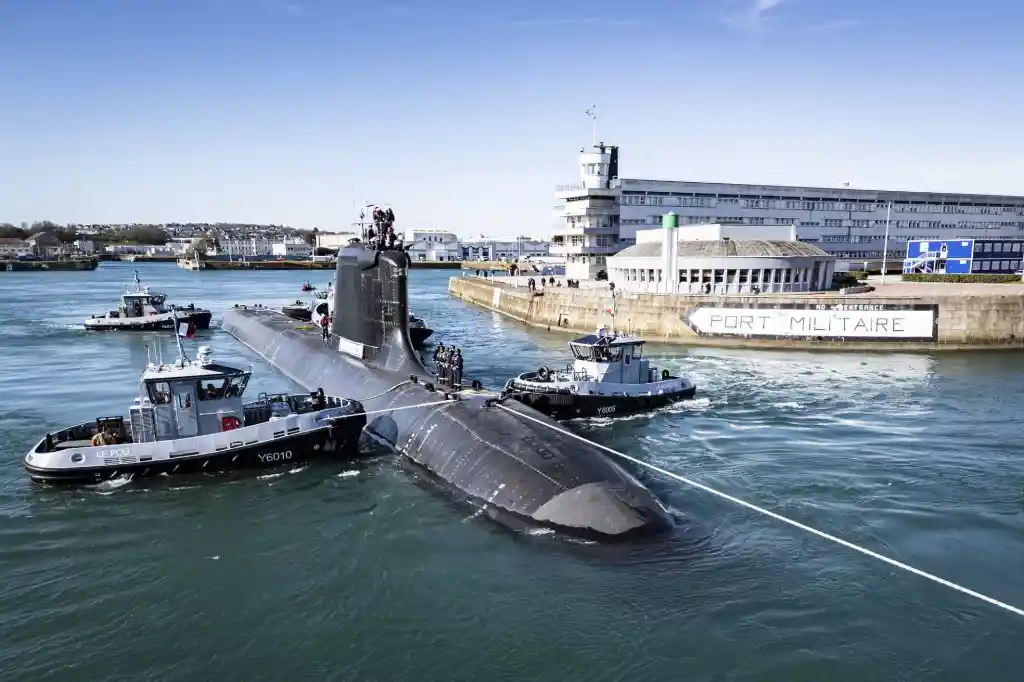
The French Navy has moved a decisive step closer to renewing its undersea strike fleet as the nuclear-powered attack submarine De Grasse departed Cherbourg for its first sea trials in late February 2026. The trials signal the transition from construction and dockside testing to full maritime evaluation, where propulsion, combat systems, acoustic discretion, and crew procedures are validated under operational conditions. For France’s maritime strategy, this moment matters: the Barracuda program is not simply replacing aging hulls, it is reshaping how the navy projects power, protects strategic assets, and conducts intelligence operations beneath contested waters.
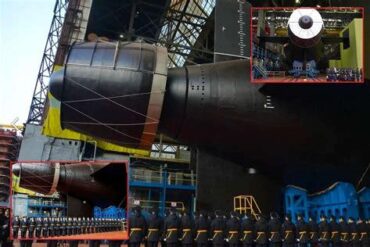
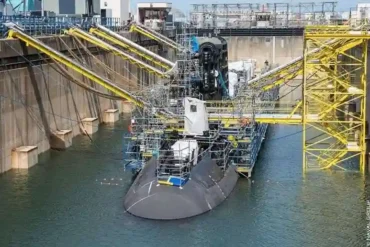
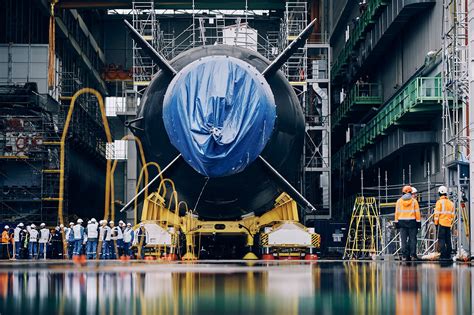
The departure from Cherbourg followed months of tightly choreographed preparation. After being transferred from Naval Group’s construction hall into the Cachin basin in 2025, De Grasse underwent dockside trials to verify electrical distribution, reactor interfaces, combat system integration, and safety systems. The nuclear reactor achieved first criticality in December 2025, a milestone that unlocks propulsion testing at sea and marks the submarine’s transition from inert steel to a living system. Sea trials now place the boat into the hands of mixed teams from Naval Group, TechnicAtome, the French Defence Procurement Agency, the Atomic Energy Commission, and French Navy crews, a choreography designed to compress technical risk before formal delivery later in 2026.
The Barracuda program has become the backbone of France’s second-generation nuclear attack submarine force, replacing the compact Rubis class that entered service in the 1980s. The Suffren-class design represents a generational leap in size, endurance, and mission breadth. With six boats planned through 2030, the class is engineered to protect France’s ballistic-missile submarines, shadow adversary fleets, gather intelligence, escort carrier and amphibious groups, and deliver precision land strikes. De Grasse is the fourth unit to reach sea trials, following Suffren, Duguay-Trouin, and Tourville into service, and its progress stabilizes the program’s rhythm after years of technical complexity and supply-chain pressures that slowed early delivery timelines.
From a strategic lens, the timing is not incidental. European naval forces are operating in an environment shaped by renewed great-power competition, persistent gray-zone activity at sea, and the rearmament of undersea fleets across the North Atlantic, Mediterranean, and Indo-Pacific. Nuclear-powered attack submarines thrive in this environment because they remain submerged for months, sprint silently when needed, and reposition without the telltale signatures of snorkeling. France’s investment in the Suffren class preserves credible undersea deterrence and influence within NATO while maintaining national autonomy over nuclear propulsion technology, a domain guarded by decades of industrial sovereignty.
The technical architecture of De Grasse reflects the Barracuda design philosophy: speed when required, silence by default. A TechnicAtome K15 pressurized water reactor provides continuous power to turbo-alternators that feed an electrically driven propulsion chain terminating in a pump-jet. The pump-jet is a key contributor to acoustic discretion, smoothing cavitation and reducing noise at speed, while hybrid drive modes allow commanders to trade velocity for near-silent patrol profiles. This matters in modern undersea warfare, where detection often precedes destruction by hours or days. A quieter boat writes its own narrative in the ocean’s physics, bending sonar geometry in its favor.
The combat system architecture centers on the SYCOBS combat management system and Thales sonar suites, combining hull-mounted and flank arrays to widen detection arcs and sharpen classification. These sensors are not just ears; they are the submarine’s perception engine, fusing acoustic signatures with navigation data, electronic support measures, and tactical intelligence to create a three-dimensional picture of contested waters. The result is a platform capable of tracking adversary submarines at range, screening task groups against underwater threats, and positioning itself for strikes without betraying its presence.
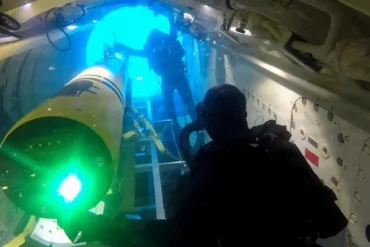
Armament gives De Grasse strategic reach. Four 533 mm torpedo tubes can deploy F21 heavyweight torpedoes for submarine and surface combat, SM39 Exocet missiles for sea-denial missions, and MdCN naval cruise missiles for land attack at distances approaching a thousand kilometers. The presence of land-attack cruise missiles transforms the submarine from a hunter into a stealthy strike asset, enabling France to hold critical infrastructure and high-value targets at risk without forward basing. The boat’s internal volume also supports mine-laying and the embarkation of combat swimmers and special forces, expanding mission scope into covert insertion, reconnaissance, and sabotage operations along hostile coastlines.
Sea trials will stress these systems across a spectrum of conditions. Engineers will measure vibration and acoustic signatures at different speeds and depths, validate reactor performance under dynamic loads, and test combat system responsiveness during simulated engagements. Crew drills refine emergency procedures, damage control, and reactor safety protocols. The process is deliberately unforgiving because the ocean is indifferent to optimism. Every vibration mode, every software timing loop, every hydraulic response must behave as designed when the boat is isolated hundreds of meters below the surface. Acceptance trials under the Defence Procurement Agency’s authority will gate delivery, ensuring the navy receives a platform that meets both tactical ambition and nuclear safety standards.
The name De Grasse carries historical gravity. The submarine honors Vice Admiral François Joseph Paul de Grasse, whose control of the Chesapeake in 1781 cut British reinforcement routes and helped secure the decisive Franco-American victory at Yorktown. Naming a modern nuclear attack submarine after a commander who mastered maritime maneuver and coalition warfare is more than ceremonial. It frames the vessel as a tool of strategic leverage, designed to shape outcomes not through spectacle but through positioning, timing, and control of maritime chokepoints. In the undersea domain, history echoes as doctrine: deny the enemy freedom of movement, and campaigns collapse.
France’s undersea modernization unfolds within a global resurgence of nuclear-powered attack submarines. The United States continues to expand the Virginia class while shaping the future SSN(X). The United Kingdom fields Astute-class boats and prepares for SSN-AUKUS. Russia advances Yasen-class submarines with long-range strike capabilities. China accelerates development beyond Type 093, and India blends leasing with indigenous nuclear propulsion programs. In this crowded arena, acoustic discretion, sensor fusion, and weapons integration become the currency of survivability. The Suffren class positions France competitively, ensuring its boats are neither museum pieces nor boutique projects but frontline assets designed for decades of relevance.
Industrial sovereignty underpins the program’s credibility. Naval Group’s Cherbourg shipyard, working with TechnicAtome and Thales, anchors a supply chain that sustains nuclear propulsion expertise, combat system integration, and lifecycle support. This ecosystem does more than build submarines; it preserves skills that cannot be reconstituted quickly once lost. Sea trials of De Grasse thus resonate beyond the hull itself. They validate a national capability to design, build, test, and operate complex nuclear systems in a world where technological dependence increasingly shapes strategic autonomy.
The Barracuda program’s cadence also reshapes fleet availability. Dual-crew concepts and higher automation reduce crew fatigue and increase operational tempo, allowing fewer hulls to deliver more presence. Compared with the Rubis class, the Suffren boats carry more weapons, operate more quietly, and support broader mission sets without sacrificing endurance. The shift from compact coastal hunters to blue-water multi-mission platforms reflects the reality that France’s maritime interests span from the Atlantic to the Indo-Pacific, across exclusive economic zones, chokepoints, and alliance commitments that demand persistent undersea coverage.
As De Grasse pushes through its sea trial envelope in 2026, the trials themselves become a narrative of proof. Each submerged sprint, each silent patrol profile, each simulated strike weaves confidence into steel and software. When delivery follows, the submarine will not arrive as a promise but as a tested instrument of policy, ready to disappear into the ocean’s layered acoustics and reappear only in the strategic calculations of those who know it is there.