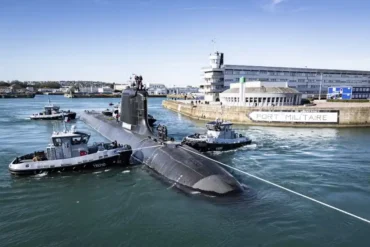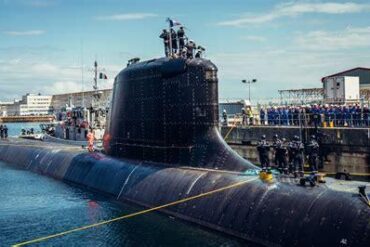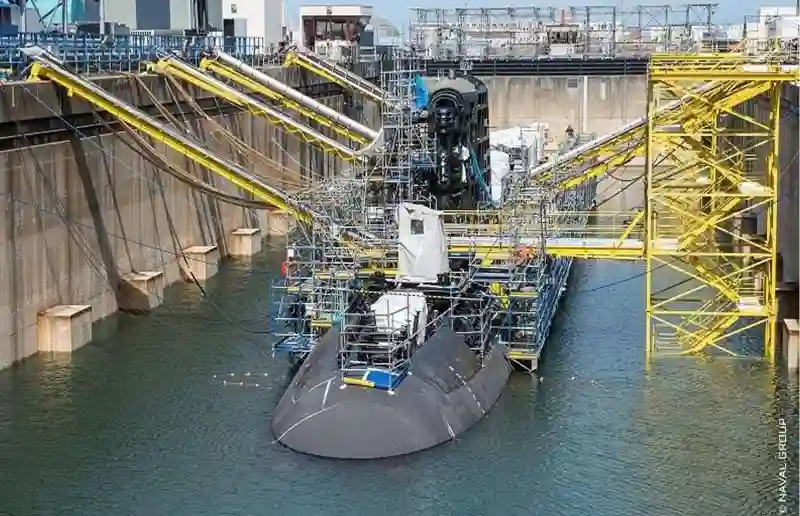
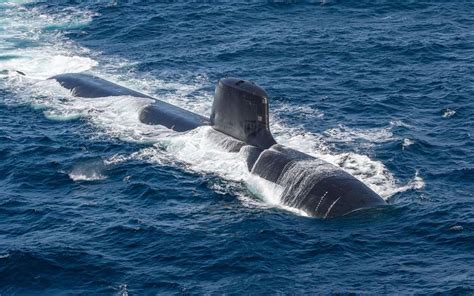
On December 12, 2025, France reached a pivotal milestone in its strategic naval evolution with the activation of the nuclear reactor aboard De Grasse (S638), the fourth Barracuda-class nuclear-powered attack submarine. This event, known in nuclear parlance as “divergence”, marks the first controlled chain reaction in the submarine’s propulsion plant and initiates a critical phase of testing that will lead to sea trials. The announcement, made by the French Ministry of the Armed Forces, underlines France’s commitment to sustaining and enhancing its nuclear-powered underwater warfare capabilities well into the 21st century.
The Strategic Significance of Reactor Divergence
Divergence is far more than a symbolic moment—it represents a decisive transition from shipyard construction to operational readiness. It is the point at which the nuclear core becomes self-sustaining under stringent oversight and the submarine transitions to continuous nuclear monitoring by trained propulsion officers. These personnel will oversee the reactor throughout its decades-long service life, expected to extend well into the 2060s.
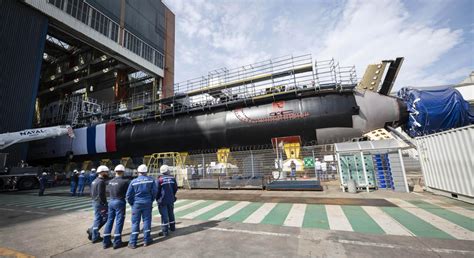
Designed under the leadership of France’s Atomic Energy Commission (CEA), the De Grasse reactor features technology supplied by TechnicAtome, with Naval Group responsible for manufacturing and integration at Cherbourg Naval Base. This high-level collaboration combines scientific excellence with industrial precision, anchoring the project within France’s broader defense ecosystem.
Barracuda-Class: Silent Power Beneath the Waves
The Barracuda-class—also known as the Suffren-class—represents the next generation of French nuclear attack submarines, replacing the aging Rubis-class. These submarines are powered by a compact pressurized-water reactor (PWR) derived from those used in France’s Triomphant-class SSBNs and the aircraft carrier Charles de Gaulle. The core provides approximately 150 MW of thermal output, housed within a nuclear boiler weighing nearly 400 tons and occupying a 10-meter hull section.
This advanced powerplant supports a hybrid steam-electric propulsion architecture, where non-radioactive secondary steam drives turbines and turbo-generators, feeding into a quiet electric motor optimized for tactical stealth and maneuverability. The result is a propulsion system that reduces noise, minimizes detectability, and provides the endurance and speed needed for strategic operations.
Operational Superiority Through Nuclear Propulsion
The value of nuclear propulsion is most evident in what it eliminates. Unlike diesel-electric submarines, nuclear-powered boats like De Grasse do not need to snorkel to recharge batteries, allowing them to remain submerged for months. This drastically reduces their signature, increases tactical flexibility, and provides the ability to respond rapidly to emerging threats across the globe.
Nuclear propulsion enables commanders to:
- Sustain higher underwater speeds for rapid repositioning.
- Remain deeply submerged and silent during covert tracking.
- Eliminate constraints related to oxygen supply or battery life.
These attributes significantly expand mission profiles, from intelligence collection to power projection and special operations support.
Expanded Combat Capabilities of De Grasse
Unlike its Rubis-class predecessors, De Grasse carries a modern and diverse arsenal that allows it to operate across multi-domain missions:
- MdCN cruise missiles for land attack while submerged.
- F21 heavyweight torpedoes for anti-submarine and anti-surface warfare.
- SM39 Exocet missiles for surface ship engagement.
- Advanced naval mines for area denial operations.
- Future integration potential for unmanned underwater and aerial vehicles.
Visual intelligence is enhanced through non-penetrating Safran optronic masts, distributing high-definition imaging across the Combat Information Center (CIC) without the structural vulnerabilities of traditional periscopes. This allows for superior reconnaissance and situational awareness, even during periscope-depth operations.
Designed for Strategic Missions and Special Forces
The Barracuda-class was engineered around missions that safeguard France’s strategic deterrent and project national power:
- Protection of France’s SSBN fleet
- Escort operations for carrier and amphibious task groups
- Covert surveillance and reconnaissance
- Special operations support, including deployment of combat swimmers and swimmer delivery vehicles (SDVs) via dry deck shelters
Automation has reduced the necessary crew size to just over 60 sailors, leaving room for embarked special operations forces. This balance between lean manning and expanded capability positions De Grasse as a multirole undersea platform, capable of transitioning from deterrence patrols to tactical interventions without compromise.
Technological Comparison with Allied Submarine Programs
France’s Barracuda-class submarines reflect a different philosophy compared to allied and competitor designs:
- United States – Virginia Class: Larger displacement and designed for payload expansion, with the Virginia Payload Module enabling increased Tomahawk missile capacity and special operations capabilities.
- United Kingdom – Astute Class: Focus on precision strike and anti-submarine warfare, integrating Tomahawk IV and Spearfish torpedoes with high-performance sonar systems.
- Russia – Yasen Class: Built for long-range cruise missile strikes, incorporating vertical launch systems and an array of torpedo tubes.
France’s approach prioritizes low observability, stealthy mobility, and selective strike capability, supporting strategic missions where discretion and precision are paramount.
A Clear Signal of Strategic Commitment
With six Barracuda-class boats ordered under the Military Planning Law 2019–2025, France is not merely upgrading hardware—it is redefining undersea warfare doctrine. Each reactor activation, from Suffren to De Grasse, marks another step toward a fully realized future fleet, capable of deterring adversaries and assuring allies.
The De Grasse divergence milestone is a signal, both technical and geopolitical:
- A proof of capability in nuclear marine engineering.
- A deterrent message to potential adversaries.
- A reassurance to allies regarding France’s enduring naval commitment.
France’s ability to independently design, build, fuel, and commission nuclear-powered submarines is a rare strategic asset, shared only with a handful of nations. This sovereignty in the underwater domain is vital to France’s defense autonomy and its role within NATO and European security frameworks.
The Road Ahead: Sea Trials and Full Commissioning
Following reactor divergence, De Grasse will enter alpha sea trials, where nuclear propulsion systems, navigation sensors, combat systems, and crew procedures will be rigorously tested in open waters. This phase will validate:
- Reactor performance and safety protocols
- Tactical propulsion and maneuverability
- Combat system integration
- Crew readiness under operational stress
Successful trials will pave the way for full operational commissioning, placing De Grasse into the hands of the French Navy as a combat-ready asset capable of defending national interests and responding to global crises.
Conclusion: A New Depth of Power for France
The activation of De Grasse’s nuclear reactor is not merely a procedural event—it is the birth of a weapon system designed to dominate the most secretive domain of modern warfare: the ocean depths. As the Barracuda program advances toward completion, France reinforces its status as a leading undersea power, equipped with submarines that can stay longer, strike further, and operate quieter than ever before.
In a world of mounting maritime competition and shifting alliances, De Grasse is not just another submarine—it is a strategic sentinel, silent beneath the surface, watching, ready, and formidable.