NASA is preparing for one of the most ambitious propulsion experiments in modern aerospace history: a nuclear-powered mission to Mars. If successful, the project could transform how spacecraft travel beyond Earth orbit, shorten mission timelines, and unlock destinations once considered too distant or too expensive to reach. At the center of this effort is a spacecraft called Space Reactor-1 Freedom, a name that signals both technological boldness and strategic intent.
Announced during NASA’s March 2026 “Ignition” event, the mission marks a renewed push toward advanced propulsion systems capable of carrying cargo and future crews deeper into the solar system. Instead of relying solely on conventional chemical rockets, NASA aims to demonstrate nuclear electric propulsion, a technology that uses a reactor to generate power for highly efficient engines. This approach could become the bridge between today’s rocket era and tomorrow’s interplanetary economy.
The mission is also tied to a broader national strategy emphasizing lunar bases, commercial partnerships, and expanded American presence in space. While debates continue over budgets and priorities, the propulsion concept itself has captured global attention because it addresses one of spaceflight’s oldest limitations: getting anywhere fast enough to matter.
Why NASA Needs Nuclear Propulsion for Mars
Traveling to Mars with conventional propulsion is slow, resource-intensive, and operationally risky. Chemical rockets deliver tremendous thrust during launch, but they consume enormous amounts of propellant. Once spacecraft leave Earth, efficiency becomes the deciding factor. Every kilogram of fuel launched from Earth adds cost, engineering complexity, and mission constraints.
That is where nuclear systems gain their advantage. A compact reactor can generate continuous electrical power for long periods, allowing engines to operate steadily rather than in short bursts. Instead of a powerful sprint followed by coasting, a spacecraft can accelerate gradually over time, building speed efficiently across millions of kilometers.
For Mars missions, this matters enormously. Reduced travel time lowers crew radiation exposure, decreases life-support demands, and increases flexibility for launch windows. Cargo missions also benefit, since heavier equipment can be transported more efficiently. Nuclear propulsion could turn Mars expeditions from rare mega-projects into more regular campaigns.
NASA’s interest is not merely theoretical. Engineers understand that future exploration of Mars, asteroids, Jupiter’s moons, and beyond will likely require propulsion systems stronger and smarter than chemical rockets alone.
How Space Reactor-1 Freedom Is Expected to Work
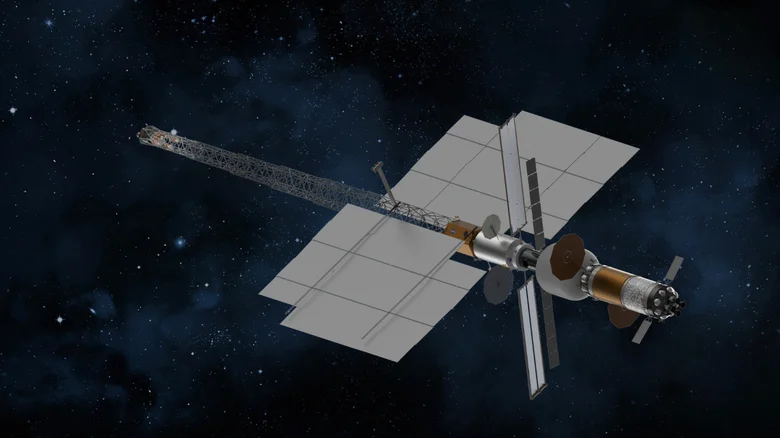
Space Reactor-1 Freedom is designed around nuclear electric propulsion rather than nuclear thermal propulsion. Though both use reactor technology, they function differently.
In this concept, a reactor uses controlled fission reactions to generate heat. That heat is converted into electricity, which powers advanced electric thrusters. These thrusters ionize propellant gas into charged particles and accelerate them at extremely high velocity. The resulting thrust is gentle compared with launch rockets, but incredibly efficient over long durations.
The practical effect is similar to choosing endurance over brute force. A chemical rocket is a drag racer. A nuclear electric spacecraft is a long-distance marathon machine that keeps accelerating long after chemical stages have burned out.
NASA reportedly plans to integrate existing electric propulsion hardware derived from earlier space station infrastructure concepts with a reactor developed alongside the Department of Energy. Reusing mature components may reduce development time and cost, though integrating them into one flight-ready vehicle remains a formidable engineering challenge.

The Skyfall Mars Helicopter Mission
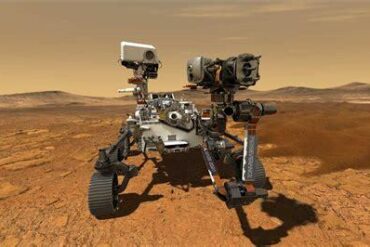
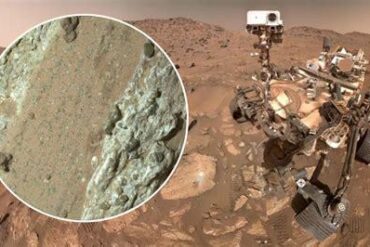
The first payload linked to SR-1 Freedom is the Skyfall mission, a Mars exploration program involving three remotely operated helicopters. Developed through collaboration with aerospace partners and NASA’s Jet Propulsion Laboratory, the concept builds on the success of rotorcraft operations on Mars.
After the historic proof provided by earlier Martian helicopter demonstrations, engineers now see aerial vehicles as powerful tools for scouting terrain, inspecting cliffs, entering craters, and supporting future surface missions. A fleet of helicopters could cover far more ground than a rover alone.
If Space Reactor-1 Freedom successfully delivers this payload, the transportation system may become as important as the science mission itself. Historically, new transportation technologies often create bigger long-term impacts than their first cargoes. Railroads changed continents. Container ships changed trade. Reliable nuclear spacecraft could similarly change the economics of deep space logistics.
Why Solar Power Alone Is No Longer Enough
Solar panels have served NASA exceptionally well, but sunlight weakens rapidly with distance from the Sun. Missions operating near Earth or Mars can still use large solar arrays, yet farther destinations face severe energy limitations.
That creates a scaling problem. More power requires larger panels. Larger panels add mass, fragility, and deployment complexity. Dust accumulation, shadowing, and mechanical failures introduce further risks.
A nuclear reactor bypasses those constraints by generating dependable power regardless of distance, orientation, or season. For spacecraft operating in deep space, around shadowed lunar regions, or during long-duration cargo missions, continuous onboard power can be mission-enabling rather than merely convenient.
This is one reason nuclear systems are increasingly viewed as essential for sustainable exploration rather than optional upgrades.
The Challenges NASA Must Overcome
Bold concepts do not erase hard realities. Building a nuclear spacecraft involves technical, political, and safety hurdles unlike ordinary missions.
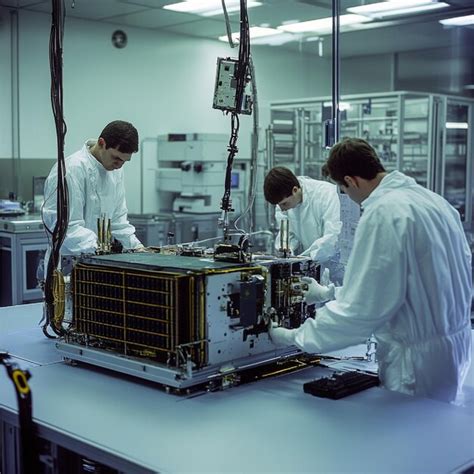
Reactor shielding must protect onboard systems. Launch protocols must account for contingencies. Thermal management in vacuum is complex because heat cannot dissipate through air. Integration timelines are notoriously optimistic in aerospace, and combining multiple advanced subsystems often creates delays.
Critics have also questioned whether Mars is the ideal first destination for such a demonstration. Since Mars is comparatively close, some analysts argue that nuclear propulsion’s full value would be better proven on missions to the asteroid belt or outer planets. Others counter that Mars offers visibility, urgency, and strategic relevance.
Budget uncertainty remains another variable. Large propulsion programs can span administrations, making continuity difficult. Space history is filled with excellent hardware that never flew because priorities changed before launch.
Beyond Mars: The Real Future of Nuclear Spaceflight
Even if the first mission functions mainly as a technology demonstrator, the long-term implications are enormous. Nuclear propulsion could support:
- Permanent lunar bases needing cargo resupply
- Rapid-response asteroid interception missions
- Human journeys to Mars with shorter transit times
- Scientific probes to Jupiter, Saturn, and icy moons
- Deep-space freight networks supporting commercial industry
Once transportation improves, entirely new mission architectures become possible. Habitats can be larger. Cargo can be heavier. Schedules can be faster. Risk can be reduced through redundancy and flexibility.
In many ways, propulsion determines civilization’s frontier. Sail power opened oceans. Steam opened continents. Jet engines shrank the planet. Nuclear propulsion may do the same for the solar system.
NASA’s Next Leap Could Change Everything
Space Reactor-1 Freedom represents more than another spacecraft. It symbolizes a shift in thinking about what space travel must become if humanity intends to move beyond brief visits and symbolic milestones.
Mars remains difficult, expensive, and dangerous. But those barriers are often transportation problems disguised as exploration problems. Solve propulsion, and many other challenges become manageable.
NASA’s planned nuclear-powered mission may face skepticism, schedule pressure, and engineering risk. That is normal for transformative programs. The same doubts surrounded reusable rockets, lunar landings, and robotic Mars landers before they succeeded.
If Space Reactor-1 Freedom launches and performs as intended, future generations may look back on it as the moment interplanetary travel stopped being experimental—and started becoming practical.