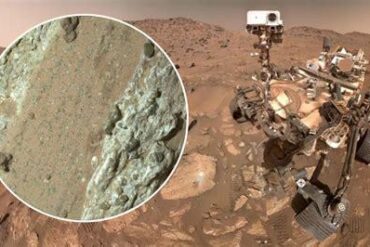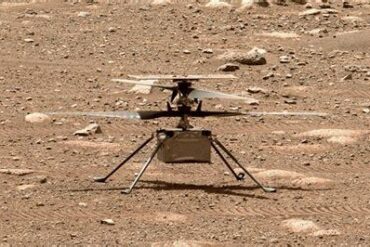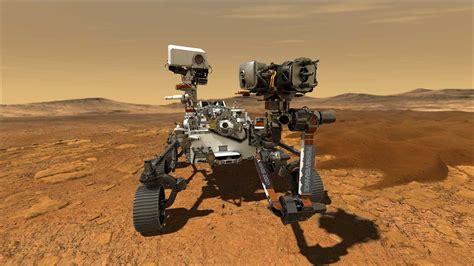
Since touching down on the Martian surface in February 2021, NASA’s Perseverance rover has evolved from a daring engineering experiment into one of the most productive planetary science platforms ever deployed. Five years into its mission, the agency has now provided a detailed update on the rover’s condition, performance, and scientific trajectory, and the message is unmistakably confident. We are not approaching an epilogue, but rather entering a new, data-rich chapter of sustained exploration.
A Rover Built for Longevity and Scientific Depth
According to mission leadership at NASA’s Jet Propulsion Laboratory, Perseverance remains in excellent operational health, with all major systems performing well within design expectations. Extensive testing conducted on Earth using identical hardware has reinforced confidence that the rover can continue operating for at least another 5 years. This assessment is not theoretical optimism; it is grounded in real-world simulations of wheel motors, power systems, and mechanical wear patterns derived from Perseverance’s actual usage profile on Mars.
The rover’s wheels, often a limiting factor in long-term surface missions, are projected to support an additional 37 miles of travel, well beyond the roughly 25 miles already completed. This margin is critical as NASA directs Perseverance toward scientifically diverse terrain that demands both endurance and precision.
Transitioning Toward the Lac de Charmes Region
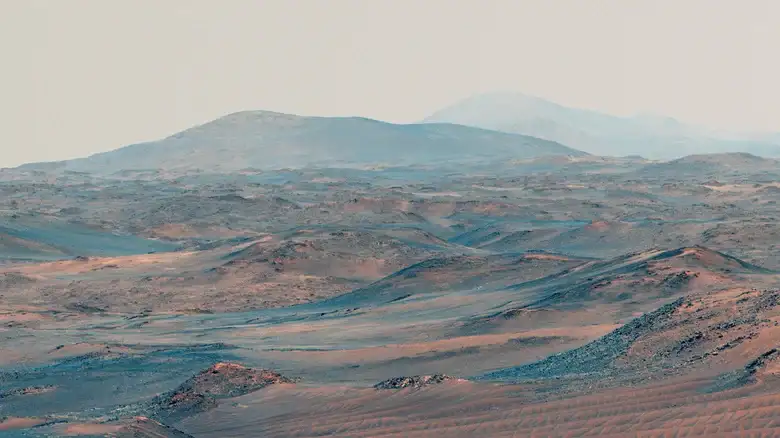
We are now steering Perseverance toward Lac de Charmes, a region believed to preserve geological records distinct from those previously sampled. Until now, the rover has focused primarily on the Jezero Crater and the Margin Unit, areas that once hosted ancient water activity. Samples collected there have already generated extraordinary interest, including one specimen that scientists believe may carry chemical signatures consistent with ancient microbial processes.
By expanding into Lac de Charmes, NASA aims to build a comparative framework across multiple Martian environments. This approach allows researchers to evaluate how geological and potentially biological conditions varied across regions, strengthening or challenging current hypotheses about Mars’ habitability billions of years ago.
Imaging Capabilities Redefining Surface Awareness
Perseverance’s navigation and hazard-avoidance cameras have quietly become one of the mission’s most transformative tools. These systems provide unprecedented clarity of the surrounding terrain, enabling both safer traversal and richer scientific context. In 2022, the cameras famously detected a reflective object later identified as debris from the rover’s own landing system. While mundane in origin, the discovery underscored the level of visual fidelity now available to mission planners and scientists.
This enhanced perception directly supports Perseverance’s advanced autonomous driving capabilities, which have allowed the rover to cover ground more efficiently than any of its predecessors.
Autonomous Driving as a Mission Multiplier
Approximately 90 percent of Perseverance’s total driving distance has been completed autonomously. Using onboard software to analyze terrain and avoid hazards in real time, the rover significantly reduces the need for step-by-step instructions from Earth. This autonomy not only saves time but also reduces mechanical stress by selecting smoother, safer routes across unpredictable landscapes.
The result is a rover that travels farther, faster, and with greater confidence, expanding the mission’s scientific reach without increasing operational risk.
Refining Sample Collection for the Future of Mars Science
One of the mission’s most valuable secondary outcomes has been the continuous refinement of rock sampling techniques. Early in the mission, engineers discovered that many Martian rocks were more fragile than anticipated, likely due to prolonged exposure to ancient water. To adapt, NASA researchers conducted extensive drilling tests on Earth using geologically similar rocks found in California.
These experiments led to improved drilling pressure control and movement sequencing, enabling Perseverance to successfully collect intact samples from challenging formations. The lessons learned are already informing the design of future robotic explorers, ensuring that the next generation of Mars missions builds directly on Perseverance’s hard-won experience.
Five years on, Perseverance is not merely surviving on Mars. It is thriving, evolving, and continuing to redefine what long-term robotic exploration can achieve on another world.